For a secondary school packed lunch, first choose a bar with ingredients and allergen information that are suitable for your child, then check any rules set by their school. The weight of each bar helps you choose a portion; to compare recipes in different sizes, also check the nutritional information per 100 g. For recipes containing hazelnuts, cereals or wafer, check the label for the specific product.
Who is this guide for?
Families managing food exclusions
If your child needs to avoid an ingredient, start by checking the label on the bar you’re buying, including any ‘may contain’ information. Product pages from Carrefour, Milka and Lindt show that milk chocolate recipes can also contain hazelnuts, wheat or soya.
Families looking for an easy-to-pack portion
The weight of each bar and the number of bars in a pack make it easier to plan packed lunches without breaking up a slab of chocolate. The individual bars listed by Carrefour France range from 21 g to 45 g, depending on the recipe; check separately whether each bar is individually wrapped.
People comparing recipes
If you’re choosing between a small bar and a crunchy recipe, compare the sugars, energy and fat per 100 g, then check how much there is in a whole bar. These two comparisons answer different questions: what the recipe contains and how much is in each portion.
What should you look for before buying?
For a packed lunch, check that the bar is suitable for any food exclusions and complies with the relevant rules before considering its format or texture. The table then sets out the needs consumers may prioritise.
| Criterion |
What to check |
Who is it for? |
| Allergens and school rules |
Read the ingredients and ‘may contain’ information, and check the school’s rules if necessary. |
If an ingredient needs to be avoided, I want to rule out unsuitable recipes before choosing a flavour. Around 36% of consumers would prioritise this suitability. |
| Portion and packaging |
Check the weight of each bar, the number of bars and how they are wrapped. |
When preparing several packed lunches, I prefer to know how much is intended for each break without having to cut up a slab. This convenience of portioning would be a priority for around 29% of consumers. |
| Nutritional values |
Compare the sugars, energy and fat per 100 g, then per bar. |
If I’m choosing between two recipes with different weights, their size alone doesn’t tell me what each one contains. Comparing nutritional values would come first for around 21% of consumers. |
| Recipe and texture |
Check whether the specific recipe contains hazelnuts, cereals or wafer. |
Once I’ve checked that the ingredients are suitable for my needs, I can look for the crunch of a wafer or a recipe with hazelnuts. This recipe preference would be the top criterion for around 14% of consumers. |
The DGCCRF states that the nutrition declaration on relevant prepacked foods allows you to check values per 100 g, among other things. The weight per bar is also useful when comparing different portion sizes.
Mistakes to avoid
-
Assuming all milk chocolate bars contain the same allergens
As well as dairy ingredients, the recipes reviewed at Carrefour, Milka and Lindt include hazelnuts, wheat or soya; some also warn that other allergens may be present.
If an ingredient needs to be avoided, check the ingredients list and ‘may contain’ information on the packaging of the specific product you’re buying, rather than relying on the brand or product category.
-
Assuming the Nutri-Score is compulsory
In France, Santé publique France describes the Nutri-Score as a logo that producers can choose to display. It does not replace the nutrition declaration for relevant prepacked foods, as described by the DGCCRF.
If it appears on the pack, read it alongside the nutritional information per 100 g and the weight of the bar. Don’t assume on its own that a recipe meets your needs.
-
Judging portion size by how big the pack looks
The individual bars listed by Carrefour France range from 21 g to 45 g. So the total weight of a multipack doesn’t tell you how much there is in a single serving.
Check the number of bars and their individual weight before choosing a format to put in a packed lunch.
Brands to consider
These examples showcase different recipes and formats, but the ingredients of one product shouldn’t be taken to represent another from the same brand.
Carrefour
Carrefour offers a multipack of 10 milk chocolate bars, each weighing 21 g.
- The number of bars and weight per bar make it easier to choose a portion.
- The product page lists milk and warns that traces of peanuts, eggs, soya, cereals containing gluten and nuts may be present.
Milka
The Milka Nussini product listed by Carrefour contains five 31 g bars, made with milk chocolate, wafer and hazelnuts.
- This format lets you choose an individual 31 g portion.
- The ingredients listed include wheat, hazelnuts, milk and soya.
Lindt
The 35 g Lindt Noccio bar listed by Carrefour combines milk chocolate and hazelnuts.
- The bar’s weight is clearly stated, making it easier to choose a portion.
- The ingredients list includes hazelnuts, milk, lactose, soya and barley malt extract.
Côte d’Or
The range listed by Carrefour France includes a 45 g Côte d’Or milk chocolate and hazelnut bar.
- Its stated weight sets it apart from the 21 g to 35 g products featured here.
- The hazelnut recipe and larger portion make it important to check the label and consider whether the format is right for you.
Nestlé / Crunch
Carrefour France lists a 30 g Nestlé milk chocolate bar with puffed rice.
- The recipe is a good fit if you prefer crunchy cereals.
- The ingredients published for a different Crunch product don’t tell you the ingredients or ‘may contain’ information for this specific bar.
Bars and multipacks available on Joybuy
This selection includes small bars in multipacks, as well as bars with cereals, wafer, caramel or peanuts. For each product, check how the portion for the packed lunch is wrapped and read the ingredients for the specific product you’re buying.
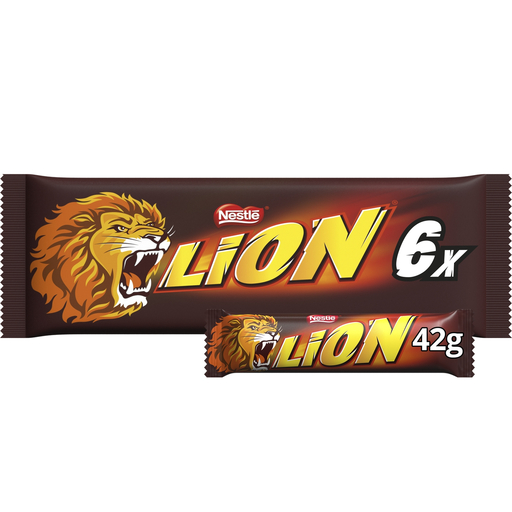 Image unavailable
Lion milk chocolate, 6 × 42 g
If you prefer a recipe with cereals, this pack contains six 42 g bars. Before putting one in a packed lunch, check its packaging and, if you need to avoid an ingredient, look for information about milk, wheat, peanuts, nuts and soya in particular.
View on Joybuy
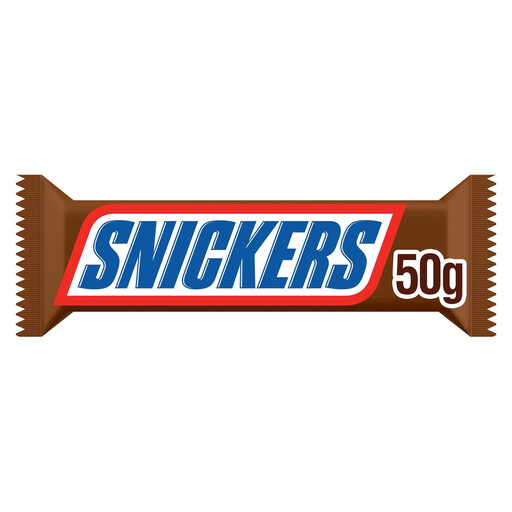 Image unavailable
Snickers milk chocolate, peanuts and caramel, 50 g
This 50 g bar is a good fit if you prefer a recipe with peanuts and caramel rather than a small portion. If you need to avoid an ingredient, check the label for peanuts, milk, soya and egg in particular, as well as any warnings about traces of nuts.
View on Joybuy
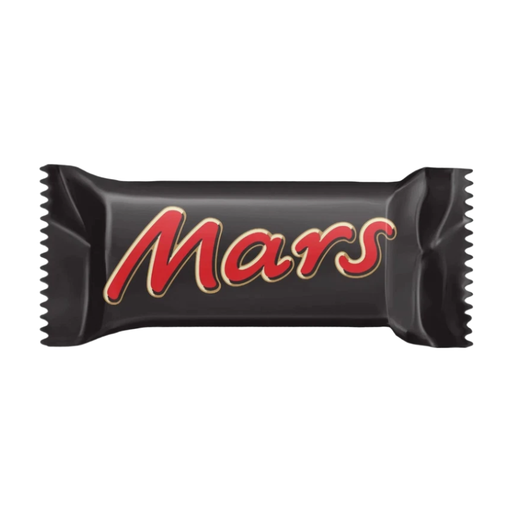 Image unavailable
Mars milk chocolate and caramel, 51 g
This 51 g bar suits anyone looking for a caramel and nougat recipe in this format. Check the ingredients before packing it if you need to avoid milk, soya, barley or egg, and look out for warnings about traces of peanuts and nuts.
View on Joybuy
 Image unavailable
Kinder Chocolate Maxi Pack, 11 × 21 g bars
The eleven 21 g bars let you choose a small portion at a time. Check that each bar is wrapped as you’d like for carrying, and if you need to avoid an ingredient, reread the ingredients and ‘may contain’ information on the pack you buy, especially for milk and soya.
View on Joybuy
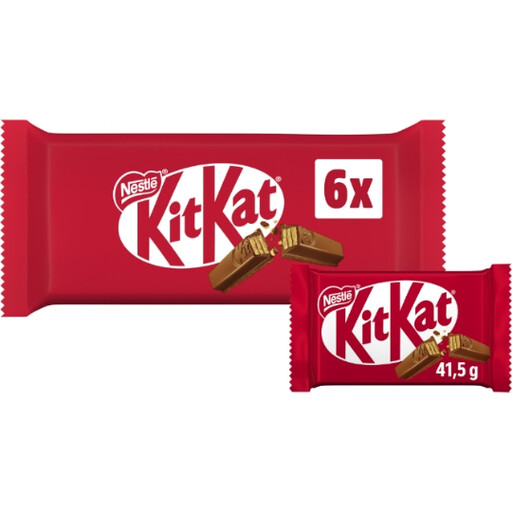 Image unavailable
KitKat milk chocolate, 6 × 41.5 g
This pack of six 41.5 g bars is a good choice if you prefer wafer. Check how each bar is wrapped before packing it, and reread the label if you need to avoid an ingredient, particularly wheat and milk, or if you need to check for warnings about traces.
View on Joybuy
Frequently asked questions
Is the Nutri-Score compulsory on milk chocolate bars in France?
No. According to Santé publique France, producers can choose whether to display it. The DGCCRF distinguishes this logo from the mandatory nutrition declaration for relevant prepacked foods. To compare two bars, also check their values per 100 g and their individual weight.
Does the ‘soda tax’ apply to milk chocolate bars?
No. The French Ministry of the Economy describes this levy as applying to sugary drinks, not chocolate bars. When choosing a bar, check its ingredients, portion size and nutritional information instead.
What should you check if your child has an allergy before packing a bar?
Read the label for the specific product you’re buying, including any ‘may contain’ information, and follow the relevant rules for your child and their school. The EU food labelling rules require allergens present in the ingredients list of relevant foods to be emphasised; a similar recipe or flavour doesn’t remove the need to check.
Does the smallest bar always contain less sugar?
Not necessarily: size and recipe are two different things. First compare the sugars per 100 g in the nutritional information, then check the weight of each bar to work out how much sugar there is in the portion you’ve chosen.


