Students keeping an eye on snack portions
You want to know what you’ll get from a whole bar or a few minis, rather than relying on a “light” product claim. The portion’s weight matters just as much as the value shown per 100 g.


When choosing a chocolate bar as a snack or dessert to go with a student dinner, compare the energy content of the portion you’ll actually eat, then check the values per 100 g and the ingredients. A “light” claim or Nutri-Score rating won’t answer the question on its own. A small portion can limit the energy you consume in one sitting, but it won’t replace a dinner. Check the allergens too, and choose a pack size that suits your shopping needs.
You want to know what you’ll get from a whole bar or a few minis, rather than relying on a “light” product claim. The portion’s weight matters just as much as the value shown per 100 g.
You’re choosing between individual bars and multi-packs. Checking how many bars are in the pack and how much each one weighs can help you find a format that suits the snacks you have planned.
Check the ingredients and any “may contain” warnings for the exact product before considering its portion size or nutritional values. The recipes listed by Carrefour don’t all contain the same allergens.
For a snack to go with a student dinner, start with the portion you plan to eat. Then check the pack size and ingredients according to what matters most to you.
| What matters | What to check | Who this is for |
|---|---|---|
| Energy in your portion | The weight of one bar and its energy per portion; values per 100 g then let you compare products. | If I eat a whole bar, I want to know the energy content of that bar, rather than that of a different portion shown on the packaging. Around 42% of consumers put the energy in the portion they eat at the centre of their choice. |
| Pack size for your food shop | The number of bars in the pack and the weight of each one. | For my student food shop, I want a pack that matches the number of snacks I have planned, without confusing a large pack with a large portion. Around 33% of consumers prioritise a pack size that suits their shopping needs. |
| Ingredients and allergens | The ingredients list, any declared allergens and any “may contain” warnings on the specific product packaging. | If I have an allergy or avoid certain foods, I need to check the recipe is suitable for me first, even if the portion seems right. For around 25% of consumers, ingredients and allergens are therefore the main consideration. |
Portion sizes affect how much you eat: Carrefour’s product page for a Snickers lists 241 kcal per 50 g, while its page for a Special K cereal bar lists 87 kcal per 20 g. These are different categories and different weights, so they don’t provide an overall comparison of their composition.
Check the energy per portion and per 100 g, then make sure the portion shown matches what you’ll eat.
Carrefour lists 500 kcal per 100 g for the Canderel “no added sugars” bar mentioned in the product pages consulted. This claim alone doesn’t tell you how much energy the product contains.
Compare the nutritional values and ingredients for similar portion sizes, rather than assuming a claim about sugars means fewer calories.
According to the French Ministry of the Economy, displaying the Nutri-Score remains voluntary in France. The DGCCRF states that, as a general rule, a nutrition declaration is compulsory on pre-packed foods, subject to applicable exemptions.
If the logo is shown, use it as an additional guide, and check the nutritional information and ingredients list too.
The Carrefour bar product pages consulted list milk, wheat, soya, peanuts or tree nuts, depending on the recipe, as well as possible traces.
If you have an allergy or avoid certain foods, check the packaging for the variant you’re buying, particularly if the pack size or recipe has changed.
The details below apply to the products described on the Carrefour product pages, not every bar made by each brand.
The product reviewed combines nougat, peanuts and caramel, with each bar weighing 50 g.
The Carrefour product combines biscuit, caramel and milk chocolate, in a pack of ten 50 g bars.
The KitKat Mini Mix described by Carrefour offers chocolate-coated wafer minis, with two minis as a suggested portion.
The product reviewed is a pack of five 50 g chocolate and peanut bars.
This selection features a chocolate bar in a pack of smaller bars, which you could consider as a portioned snack to go with a student dinner. Check its nutritional portion size before deciding how much to have.
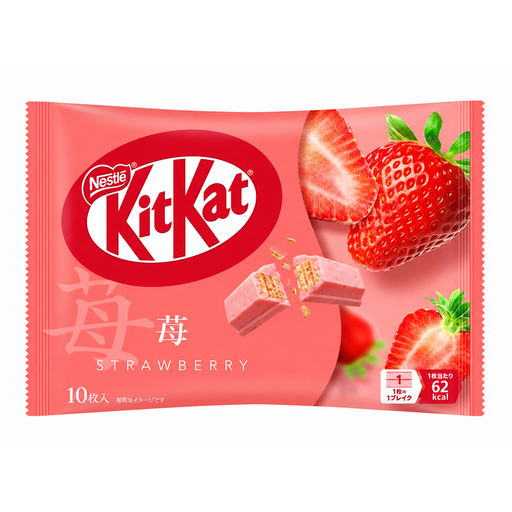 Image unavailable
This pack could suit you if you want to count how many pieces you have as a chocolatey snack. The nutritional information uses a reference portion of 12.5 g, but the bar weights given in the title and description don’t match. Check the packaging for the weight of each bar and the energy content of the amount you’ll eat. The product page lists wheat containing gluten, milk and soya, as well as possible traces of peanuts, sesame and tree nuts.
No. Under the conditions set out in Article 1613 ter of the French General Tax Code, the contribution applies to drinks and liquid preparations for making drinks, not solid chocolate bars. Sugar content is still worth checking in the nutritional information, regardless of this tax.
No. The French Ministry of the Economy states that displaying it remains voluntary. The DGCCRF distinguishes this logo from the nutrition declaration, which is generally compulsory on pre-packed foods, subject to exemptions. Check the nutrition declaration to compare energy, sugars and fat in particular.
Not necessarily. Among the products listed by Carrefour, the Canderel “no added sugars” bar contains 500 kcal per 100 g, while the Twix mentioned contains 493 kcal per 100 g. This comparison applies to these two products only: check the energy content of the portion you plan to eat too.
A bar can be planned as a snack or dessert, but its nutritional values alone aren’t enough to consider it a complete dinner. Anses notes that a balanced diet includes macronutrients and micronutrients. Think about the bar as part of the meal as a whole, rather than as its only component.