When choosing a snack for your journey, only consider a chocolate bar lower in fat if the claim applies to that specific product and its nutritional values allow you to make a comparison per 100 g. If you’re mainly looking for an easy-to-carry portion, an individually wrapped bar may be a practical choice, but that doesn’t prove it’s lower in fat. Check the sugars and how much you plan to eat, too.
Who is this option for?
Shoppers looking for a verifiable reduction in fat
Reducing fat is your top priority. You’re looking for a claim on the specific product that you can check against its nutritional information, rather than relying on the size of the bar or its Nutri-Score.
Travellers who prefer a portable portion
You’d like to tuck a wrapped bar into your bag for the journey. Choosing this format doesn’t mean it contains less fat than another chocolate bar.
Shoppers keeping an eye on sugars and allergens
You compare fat and sugars per 100 g, then check the amount in the portion you plan to eat. The ingredients list and allergens for each product also matter when making your choice.
What should you check?
When choosing a bar to take with you, first distinguish between looking for a lower-fat option and simply preferring an individual portion. Then compare nutritional values on the same basis and check any requirements specific to your journey.
| What to consider |
What to check |
Who is this for? |
| Reduced fat |
Look for a claim on the specific product and compare its fat per 100 g with that of a similar product. |
If I’m looking for a lower-fat bar for my journey, I want to be able to check this claim before buying; around 42% of shoppers put this check at the top of their list. |
| Sugars and portion size |
Compare fat, saturates and sugars per 100 g, then check the amount in the portion you’re taking with you. |
A possible reduction in fat doesn’t tell me how much sugar is in my bar; around 33% of shoppers prioritise checking these nutritional values together. |
| Convenience and shopping requirements |
Check the weight, number of bars, listed allergens and availability at your chosen shop. |
When getting ready for my journey, I mainly need a portable format that meets my shopping requirements, particularly those relating to allergens; this is a priority for around 25% of shoppers. |
Common misconceptions to avoid
-
Assuming the ‘soda tax’ applies to chocolate bars
Article 1613 ter of the General Tax Code, in the version in force referenced by Légifrance in July 2026, applies to drinks and liquid preparations for drinks. A solid chocolate bar is outside its scope.
When choosing a bar, focus instead on its sugar and fat content, and the portion you plan to take with you.
-
Taking Nutri-Score as proof that a product is lower in fat
According to the DGCCRF, displaying Nutri-Score is voluntary. If it appears, it doesn’t replace the nutrition declaration or a specific claim about reduced fat.
Use it as additional information and check the nutritional values per 100 g before comparing portions.
-
Confusing a smaller format with a lower-fat recipe
An individually wrapped bar may be convenient to carry, but that doesn’t mean there’s a proven reduction in fat. For example, Carrefour’s product listing for a Mars bar gives 7.5 g of fat per 45 g portion; this figure alone doesn’t prove that it’s lower in fat.
Decide whether format or a verifiable reduction matters most to you, then check the claim and nutritional values for the product you’re considering.
Brands and ranges to know
Mars
The Carrefour listing we consulted features a chocolate bar with caramel and nougat, sold in a pack of 12 bars weighing 45 g each.
- Carrefour lists 7.5 g of fat per 45 g bar.
- This figure alone isn’t enough to establish a reduction in fat. The ingredients list for this product includes milk, soya and egg, among other ingredients.
Twix
Carrefour’s chocolate bar section includes, among other products, Twix mini bars with caramel.
- The mini format may suit you if portion size is your main practical consideration.
- Check the nutritional information and any claims on the specific product: its format doesn’t prove that it’s lower in fat.
Carrefour
The retailer’s range includes bars under its Carrefour and Carrefour Sensation brands, alongside products from other brands.
- You can compare several formats, depending on how many portions you want to take with you.
- A product being stocked in the range doesn’t, by itself, tell you whether its fat content has been reduced.
Eco+
E.Leclerc lists a 12-pack of biscuit and caramel bars covered in milk chocolate under the Eco+ brand.
- E.Leclerc’s listing gives values you can use to assess this recipe: 25 g of fat and 45 g of sugars per 100 g.
- The listing shows a Nutri-Score of E, but doesn’t establish that this product carries a claim about reduced fat.
A grab-and-go option on Joybuy
This selection features an individual cranberry and dark chocolate bar for your journey. It meets the need for a portable snack, but shouldn’t be confused with a traditional chocolate bar or a product proven to be lower in fat.
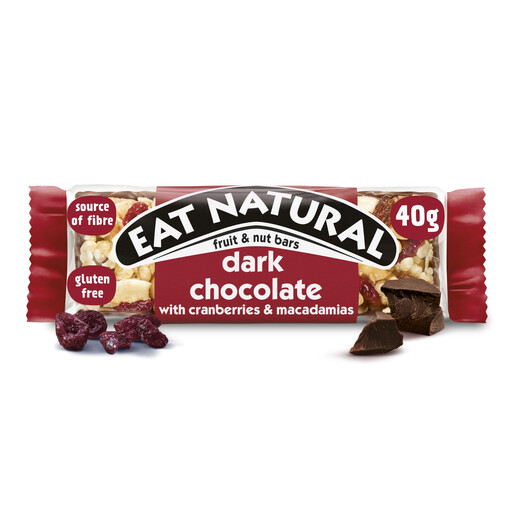 Image unavailable
Eat Natural Cranberry Dark Chocolate Bar, 40 g
A handy individual portion to take with you: this 40 g bar combines cranberries and dark chocolate. If reducing fat is your deciding factor, check the claim and nutritional information for this product before buying. If you need to avoid certain allergens, check the labelling too.
View on Joybuy
Frequently asked questions
Does the French ‘soda tax’ apply to chocolate bars?
Not to solid chocolate bars. Article 1613 ter of the General Tax Code, in the version in force referenced by Légifrance in July 2026, applies to drinks and liquid preparations for drinks. Check the bar’s nutritional information instead.
Is Nutri-Score mandatory on chocolate bars sold in France?
No. The DGCCRF describes Nutri-Score as a voluntary label, while a nutrition declaration is mandatory for most prepacked foods. Displaying a Nutri-Score doesn’t prove that a product is lower in fat.
How can I compare two bars of different sizes?
First compare their nutritional values per 100 g, the basis used in nutrition declarations according to the DGCCRF. Then check the amount in each bar or portion you plan to eat during your journey.
What should I check if I need to avoid an allergen?
Read the ingredients list and check which allergens are highlighted on the label for the specific product. Don’t assume it has the same ingredients as another bar, even if they’re in the same category.


