People who want proof of fair trade
You want to check the commitment applies to the product you’re buying, and you’re happy to switch brand or format if your usual bar doesn’t meet this requirement.


If fair trade is a priority for your weekly shop, check the certification or supply-chain information for the exact product rather than relying on the brand’s reputation alone. Then compare sugar and energy per 100 g, as well as portion sizes. Nutri-Score can add to this information when displayed, but its use is voluntary in France.
You want to check the commitment applies to the product you’re buying, and you’re happy to switch brand or format if your usual bar doesn’t meet this requirement.
For your weekly shop, you look at the fair trade evidence, nutritional information and number of portions in the pack.
You prefer an individual bar that’s available at your usual shop, without assuming that a well-known brand is Fairtrade certified.
For your weekly shop, start with what matters most to you: proof of fair trade, nutritional composition or availability in a bar format.
| Criterion | What to check | Who is it for? |
|---|---|---|
| Proof of fair trade | Look for the Fairtrade/Max Havelaar logo on the exact product, or for clearly documented supply-chain information. According to Max Havelaar France, its label is based on criteria checked by an independent certifier. | If fair trade is essential to my purchase, a general brand promise isn’t enough. Around 43% of consumers also prioritise verifiable proof on the product. |
| Nutritional composition | Compare sugar and energy per 100 g in particular, then check the portion size. Nutri-Score adds to this information when it appears on the packaging. | When I buy several portions for the week, I want to compare recipes even if the bars come in different sizes. This nutritional information is the top priority for around 29% of consumers. |
| Format availability | Check that a product meeting your criteria is available in the format you want and at your chosen shop; a block of chocolate isn’t an individual bar. | I’m looking for a portion that’s easy to take with me and available during my usual shop, without accidentally switching formats. For around 28% of consumers, finding the right format comes before other criteria. |
A commitment made for an entire brand doesn’t prove that the bar you’ve chosen carries the Fairtrade/Max Havelaar label. The DGCCRF highlights the importance of fair and accurate fair trade claims.
Check the logo or supply-chain information on the packaging and the product listing for the exact item.
According to Santé publique France, displaying Nutri-Score is voluntary. If it’s not shown, you’ll still need to check the nutritional information.
Compare the values per 100 g and the ingredients list, whether or not the logo is displayed.
The provisions set out by Légifrance apply to drinks and liquid preparations for drinks, not solid chocolate bars.
Check the sugar content in the nutritional information to compare recipes, without confusing this with what the levy covers.
A useful guide when looking for certification on the product you’re buying, rather than assuming it applies because of the brand or shop.
A brand to consider if a block or another chocolate format could work instead of the individual bar you’re looking for.
An option for comparing chocolate, with a focus on the cocoa supply chain and the format available.
Another chocolate brand to consider if you’re happy to compare formats beyond classic bars.
This selection focuses on an individual portion of milk chocolate with hazelnuts for your weekly shop. If Fairtrade certification is essential to your choice, check the product details before you buy.
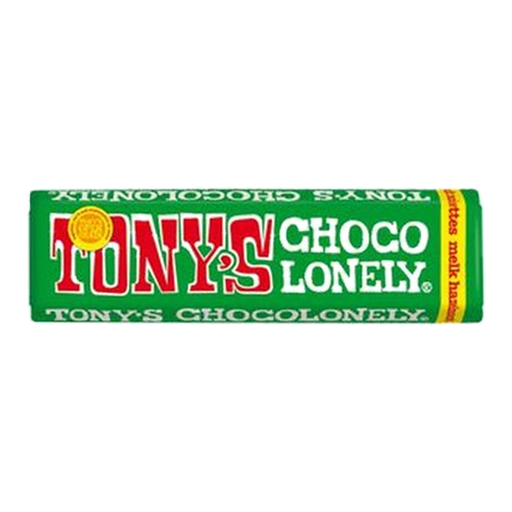 Image unavailable
The 47 g size is a good fit if you’re looking for an individual chocolate portion. The product listing uses the phrase “Fair trade”, but this alone doesn’t establish that this product is Fairtrade/Max Havelaar certified. Check the packaging if this label is important to your decision.
Look for the Fairtrade/Max Havelaar logo on the packaging of the exact product. A general claim about “sustainable” cocoa or a brand’s commitment doesn’t, on its own, prove that the bar carries the label.
No. According to Santé publique France, displaying it is voluntary. The DGCCRF says that nutrition declarations are generally compulsory for prepacked foods. They allow you to compare sugar and energy per 100 g, for example, when Nutri-Score isn’t shown.
No. The provisions set out by Légifrance apply to drinks and liquid preparations for drinks, not solid chocolate bars. Sugar content is still useful information when comparing recipes.
Check the products available at your shop, then consider another retailer or a different chocolate format if it suits your needs. Max Havelaar France says Fairtrade products may be stocked at Carrefour and E.Leclerc on a temporary basis; always check the label and format of the product you choose.