What should you look for before buying?
For a solo tasting, start with the flavour you want, then compare the bars using the label and the size actually on sale.
| What to consider |
What to check |
Who is it for? |
| Cocoa and sugars |
The cocoa percentage and the ‘of which sugars’ figure per 100 g for each product. |
If you want a few squares with a pronounced cocoa taste, the recipe’s sugar content matters just as much as its cocoa percentage. Around 31% of consumers make this their priority. |
| How mild the milk chocolate is |
Whether it’s plain or filled, and then its sugars per 100 g. |
After a galette des rois, some people are looking for a mild, milky flavour rather than a filling. This is the priority for around 23% of consumers. |
| Allergens and ingredients |
The ingredients list, declared allergens and ‘may contain’ warnings. |
If you’re considering a praline or crunchy recipe, knowing exactly what it contains can determine whether you buy it. Checking the ingredients comes first for around 31% of consumers. |
| Pack size |
The net weight and the number of bars in the pack. |
If you’re buying a bar to enjoy on your own, a multipack won’t meet the same needs as a single bar. Around 15% of consumers prioritise this above all else. |
Brands to compare
These details apply to the products mentioned, not to every bar from each brand or to their availability on Joybuy.
Lindt
Two 100 g recipes let you compare a cocoa-rich dark chocolate with plain milk chocolate.
- The Joybuy listing for Excellence 85% states that it contains 15 g of sugars per 100 g; Lindt lists 55 g per 100 g for L’Authentique Lait.
- These figures don’t apply to other Lindt recipes. L’Authentique Lait lists milk and soya among its ingredients.
Milka
The Lait Daim variety combines milk chocolate with a filling and comes in a pack of two 100 g bars.
- The packaging makes it clear how much each bar weighs compared with the total amount you’re buying.
- The Joybuy listing mentions milk, hazelnuts and soya, as well as possible traces of other nuts and wheat.
Côte d’Or
The plain milk chocolate and praline recipes have different ingredients lists.
- The Carrefour listing for Praliné Double Lait details the hazelnuts, almonds and cashew nuts in this recipe.
- This product also lists milk and soya, and may contain traces of other nuts. Check the exact variety you’re buying.
Carrefour Bio
The 90% organic dark chocolate bar is an example of an unfilled recipe to compare on the label.
- Carrefour states that it contains at least 90% cocoa and lists cocoa mass, cocoa butter, cane sugar and vanilla extract.
- The cocoa percentage is no substitute for checking the nutrition information and allergen warnings.
E.Leclerc : Tablette d’Or et Equador
These two dark chocolate products offer points of comparison for cocoa percentage and pack size.
- E.Leclerc offers a 47% Tablette d’Or in a multipack of three 100 g bars and a 72% Equador in a single 100 g bar.
- Their listings advise contacting your E.Leclerc store to check availability.
Nestlé
NESTLÉ DESSERT Blanc 170 g is for baking, rather than choosing a plain dark or milk chocolate bar to enjoy as it is.
- The Joybuy listing for this product states that it is intended for baking.
- The listing mentions milk and possible traces of eggs, gluten and nuts.
Chocolate bars to consider on Joybuy
These 100 g bars are suitable for enjoying after a galette des rois, with dark, milk and filled recipes to choose from. To compare them, start with the recipe that appeals to you, then check its ingredients and how much you plan to keep.
 Image unavailable
Lindt Excellence dark chocolate, 85% cocoa, 100 g
Worth considering if you prefer an unfilled dark chocolate bar and want to compare sugars per 100 g. The Joybuy listing states that it contains 15 g of sugars per 100 g. Check the allergen information on the pack you buy.
View on Joybuy
 Image unavailable
POULAIN dark chocolate, 70% cocoa, 100 g
Another 100 g dark chocolate option for anyone comparing cocoa-rich recipes. If sweeteners are a factor in your choice, read the ingredients list and consumption advice for this product.
View on Joybuy
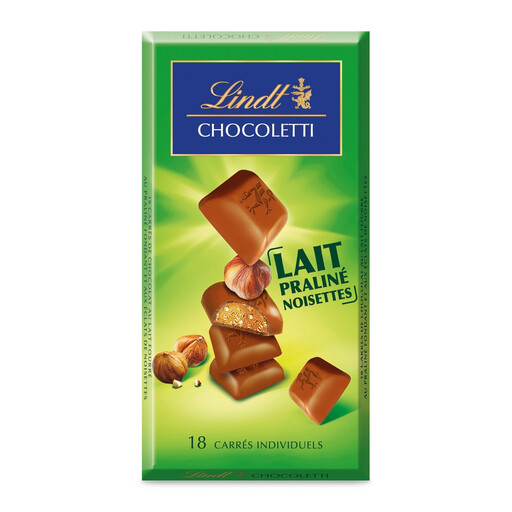 Image unavailable
Lindt Chocoletti milk chocolate praline, 100 g
This bar is for anyone who prefers praline to plain milk chocolate. Before choosing a filled recipe, check the packaging for nuts and other allergens.
View on Joybuy
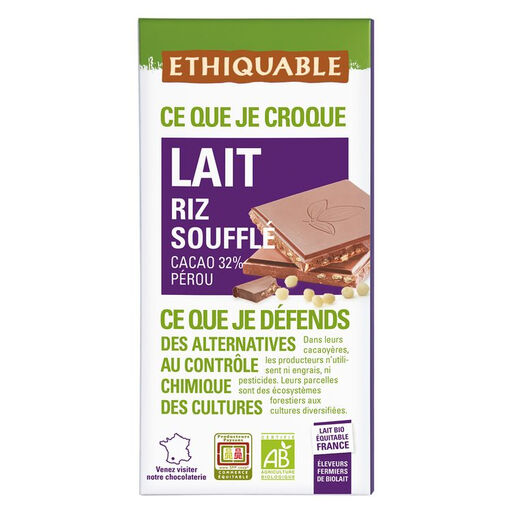 Image unavailable
ETHIQUABLE organic milk chocolate with puffed rice, 100 g
Worth considering if you’d prefer a milk chocolate bar with puffed rice to a plain recipe. Check the ingredients list and any ‘may contain’ warnings if you need to avoid certain allergens.
View on Joybuy
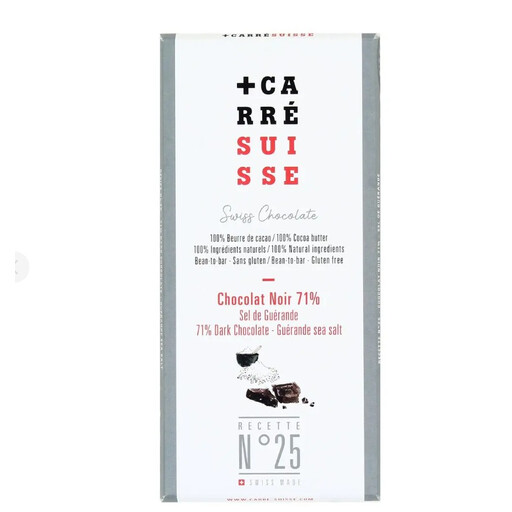 Image unavailable
CARRE dark chocolate with Guérande sea salt, 100 g
This bar is a good choice if you fancy dark chocolate with a salty note, rather than a plain dark chocolate recipe. To compare it with bars containing more cocoa, check its cocoa percentage and nutrition information.
View on Joybuy
Frequently asked questions
Does the French tax on sugary drinks apply to chocolate bars?
No. The rates published in the Official Bulletin of Public Finances – Taxes relate to levies on non-alcoholic drinks containing added sugars or artificial sweeteners. A chocolate bar isn’t a drink, so compare the labels when choosing between bars.
Does a chocolate bar sold in France have to display a Nutri-Score?
No. According to the European Commission, simplified nutrition information on the front of the pack is voluntary under current EU rules. Most prepacked foods must, however, carry a nutrition declaration including energy, fat, carbohydrates and sugars.
How can you compare two bars if only one displays a Nutri-Score?
Read the nutrition information per 100 g on both packs, then compare the ingredients and allergens. Any Nutri-Score shown is no substitute for this information and isn’t enough on its own to help you choose according to your preferences.
Is a 100 g bar a single serving?
No. 100 g is the net weight of the bar, not an amount to eat in one sitting. If you’re having a few squares after a galette des rois, check how many bars are in the pack too, and plan to store the rest according to the instructions on the packaging.
What should you check before buying a praline bar?
Read the ingredients, declared allergens and possible traces listed for that specific recipe. The Carrefour listing for Côte d’Or Praliné Double Lait mentions hazelnuts, almonds, cashew nuts, milk and soya. This list shouldn’t be assumed to apply to all praline bars.


