Who is this choice for?

Cyclists looking for a small chocolate snack

If you’re having a bar when you’re not exercising or after a short ride, check the energy content of the serving you’ll actually eat. The per-100 g value is then useful for comparing different-sized formats.

Cyclists planning their carbs for endurance rides

On a longer ride, the carbs in each bar count towards your total intake during exercise. World Athletics’ guidelines vary depending on the duration, so also check that the bar works for you while riding.

People interested in a high-protein or lower-sugar recipe

If the snack’s nutritional make-up is your main priority, compare the sugar, protein and energy per serving. Also check the ingredients and allergens for the exact recipe.

What should you look at first?

When choosing a chocolate bar for a cycling trip, first decide whether you want a snack for when you’re not exercising or fuel for a long ride.

What matters What to check Who is it for?
Energy per serving Kcal per bar and per 100 g; serving weight. For a snack when I’m not exercising, I want to know what the serving I’m going to eat contains, rather than relying on the size of the pack. Around 30% of consumers are said to focus first and foremost on the energy content of their snack.
Carbs during exercise Carbs in g per bar; how that serving fits into your planned intake during the ride. On a long ride, I want to spread my carbs throughout the journey and know how much each bar contributes. This is said to be the priority for around 50% of consumers.
Snack ingredients Sugar and protein per serving; ingredients and allergens. If I’m choosing mainly based on protein or sugar, I want to compare the exact recipe without assuming it will also work as fuel while riding. Around 20% of consumers are said to prioritise these ingredients.

What pitfalls should you avoid?

  • Relying only on the words “low calorie”

    Serving sizes affect how you interpret the kcal figures: Carrefour lists 96 kcal per bar for Punch Power and 163 kcal per 45 g for HiPRO, while KitKat France gives 213 kcal per serving of its milk chocolate bar. These figures aren’t for identical serving sizes.

    Compare the weight and energy per serving, then the values per 100 g, before deciding how much to take with you.

  • Choosing the smallest serving for a long ride

    A small bar can contribute to your carb intake, but may not provide all the fuel you need during exercise. World Athletics recommends 30 to 60 g of carbs per hour for 1 to 2.5 hours of exercise, then up to 90 g per hour for sessions lasting more than 2.5 hours.

    Look at the carbs in each bar as part of your overall fuelling plan, and try your choice during training.

  • Assuming that no Nutri-Score means the product is unhealthy

    In France, the DGCCRF describes Nutri-Score as a voluntary label. Its absence alone therefore isn’t enough to judge a bar’s nutritional make-up.

    Whether or not a Nutri-Score is shown, read the nutrition information, serving size and ingredients list.

  • Assuming all chocolate recipes are alike

    Depending on the product, the listed ingredients and allergens may include milk, soya, wheat, peanuts or tree nuts. Some high-protein recipes also list sweeteners.

    Check the label on the specific variety you’re buying, especially if you need to avoid a particular ingredient.

Brands to know when comparing recipes

KitKat

Milk chocolate-coated wafers available in several formats. Consider them classic chocolate bars, rather than assuming they’re designed for cycling.

  • KitKat France lists 213 kcal and 24.5 g of carbs per stated serving of its milk chocolate bar.
  • This recipe contains wheat and milk; check the ingredients for the format you choose.

Mars

The 50 g Mars Protein product is a high-protein chocolate bar, distinct from a standard Mars bar.

  • The ingredients list for this product includes milk chocolate, caramel and milk proteins.
  • Carrefour’s product details list milk, soya, egg and barley, as well as possible traces of other allergens. Check the label on the bar you buy.

Carrefour Sensation

The range includes a chocolate protein bar and a cereal bar with seeds and chocolate. Don’t confuse their categories or serving sizes.

  • Carrefour lists 185 kcal per 32 g serving of its chocolate protein bar.
  • The cereal bar with seeds and chocolate is listed at 577 kcal per 100 g. Compare each product both per serving and per 100 g, and check its allergens.

Joyfuel

High-protein chocolate bars, including milk and peanut and double chocolate varieties. Compare each recipe individually.

  • Carrefour lists 382 and 369 kcal per 100 g for these two products respectively; these figures alone don’t tell you the energy content of a serving.
  • Ingredients and allergens vary by recipe, as do the sweeteners listed. Check the details for the exact variety.

Chocolate bars on Joybuy

These mini KitKat formats could work as a portion-controlled snack when you’re not exercising or after a short ride. For longer rides, check the carbs in each piece separately and consider your total intake.
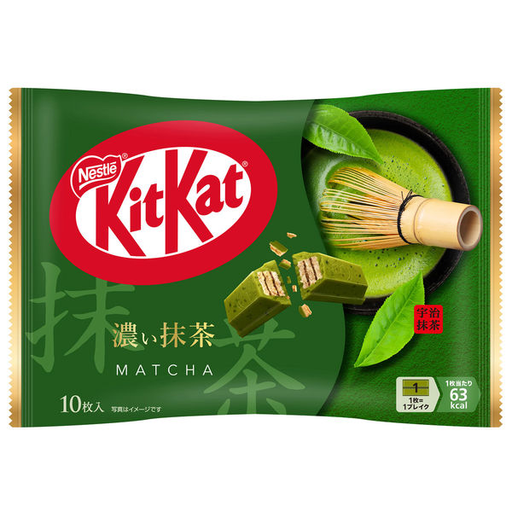
NETSLE Kit Kat Mini Rich Matcha Otona Amasa, 113 g pack

NETSLE Kit Kat Mini Rich Matcha Otona Amasa, 113 g

The mini format lets you choose how much to have as a snack. The 113 g refers to the pack, so check the nutrition information per piece and the allergens for this variety before taking it with you.

View on Joybuy

Nestle KitKat Strawberry Short Cake, 9 pieces, 104.4 g

Nestle KitKat Strawberry Short Cake, 9 pieces, 104.4 g

The 9 pieces let you choose a serving for a snack when you’re not exercising. The pack weighs 104.4 g; check the nutrition information for the piece you plan to eat and the allergens listed for this recipe.

View on Joybuy

Frequently asked questions

Is Nutri-Score required on chocolate bars in France?

No. The DGCCRF states that displaying Nutri-Score is voluntary. Nutrition labelling on prepacked foods is a separate requirement, with some exceptions set out in the regulations. Use the available nutrition information to compare products.

Does the tax on sugary drinks apply to chocolate bars?

No, not under this levy. Article 1613 ter of the French General Tax Code, published by Légifrance, covers drinks and liquid preparations for drinks; a solid chocolate bar doesn’t fall within this definition. Its sugar content is still worth checking on the label.

How should you factor in the carbs in a bar on a long ride?

Count the carbs in the serving you eat towards your total intake during exercise. World Athletics recommends 30 to 60 g per hour for 1 to 2.5 hours of exercise, then up to 90 g per hour for sessions lasting more than 2.5 hours; a bar may provide only part of this amount.

Can a protein bar replace a bar chosen for its carbs?

Not necessarily. If you’re looking for fuel during endurance exercise, compare the carbs per serving first: the words “high-protein” don’t tell you how much it contains. For a snack, also check the energy, ingredients and allergens for the product you choose.

Which allergens should you check before taking a bar with you?

Read the ingredients list and allergen information for the exact variety. Depending on the product, the KitKat and Carrefour recipes featured here include milk, wheat, soya, peanuts, egg or tree nuts; other recipes may differ.