To keep chocolate on hand to share with your morning coffee, choose a multipack based on how many people and mornings you’re catering for. If lunchboxes are your priority, look at smaller formats and how they’re packaged: a smaller bar isn’t necessarily individually wrapped. In either case, check the ingredients, allergens and sugars per 100 g for the exact product; according to Santé publique France, displaying the Nutri-Score is voluntary.
Who are these formats for?
Households sharing chocolate at breakfast
If everyone has a few squares with their coffee, a multipack means you can keep several bars in the cupboard. Carrefour lists, among other options, packs of six 100 g Milka bars and a pack of three 100 g Côte d’Or bars. Choose the quantity to suit how you’ll use it, and don’t confuse the number of bars with individual portions.
Parents preparing lunchboxes
A smaller bar or an easy-to-split portion can make it simpler to divide chocolate between several lunchboxes. Before choosing a product for a child, check its ingredients and allergens on the packaging; the format alone doesn’t tell you what’s in the recipe.
Shoppers comparing labels
When comparing recipes to enjoy with your morning coffee, check the sugars and other nutritional values per 100 g, as well as the ingredients list. The Nutri-Score can provide extra information if it appears on the packaging; Santé publique France states that displaying it is voluntary.
What should you look for before buying?
Start with the format that suits how you’ll use it — bars to share or portions to divide up — then compare the labels of the products you’ve shortlisted.
| What to consider |
What to check |
Who is it for? |
| Stocking up and sharing |
Number of bars and total pack weight. |
I want to keep several bars in the cupboard so everyone can have chocolate with their coffee. Around 40% of consumers prioritise having a supply to share. |
| Dividing between lunchboxes |
Weight of each unit and whether any portions are individually wrapped. |
To prepare several lunchboxes without opening a large bar each time, I need a format that’s easy to portion out. This ease of sharing comes first for around 30% of consumers. |
| Ingredients and allergens |
Sugars per 100 g, ingredients and allergens for the exact product; Nutri-Score, if displayed. |
Before choosing a recipe, I need to be able to check its ingredients, particularly if someone needs to avoid an allergen. Checking the label is the main priority for around 30% of consumers. |
Mistakes to avoid
-
Using the ‘soda tax’ to compare chocolate bars
The levy described by the French Ministry of the Economy applies to non-alcoholic drinks; it tells you nothing about the ingredients in a chocolate bar.
To compare chocolate bars, check the sugars per 100 g and the ingredients list for the product you’re considering.
-
Assuming the Nutri-Score is compulsory
According to Santé publique France, producers display the Nutri-Score voluntarily. Its absence is therefore no reason to judge what’s in a chocolate bar. Nutritional declarations, on the other hand, are covered by the EU regulation on the provision of food information to consumers.
If the logo is displayed, use it as extra information when comparing similar products; also read the nutritional values, ingredients and allergens.
-
Assuming the allergens based on the type of chocolate alone
Two milk chocolate recipes or two dark chocolate recipes can have different ingredients. Carrefour’s product information for Côte d’Or L’Original lists milk and soya, and also says it may contain nuts; these details don’t apply to every bar from the brand.
If you’re packing chocolate for someone with an allergy, check the information for the exact product on its packaging.
Brands to know when comparing formats
Milka
Carrefour lists Milka bars in a range of recipes, including multipacks of several 100 g bars.
- A pack of six 100 g bars is among the formats listed by Carrefour for stocking up.
- Ingredients and allergens vary by recipe, so check each product separately.
Côte d’Or
Carrefour lists Côte d’Or L’Original in a pack of three 100 g bars, among other options.
- This pack lets you keep several whole bars for sharing on different occasions.
- Allergen information for L’Original shouldn’t be assumed to apply to other Côte d’Or recipes.
Lindt
E.Leclerc DRIVE includes Lindt among the chocolate brands in its range.
- If you’re looking for this brand, check the format of the specific product.
- Don’t assume a Lindt bar is sold in a multipack: check the packaging details for the product you choose.
Carrefour
The retailer lists multipacks of Milka and Côte d’Or bars, with the number of bars and pack weight specified.
- This information makes it easier to compare formats for stocking up or sharing.
- Check the details for each recipe rather than assuming every multipack has the same ingredients.
E.Leclerc / Marque Repère
E.Leclerc DRIVE lists its Marque Repère Tablette d’Or, Equador and Bio Village products, as well as several well-known brands.
- The range lets you compare own-brand products with well-known brands.
- For each product you’re considering, check whether it’s a single bar or a multipack, then read the label.
Selected multipacks and smaller formats on Joybuy
These products include multipacks of 100 g chocolate bars for sharing and a pack of 50 g chocolate bars. If you’re preparing lunchboxes, check the packaging before relying on the portions being individually wrapped.
 Image unavailable
Poulain Extra Dark, 3 × 100 g
A pack to consider if you’d like to keep several dark chocolate bars on hand to enjoy with coffee and share at home.
Three 100 g bars, weighing 300 g in total. If you’re dividing them between several lunchboxes, check that the packaging suits your needs.
View on Joybuy
 Image unavailable
Milka Alpine Milk, 3 × 100 g
This milk chocolate multipack is well suited to keeping in the cupboard or sharing over coffee.
Three 100 g bars, weighing 300 g in total. If nuts or other allergens matter to you, check the information on this product’s packaging: the details given for this recipe differ.
View on Joybuy
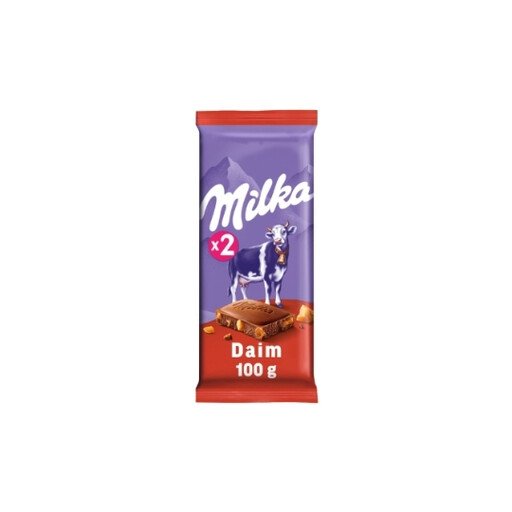 Image unavailable
Milka Milk I737, 2 × 100 g
Two milk chocolate bars could be a good choice if you’re looking for a smaller multipack to keep for several coffees.
Two 100 g bars, weighing 200 g in total. Be sure to check the packaging for the type of nuts and other allergens: the information given for this product doesn’t match.
View on Joybuy
 Image unavailable
Toblerone Milk, 3 × 50 g
This pack contains smaller bars than a 100 g chocolate bar, making it worth considering if you prefer to divide up several individual bars.
Three 50 g milk chocolate bars, weighing 150 g in total. These aren’t 100 g bars; before using them for lunchboxes, check the ingredients and how the bars are packaged.
View on Joybuy
Frequently asked questions
Can the ‘soda tax’ help you choose a chocolate bar?
No: the levy described by the French Ministry of the Economy applies to non-alcoholic drinks, not to choosing chocolate bars. To compare two chocolate recipes, check their ingredients and sugars per 100 g instead.
Is the Nutri-Score compulsory on chocolate bars sold in France?
No. Santé publique France states that displaying it is voluntary; nutritional declarations are covered by the EU regulation on the provision of food information to consumers. If the Nutri-Score is shown, it adds to the nutritional information and ingredients list but doesn’t replace them.
Which allergens should you check before putting chocolate in a lunchbox?
Check the allergens listed on the packaging of the exact product. As one example that applies only to this product, Carrefour’s product information for Côte d’Or L’Original lists milk and soya, and also says it may contain nuts; another recipe may carry different allergen information.


