New to full-bodied dark chocolate
You’re looking for a pronounced cocoa flavour, but would rather choose an intensity that suits your taste than jump straight in with a bar containing 85% cocoa or more.


For a quick breakfast, start by choosing a dark chocolate bar with an intensity you enjoy. A 70% cocoa bar can be a good starting point, but there’s no need to opt for a higher cocoa content. However, the percentage alone won’t tell you how much sugar a bar contains or whether it may contain allergens. Compare the nutrition information per 100 g and check the packaging of the specific bar you choose.
You’re looking for a pronounced cocoa flavour, but would rather choose an intensity that suits your taste than jump straight in with a bar containing 85% cocoa or more.
You’d like to have a few squares with breakfast and check the sugar, energy and fat per 100 g, rather than relying on the words ‘dark chocolate’ alone.
The ingredients list, organic or Fairtrade claims, and allergen information all matter to your choice. Check these details on the specific bar you’re buying.
For a quick breakfast, start with the intensity you prefer, then read the label on the bar you’ve chosen. Two recipes with the same cocoa percentage can still contain different ingredients.
| Criterion | What to check | Who is it for? |
|---|---|---|
| Cocoa intensity | The cocoa percentage and flavour description of the exact product. | If I have a few squares in the morning, I want a dark chocolate with an intensity I enjoy, without immediately choosing a higher cocoa content. Around 36% of consumers put this flavour preference first. |
| Sugars and nutritional values | Sugars, energy and fat per 100 g, using the same basis for comparison. | Before making a chocolate bar a regular part of my breakfast, I want to be able to check its nutritional composition. This is a priority for around 29% of consumers. |
| Ingredients and allergens | The ingredients list, highlighted allergens and any ‘may contain’ information on the packaging. | When certain ingredients or allergens affect what I buy, the word ‘dark’ isn’t enough to help me choose. Around 21% of consumers prioritise checking this information. |
| Format and sourcing | The net weight and any organic or Fairtrade claims specific to the product. | If I’m keeping a bar at home, I want a suitable size and to know exactly what its sourcing claims mean. Around 14% of consumers put this criterion first. |
In France, the contribution set out in Article 1613 ter of the General Tax Code applies to drinks and liquid preparations for drinks, not solid chocolate bars, according to Légifrance.
When comparing chocolate bars, check their sugar content on the label instead.
Nutri-Score is voluntary in France, as Santé publique France and the DGCCRF explain. Its absence alone tells you nothing about a bar’s nutritional values.
If it appears on the packaging, use it as an additional guide and also check the nutrition information per 100 g, the ingredients and the allergens.
Lindt France’s product information for the 100 g EXCELLENCE Dark 70% bar lists 30 g of sugars per 100 g and warns that traces of allergens may be present. The cocoa percentage is no substitute for checking the details of the specific recipe.
Check the nutrition information, ingredients and ‘may contain’ statements on the packaging you receive.
According to Lindt France, the EXCELLENCE range includes Dark bars with 70%, 78%, 85% and 90% cocoa.
Carrefour France’s organic 70% dark chocolate bar comes in a 200 g format and lists four ingredients in its recipe.
Carrefour France’s product information for an Alter Eco 70% dark chocolate bar mentions organic agricultural ingredients and Fair for Life-certified Fairtrade sourcing.
This selection includes dark chocolate bars listed as 70% in their names, as well as flavoured recipes. If you’re mainly looking for a high cocoa content, check the percentage for the specific product you choose, especially for recipes with inclusions.
 Image unavailable
Worth considering if you’re looking for a dark chocolate bar with a stated cocoa percentage. It comes in a 100 g format. Check the label for ingredients, nutrition information and allergens.
 Image unavailable
The 35 g mini format may suit you if you’re after a small bar for the morning. Check the nutrition information per 100 g and the allergen details for this version rather than assuming they’re the same as those for the 100 g bar in the range.
 Image unavailable
This recipe is for anyone who’d prefer lemon and green pepper flavours to plain dark chocolate. The bar weighs 100 g. To compare its cocoa content with a classic dark chocolate bar, check exactly which part of the recipe the stated percentage applies to.
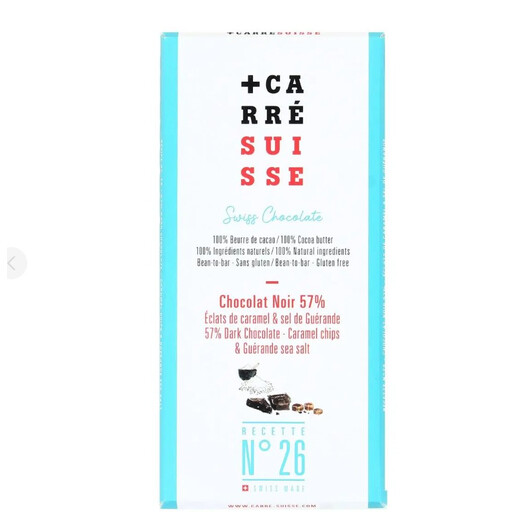 Image unavailable
Consider this if you’d prefer a recipe with caramel and Guérande sea salt to plain dark chocolate. It comes in a 100 g format. If a high cocoa content is your main priority, check the percentage along with the ingredients and allergens for this recipe.
No. Santé publique France and the DGCCRF state that displaying it is voluntary. To compare pre-packed chocolate bars, check the nutrition information and ingredients list, whether or not the Nutri-Score appears on the packaging.
No. Article 1613 ter of the General Tax Code, published by Légifrance, sets out a contribution that applies to drinks and liquid preparations for drinks; a solid chocolate bar doesn’t fall within this definition. Its sugar content is still worth checking when comparing products.
Compare the sugars, energy and fat per 100 g, then check the ingredients and allergen information. The DGCCRF explains that showing nutrition information per 100 g makes it easier to compare pre-packed foods, even when the bars are different weights.