Families sharing chocolate at breakfast
If you spread your chocolate over several mornings, individually wrapped bars let you keep the other bars sealed. Carrefour, for example, stocks packs of three 100 g bars from several brands.


If you want to spread chocolate bars across several mornings or keep one sealed for a lunchbox, choose a pack of individually wrapped bars. If you’re sharing at home there and then, one large bar may be enough. Check the weight of each bar and the allergens in the specific recipe: a 100 g bar isn’t a small individual portion. A multipack of cooking chocolate is intended first and foremost for baking, even if it’s stocked alongside chocolate bars.
If you spread your chocolate over several mornings, individually wrapped bars let you keep the other bars sealed. Carrefour, for example, stocks packs of three 100 g bars from several brands.
An unopened bar can be handy to take with you, but check its weight and the specific recipe. A whole 100 g bar shouldn’t be mistaken for a small individual portion in a lunchbox; check the ingredients and allergen information too.
When comparing packs of different sizes, check the nutritional information per 100 g, particularly the sugars and fat. Nutri-Score can provide another point of reference when it appears on the packaging, but it doesn’t replace checking the recipe.
First decide whether you want bars to stay individually wrapped for different occasions, to share straight away or to use in a recipe. Then check how each bar is packaged and read its label.
Choose this if: you want to keep bars sealed for several breakfasts or days out.
Bear in mind: a 100 g bar is still a whole bar, not an individual portion.
Choose this if: several people will share the same bar at home.
Bear in mind: once opened, it won’t leave you with individually wrapped bars for another occasion.
Choose this if: you’re mainly buying it for baking.
Bear in mind: the 2 × 205 g pack of Nestlé Dessert Noir stocked by Carrefour is cooking chocolate, rather than a format chosen for taking a bar out and about as it is.
| What to consider | What to check | Who is it for? |
|---|---|---|
| Format and sharing | Count the individually wrapped bars and check the weight of each one, not just the total pack weight. | I want to keep bars sealed for several mornings or a lunchbox. Around 31% of shoppers put this ability to portion the pack first. |
| Sugars and ingredients | Compare the sugars and fat per 100 g; check the Nutri-Score if it’s shown. | Before choosing a recipe for breakfast, I want to be able to compare its nutritional information. This is the top priority for around 31% of shoppers. |
| Allergens | Read the ingredients and any ‘may contain’ statements for the specific product. | If a bar is going in a lunchbox, I need to know whether its recipe is suitable for the person who’ll eat it. Checking allergens is a priority for around 23% of shoppers. |
| Storing the pack | Check the best-before date and storage instructions on the packaging. | I’d prefer a pack I can store and use on the occasions I have planned. Around 15% of shoppers put managing their stock first. |
In France, the DGCCRF states that prepacked foods generally carry a nutrition declaration; the Nutri-Score logo, however, is optional. The per-100 g values give you a common basis for comparing two recipes, but they don’t tell you how much you’ll actually serve.
A pack may contain several full-size bars. The three- to six-bar packs of 100 g bars stocked by Carrefour aren’t individually wrapped bite-sized pieces.
Check the weight and packaging of each bar. If you’re looking for a small portion that’s ready to take with you, make sure the product is explicitly described as that format.
According to information from the French ministry responsible for the economy, Nutri-Score is optional. If it’s not displayed, you should still check the nutritional values.
Compare the information per 100 g and the ingredients list; use the logo as an additional guide when it’s shown.
Ingredients vary between recipes. The Joybuy listing for MILKA Alpine Milk in a 3 × 100 g pack mentions milk, hazelnuts and soya, as well as possible traces of other nuts and wheat.
For a lunchbox, check the label on the specific product you’ve bought, including any ‘may contain’ statements. The DGCCRF states that allergenic ingredients must be highlighted in the ingredients list.
Carrefour stocks packs of milk chocolate bars in 5 × 100 g and 6 × 100 g formats; Joybuy lists a 3 × 100 g Alpine Milk pack.
Carrefour stocks L'Authentique milk chocolate in a 3 × 100 g pack; a dark chocolate option is also available in a 5 × 100 g pack.
Carrefour stocks L'Original milk chocolate in a 3 × 100 g pack; Joybuy also stocks a 200 g Classic Milk sharing bar.
Carrefour stocks a 2 × 205 g pack of Dessert dark chocolate as cooking chocolate.
The range includes a milk chocolate bar sold by Carrefour in a 3 × 100 g pack.
The E.Leclerc range includes Tablette d'Or milk chocolate in a 3 × 100 g pack.
These products show two breakfast options: packs of individually wrapped bars to spread across different occasions, and a single 200 g bar to share at home. Before packing one in a lunchbox, check the recipe and the weight of the bar you’ll be taking with you.
 Image unavailable
For keeping bars sealed between breakfasts, this pack contains three 100 g bars. A whole bar isn’t a small individual portion; check the ingredients and allergen information on the packaging before taking one with you.
 Image unavailable
The three 100 g bars can stay individually wrapped for different mornings. The product information for this item lists milk, hazelnuts and soya, as well as possible traces of other nuts and wheat: check the exact packaging before preparing a lunchbox.
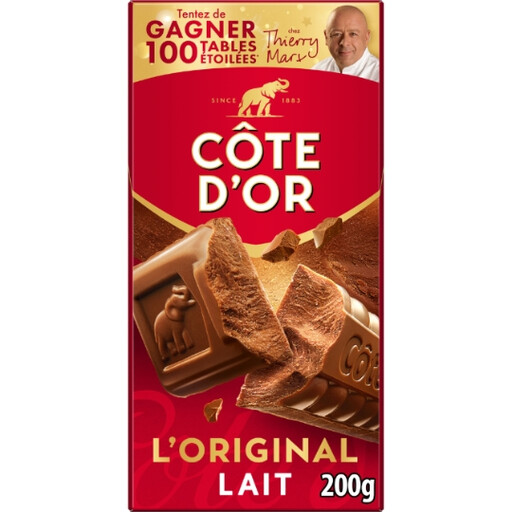 Image unavailable
This single 200 g bar is better suited to sharing at home than to dividing into individually wrapped bars for several lunchboxes. If more than one person will eat it, check that the ingredients are suitable for everyone.
No. The scale published by BOFiP-Impôts relates to a levy on non-alcoholic drinks containing added sugars; a chocolate bar isn’t a drink. If sugar content is important to you, compare the nutritional values per 100 g shown on the packaging.
No. In France, the ministry responsible for the economy states that displaying Nutri-Score is optional. The DGCCRF says that prepacked foods generally have to carry a nutrition declaration: use the per-100 g values to compare recipes, whether or not the logo is shown.
First check the weight of the individually wrapped bar, then read the ingredients and allergen information for the specific product. The DGCCRF states that allergenic ingredients must be highlighted; another recipe from the same brand doesn’t tell you whether the one you’re taking with you is suitable.
Check the best-before date and the instructions on the pack before choosing its size. If you plan to use the bars on several occasions, keep unopened bars according to these instructions and check the information for each product.