For a single break
You want to open a bar whose weight already matches the amount you plan to eat. For example, Lindt France offers a 35 g EXCELLENCE 70% Dark mini bar; check that this size suits you before choosing the recipe.


For a solo break, choose a mini bar if its weight matches the amount you want to eat in one go; a standard bar is a good option if you plan to enjoy it over several breaks. Before choosing between recipes, compare the nutritional values per 100 g and check the ingredients and allergens for the exact product.
You want to open a bar whose weight already matches the amount you plan to eat. For example, Lindt France offers a 35 g EXCELLENCE 70% Dark mini bar; check that this size suits you before choosing the recipe.
You’re choosing between several bars labelled as containing 70% cocoa. Check the sugars and fat in the nutritional information, then look at the ingredients list and allergen information too: the cocoa percentage won’t answer all your questions.
You could enjoy a bar over the course of the week or set some aside for a recipe. Carrefour France lists 170 g and 200 g sizes; these don’t, on their own, define the amount for a single break.
First, decide whether you’ll finish the bar in one go or split it up. Then compare the recipes and label information on the product you’re thinking of buying.
| Criterion | What to check | Who is it for? |
|---|---|---|
| Size and portion | The net weight and the amount you plan to eat once the bar is open. | If I want to finish my bar during a single break, its weight should match that intention. Around 27% of consumers put portion size first. |
| Ingredients and nutritional content | Sugars and fat per 100 g, as well as the ingredients in the specific recipe. | To compare two recipes without confusing bar size with composition, I start with the values per 100 g. This is the top priority for around 33% of consumers. |
| Allergens | The ingredients list and any warnings on the product you buy. | If I need to avoid an ingredient, the words ‘dark chocolate’ aren’t enough to confirm that the recipe is suitable for me. Around 20% of consumers put this check first. |
| How you’ll use it during the week | The net weight and the stated purpose of the bar, particularly if you also plan to cook with it. | If I have several breaks or a recipe in mind, I look for an amount that suits those uses rather than a single portion. This is the top priority for around 20% of consumers. |
A 35 g mini bar, such as the one listed by Lindt France, suits a different way of planning your breaks than a 90–100 g bar for tasting. The 200 g Carrefour Bio and 170 g Nestlé Dessert bars listed by Carrefour France mean you’ll need to plan what to do with the rest if a solo break is your main aim.
The DGCCRF states that nutritional information is given per 100 g or 100 ml to make products easier to compare. For a chocolate bar, this provides a basis for comparing recipes; the amount you actually eat is a separate consideration. A stated cocoa content of 70% describes the recipe, but doesn’t replace checking the sugars, fat and ingredients.
The French legislation published by Légifrance concerns a levy on drinks, not solid chocolate bars. So this tax-related criterion won’t help you choose between two bars.
Instead, compare the products’ net weight, ingredients and nutritional values.
Santé publique France describes Nutri-Score as optional, supplementary information. Its absence doesn’t mean that nutritional information is missing.
If it is shown, read it alongside the nutrition table and ingredients list, rather than treating it as a personal recommendation in its own right.
Two bars with the same stated cocoa percentage can have different recipes and nutritional values. The percentage also doesn’t tell you how much you’ll eat.
Compare the values per 100 g, then relate them to the portion you actually plan to have.
Lindt France warns that its 100 g EXCELLENCE 70% Dark bar may contain milk, almonds and hazelnuts. Carrefour France states that its 90 g Côte d’Or Noir 70 % Bio bar may contain milk and tree nuts.
Check the ingredients and warnings on the exact product every time you buy it; don’t assume they’re the same as for another recipe.
Lindt France lists a 35 g EXCELLENCE 70% Dark mini bar and a 100 g EXCELLENCE 70% Dark bar.
Carrefour France lists a 90 g Côte d’Or Noir 70 % Bio bar, a size to consider if you plan to have a few squares or enjoy it over several breaks.
Carrefour France lists a 200 g Carrefour Bio Noir 70 % bar.
Carrefour France lists a 170 g Nestlé Dessert Noir 70 % bar.
Milka France offers bars in a range of generous sizes.
These Joybuy products include a 35 g mini bar for a planned break and 100 g bars to divide up if you’re planning several breaks during the week.
 Image unavailable
Worth considering if 35 g is the amount you’re planning to have during your solo break. The product name describes a dark chocolate with 70% cocoa; check the ingredients and allergen information on the packaging you choose.
 Image unavailable
The 100 g size suits a plan to enjoy the bar over several breaks if you’d like to decide for yourself how much to have. For this recipe, check the ingredients list and any serving guidance on the packaging.
 Image unavailable
This 100 g bar is suited to enjoying over several breaks if you’re looking for a recipe with lemon zest and green pepper. Check the allergen information for the exact product before choosing.
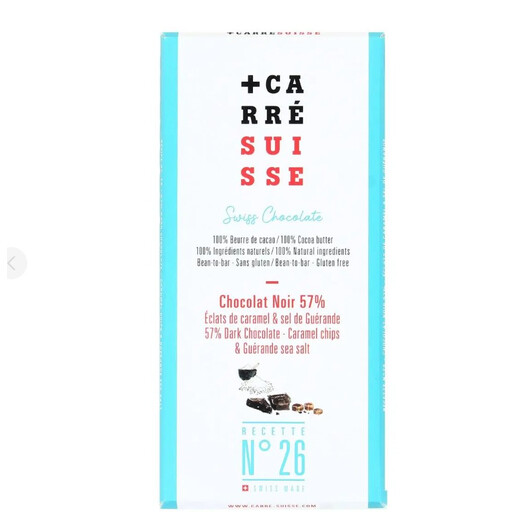 Image unavailable
Choose this size if you plan to enjoy a bar combining dark chocolate, caramel and Guérande salt over several breaks. Caramel is part of the recipe, so check the ingredients and allergens on the packaging.
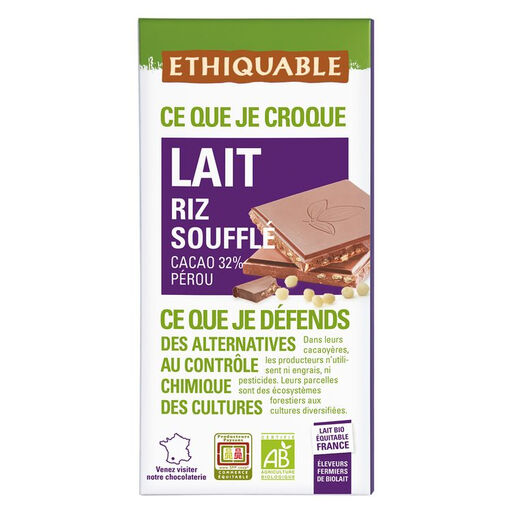 Image unavailable
This 100 g milk chocolate bar with puffed rice is worth considering for several breaks rather than as a pre-defined portion. It contains milk; also read the other allergen information for the product you buy.
No. The levy described by Légifrance applies to drinks; a solid chocolate bar doesn’t fall into this category. To choose a bar, look instead at its weight and ingredients.
No. Santé publique France describes it as optional, supplementary information. The DGCCRF states that nutritional information for prepacked foods is given per 100 g or 100 ml. To compare chocolate bars, check their values per 100 g, whether or not they display Nutri-Score.
First compare the ‘of which sugars’ figures per 100 g on each label, using the basis specified by the DGCCRF. Then consider how much you plan to eat: finishing a 35 g mini bar and finishing a 100 g bar aren’t the same portion.
No. Lindt France and Carrefour France warn that some 70% dark chocolate bars may contain milk or tree nuts. If you need to avoid these ingredients, check the ingredients list and warnings for the exact product before buying.