What should you compare?
First decide how much you’ll be sharing, then compare recipes on a like-for-like basis and check they’re suitable for everyone there.
| What to compare |
What to check |
Who is it for? |
| Nutritional composition |
Compare energy, sugars, fat (including saturates) and protein per 100 g. |
If chocolate is part of my post-workout snack, I want to know its nutritional values before choosing; around 33% of consumers rank nutritional composition as their main concern. |
| Amount to share |
Check the net weight and the number of bars if they’re sold in a multipack. |
When several people are eating together after a workout, I want enough to go round without opening a second bar unnecessarily; pack size is the priority for around 27% of consumers. |
| Allergens |
Read the highlighted allergen ingredients and check for any ‘may contain’ warnings on the specific variant. |
Before offering chocolate to the whole group, I need to know whether the recipe is suitable for anyone with an allergy; around 20% of consumers prioritise this check. |
| Taste and texture |
Choose between milk chocolate, dark chocolate and recipes containing praline, nuts or raisins. |
If the ingredients are suitable for the group, I can choose between a plain bar and one with added ingredients, depending on everyone’s tastes; this is the main criterion for around 20% of consumers. |
Chocolate bars available on Joybuy
These 180 g and 200 g bars are suitable for sharing after a workout. Choose between milk chocolate with added ingredients, plain milk chocolate and dark chocolate to suit the group, then check the label of each variant.
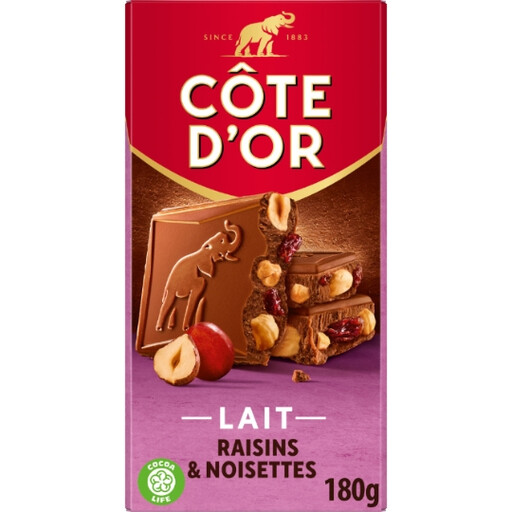 Image unavailable
Côte d'Or Lait Raisins & Noisettes, 180 g
A milk chocolate recipe with raisins and hazelnuts to share. Joybuy’s product information states that this bar contains 13% hazelnuts and 11% raisins. In particular, check for milk, soya and nuts before offering it to the group.
View on Joybuy
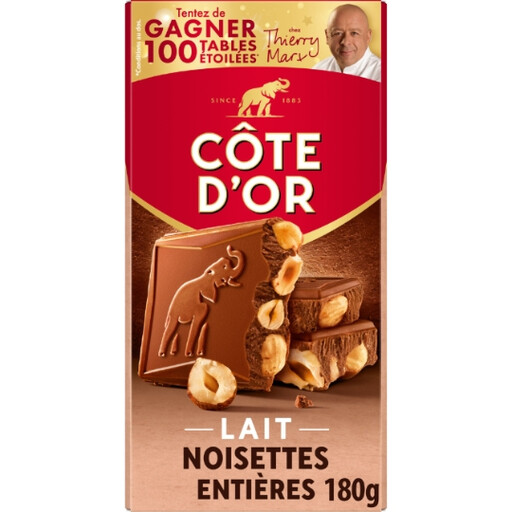 Image unavailable
Côte d'Or Lait Noisettes Entières, 180 g
For a group who prefer whole hazelnuts to raisins. The bar weighs 180 g; check the allergens on the packaging of this variant before sharing.
View on Joybuy
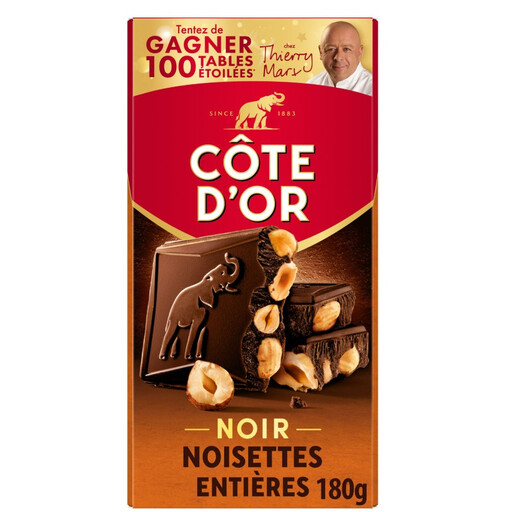 Image unavailable
Côte d'Or Noir Noisettes, 180 g
A dark chocolate recipe with hazelnuts to share. The net weight is 180 g; compare its nutritional values per 100 g with those of the milk chocolate bars instead of judging its nutritional composition by chocolate type alone.
View on Joybuy
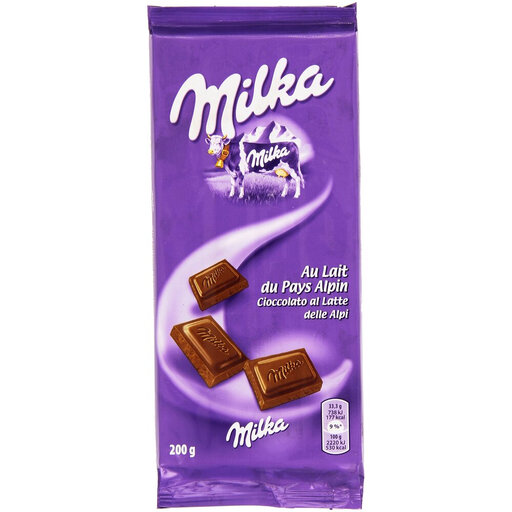 Image unavailable
Milka Milk Chocolate, 200 g
A 200 g milk chocolate bar to share. Check the sugars on the packaging of the variant on sale, and look for information about milk, hazelnuts, soya and any possible traces before offering it to everyone.
View on Joybuy
 Image unavailable
Poulain Extra Noir, 200 g
A 200 g dark chocolate bar to share, without the added ingredients featured in the other product titles in this selection. If you’re buying it for someone with an allergy, read the ingredients list and check the packaging for any ‘may contain’ warnings.
View on Joybuy
Frequently asked questions
Does the ‘soda tax’ apply to chocolate bars in France?
No. The levy on sugary drinks described by the Ministry of the Economy applies to drinks, not chocolate bars. To find out how much sugar a bar contains, check its nutrition declaration.
Does a chocolate bar have to display a Nutri-Score?
No. In France, the DGCCRF describes Nutri-Score as voluntary labelling. A nutrition declaration, on the other hand, is compulsory for prepacked foods. Compare products per 100 g, whether or not they display a Nutri-Score.
Is one chocolate bar enough for a post-workout snack?
Choosing a chocolate bar alone doesn’t mean it meets all your needs after exercise. If the nutritional composition of your snack matters to you, consider its nutritional values as part of the whole snack rather than relying on the ‘sharing size’ format.
How can I check allergens before sharing a chocolate bar?
Read the highlighted allergen ingredients and check the packaging of the specific variant for any ‘may contain’ warnings. According to the DGCCRF, allergen ingredients must be identified in the ingredients list. Don’t assume that another recipe from the same brand carries the same warnings.


