
Livraison le jour même ou le lendemain

Qualité garantie

Débloquez vos offres de bienvenue: Livraison GRATUITE | Jusqu'à -80 % | 30 jours d'essai gratuits à JoyPlus
Téléchargez l'application
A craving for chips from around the world can quickly turn into disappointment: a half-empty bag, artificial flavours, overpowering spices, or allergens discovered too late. Whether it's a family aperitif, a night with friends, or a first foray into Asian snacks, a few simple checks are all it takes to choose based on your tastes and the occasion, rather than relying solely on the packet's appearance.
"Barbecue", "truffle", "seafood" or "spicy chicken" often describe a flavour profile. That doesn't necessarily mean the ingredient in question is present in any significant quantity. Take a look at the ingredients list and spot the allergens, which are usually highlighted.
Brets Camembert and Truffle chips, for example, contain 2.9% camembert powder and just 0.06% summer truffle powder. The taste therefore also comes from flavourings and seasoning. A useful detail to help you avoid any unpleasant surprises.
Exotic chips can contain soya, wheat, milk, crustaceans, fish or sesame. Recipes vary depending on the country of manufacture, and a product may also be prepared in a facility that handles other allergens.
Lay's Grilled Squid chips, for instance, mention soya, wheat, molluscs, milk and sesame. Nongshim Shrimp Crackers contain wheat, crustaceans, soya and lactose. In every case, check the packaging you receive: that is the definitive source and contains the most up-to-date information.
A 70 to 80 g bag is suitable for individual snacking or a small tasting plate. For a group aperitif, 120 or 125 g formats are more practical. That said, several smaller bags often allow you to offer a wider variety of flavours.
Once the packet is opened, moisture quickly softens the chips. Seal it carefully and store it in a cool, dry place away from sunlight. Puffed products, like some Asian crackers, can lose their crunch even faster.
Potato chips are generally denser and crunchier. A crinkle cut holds seasoning powders better and works particularly well with dips. Rolled or puffed corn chips offer a lighter feel, while shrimp crackers often rely on an airy texture.
Also look at the potato content when it's stated. Vico Streetfood references contain 62% French potatoes, compared to 64.9% for Brets Paysanne. This is a concrete detail that allows you to compare products on an objective basis.
To create a varied platter, combine a mild recipe with a more assertive option: barbecue chips, curry, nori seaweed or chilli. Mentions of "hot", "spicy" or "chilli" generally indicate a significantly higher heat level than a simply smoked recipe.
The salt content provides another point of reference, even if it doesn't fully predict the mouthfeel. Brets Brie and Truffle chips contain around 1.5 g of salt per 100 g, compared to 2 g for Vico Thai Beef Street Food. However, keep in mind the actual quantity you consume.
Compare the net weight, fat, saturated fat and salt per 100 g. A stated serving size of around 30 g can help with sharing, but an individual bag is often eaten in one go. Chips remain aperitif snacks to be enjoyed occasionally, as part of a balanced diet.
Some products require extra attention. Lay's Grilled Squid and Lay's Korean Barbecue chips mention the sweetener E951, or aspartame, along with a warning for people with phenylketonuria. TianNiao Shrimp Slices, on the other hand, are not ready to eat: they need to be immersed for a few seconds in oil heated to between 160 and 180 °C. So they're not a bag you can simply open and enjoy.
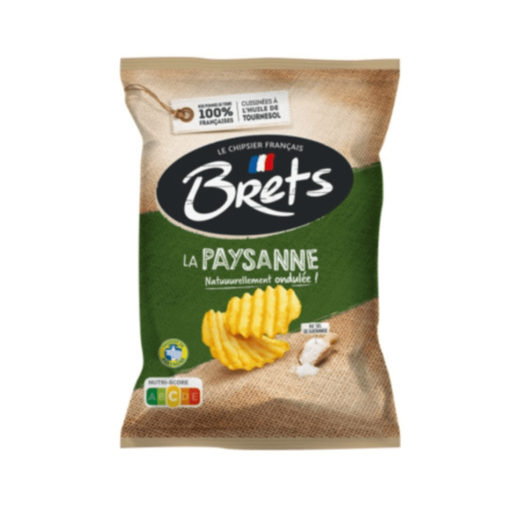
Why this choice suits this profile: With its French potatoes, sunflower oil and Guérande salt, this recipe focuses on a simple, familiar flavour – ideal for getting started.
The short ingredients list is easy to read and avoids a recipe drowned in seasonings.
125 g, crinkle cut, 64.9% potatoes and no declared allergen on the provided product sheet.
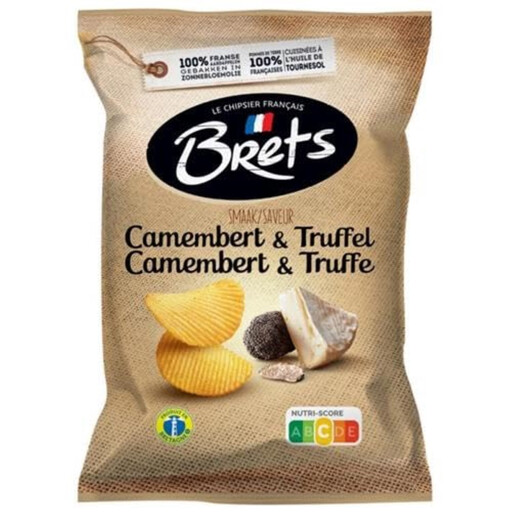
Why this choice suits this profile: The combination of camembert and truffle is aimed at lovers of generously flavoured chips, perfect for serving with a glass of wine or a cheese board.
The percentages of camembert and truffle powder are stated, allowing you to distinguish between the flavour promise and the actual composition.
Made in France, sunflower oil, crinkle cut and milk content clearly indicated.
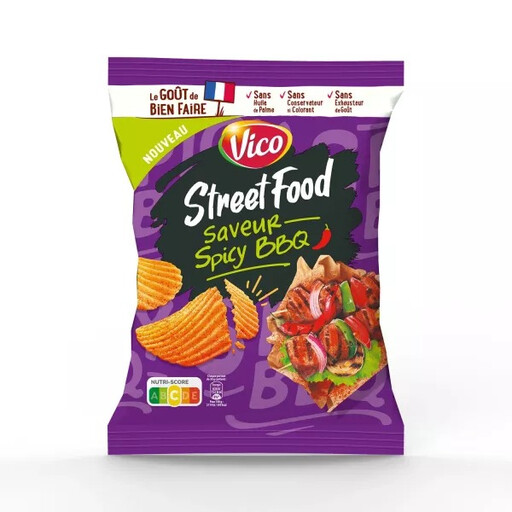
Why this choice suits this profile: Fans of bold flavours can add this to an assortment of spicy chips for a casual meal or a large gathering.
The smoked and spicy profile is clearly stated. The product sheet also confirms the absence of palm oil, colourings and preservatives.
120 g, 62% French potatoes, sunflower and rapeseed oils, and 1.3 g salt per 100 g.
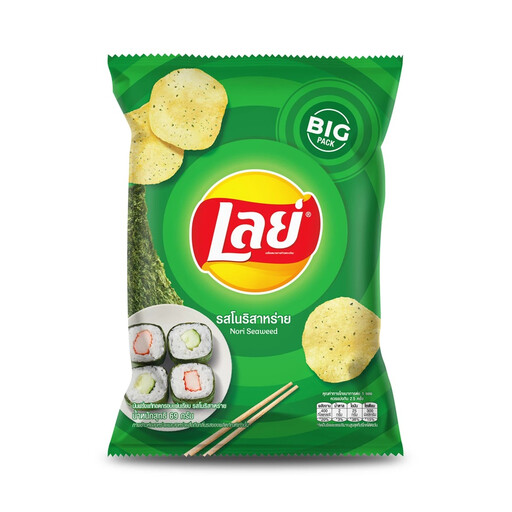
Why this choice suits this profile: With its nori seaweed seasoning and 75 g bag, this product lets you discover an Asian-inspired flavour without committing to a large format.
The presence of fish and soya is indicated, as are the flavour enhancers – so you can make an informed choice.
A punchy nori flavour, a potato chip texture and a compact format for risk-free tasting.
We've selected a comprehensive, real-time updated list of products that meet these exacting criteria and comply with European food safety regulations.
To preserve their crunch, reseal the bag as soon as possible and store it in a dry place away from heat and light. It's best to consume them within a few days. However, always check the manufacturer's recommendations on the packaging.
Plan for several styles: a plain or lightly salted option, a barbecue or spicy choice, and then a more adventurous flavour like nori seaweed or curry. The 120 to 125 g formats are ideal for sharing, while smaller bags allow you to offer less familiar flavours for people to try.
No. Some are mild or simply salted, like classic shrimp crackers. Mentions of "hot", "spicy" or "chilli" generally indicate a higher intensity, but only the detailed recipe – available on the product sheet and packaging – tells you the actual amount of chilli used.