
Livraison le jour même ou le lendemain

Qualité garantie

Débloquez vos offres de bienvenue: Livraison GRATUITE | Jusqu'à -80 % | 30 jours d'essai gratuits à JoyPlus
Téléchargez l'application
Chinese snacks are loved for their unique textures, individual portions and spicy, sweet or savoury flavours. But between the marketing promises, recipes that can be quite different from what you expect, and storage considerations, buying online can sometimes throw up a few surprises. To find Asian snacks that work for a quick bite, an aperitif, travelling or a break at the office, it’s better to look at the ingredients and preparation method rather than relying solely on the packaging.
Some products can be enjoyed straight from the packet, such as dried tofu, dried fruit or cereal bars. Others need to be cooked before eating. Glutinous rice dumplings, for example, are stored in the freezer and must be boiled in water. TianNiao prawn crackers, meanwhile, need to be fried in oil heated to between 160 and 180 °C.
So take the time to check the “Instructions for Use” section. A product presented as a snack might actually be an ingredient that needs preparing.
A red colour doesn’t tell you how spicy something is. The presence of chilli, Sichuan pepper, garlic, soy sauce or flavourings can significantly change the taste profile. For spicy Chinese snacks, look at the ingredient list and the salt content: some products contain over 3 g of salt per 100 g.
Labels like “vegetarian” also deserve a careful look. A recipe based on wheat gluten, soya or konjac can be perfectly suitable for a vegetarian diet, while still containing allergens, additives or flavour enhancers.
A large bag is handy for sharing at an aperitif, but its contents may lose their crunch once opened. Individual portions, such as a box of 20 sachets, are better suited to students, families or anyone taking snacks on the go. Check the best-before date, the net weight and the storage conditions. After opening, some products need to be eaten quickly or kept in the fridge.
European regulations require allergens to be listed in the ingredients. In Chinese snacks, the most common are soya, wheat and gluten, sesame, peanuts, milk, eggs and shellfish.
Products made from tofu, wheat gluten or plant-based proteins are not suitable for people with soya or wheat allergies. Seasoned seeds may also contain traces of other allergens, depending on the manufacturing conditions. Where possible, read the label in English and don’t rely solely on the product name.
To compare two products, start with the values given per 100 g, then relate them to the amount you actually eat. Laoli dried tofu, for example, contains 24.4 g of protein and 2.5 g of salt per 100 g. Wei Long konjac snack has 114 kcal and 3.2 g of salt per 100 g. These figures help you tell the difference between a small occasional treat and a snack you might eat in larger quantities.
The same logic applies to sweet products. MUSHAN dried strawberries contain 70 g of sugar per 100 g, while ready-to-eat chestnuts have around 15 g of sugar per 100 g, according to the Be & Cheer product. This information comes from the labelling and is not a medical recommendation.
For an aperitif, go for a crunchy texture and resealable packaging. When travelling or at work, individual sachets are easier to carry and portion out. Soft products, like tofu, wheat gluten or vegetable skewers, are often eaten straight away, but need to be protected from heat and moisture.
Ready-to-eat chestnuts, dried fruit and sunflower seeds are perfect for a no-prep break. Chinese biscuits, cereal bars and sachima go well with tea, milk or a hot drink.
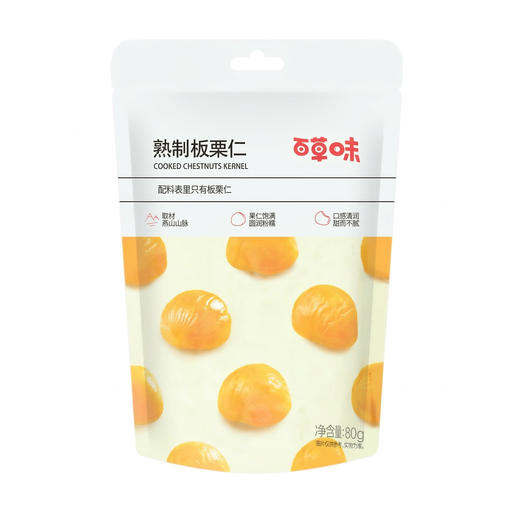
Why this choice suits this profile: This 80 g bag contains only chestnut kernels and can be eaten straight away. Its small size lets you discover Chinese specialities without committing to a large quantity.
Its very short ingredient list avoids confusing a nut-based snack with a heavily seasoned product. However, please bear in mind the “tree nuts” allergen.
100% chestnut kernels according to the product sheet, 80 g and no preparation needed.
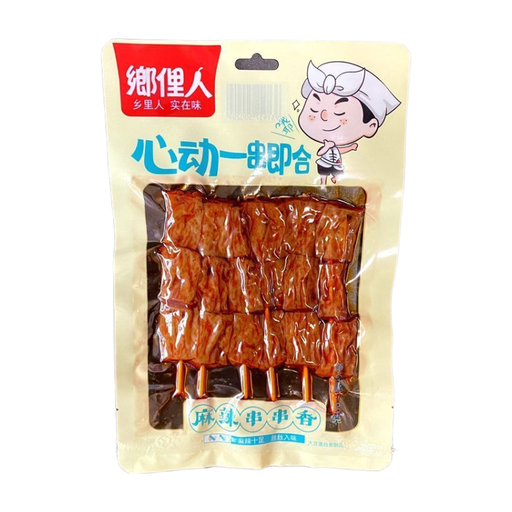
Why this choice suits this profile: Fans of complex flavours will appreciate a recipe combining tofu, soya protein, bamboo shoots, chilli and Sichuan pepper. The product can also be reheated.
The ingredient list details the main components and allergens. At 90 g, the size also avoids ending up with a large bag that’s hard to finish.
A recipe based on plant-based protein, individual packaging and 239 kcal per 100 g according to the product sheet.

Why this choice suits this profile: The box contains 20 sachets of 18 g, making it easy to share, enjoy regular breaks and carry around. Made from konjac, the recipe offers a distinctive texture and a spicy Sichuan-inspired kick.
The separate portions limit exposure to moisture after opening. The product sheet specifies the presence of soya and wheat, as well as 3.2 g of salt per 100 g.
20 individual sachets, 114 kcal per 100 g according to the labelling and ready to eat straight away.
We’ve put together a complete selection, updated in real time, of products that meet these strict criteria and the requirements of European safety regulations.
Chestnuts, dried fruit, five-spice sunflower seeds and Chinese biscuits offer easy-to-like flavours. To discover savoury snacks, dried tofu and wheat-gluten products let you explore new textures without any cooking.
No. Check for the “ready to eat” label. Products made from tofu, konjac or wheat gluten, as well as some dried fruits, can be eaten straight away. Glutinous rice balls, prawn crackers and some frozen products need to be cooked according to the instructions.
Keep dry products in a cool, dry place away from light. Reseal the bags after each use. Chilled or frozen products must be kept in the cold chain, while an opened item should be eaten within the time stated on the packaging.