
Livraison le jour même ou le lendemain

Qualité garantie

Débloquez vos offres de bienvenue: Livraison GRATUITE | Jusqu'à -80 % | 30 jours d'essai gratuits à JoyPlus
Téléchargez l'application
Overwhelmed by the Asian condiment aisle? We get it. Faced with a wall of jars with often indecipherable labels, it's hard to know which one will deliver that authentic Chinese flavour. Yet, whether you want to liven up a simple bowl of rice, accompany a comforting congee, or add some kick to your noodles, Chinese pickled vegetables are a chef's secret that's accessible to everyone.
This guide is here to provide clear, practical pointers and help you choose the perfect jar for your culinary needs, cutting through the marketing jargon.
Before we dive into our top picks, here are the key things to check to ensure you make the right choice, especially if you're shopping at an online Chinese grocery store.
The flavour spectrum of Chinese pickles is vast. To choose wisely, ask yourself what character you want to bring to your dish:
Texture is everything! Preserved Chinese vegetables can be ultra-crunchy, tender, or a subtle mix of both. Mustard stems or lotus roots provide a very satisfying crunch, while other vegetables like long beans (cowpeas) can be softer. It all depends on the use: a crunchy condiment will add dimension to a noodle dish, while a more tender version will blend beautifully into a soup.
Some pickles are ready-to-eat and can be enjoyed as a side dish right out of the jar. Others are designed more as ingredients to be incorporated into a stir-fry or a filling. Individual packets are perfect for a lunchbox or for portion control. Large jars, on the other hand, are more economical for regular family use.
Here are our top picks, each with a distinct personality to expand your culinary repertoire.

Why we love it: The cult-favourite brand Lao Gan Ma needs no introduction. This version features crunchy pickled mustard stems bathed in the famous chilli oil that made the brand a global success. The balance of spice, saltiness, and crunch is exceptionally well-executed.
Key Features:
Who is it for? For fans of bold flavours who want a condiment that can transform a simple rice or noodle dish. It's the perfect introduction to the world of spicy Asian pickles.
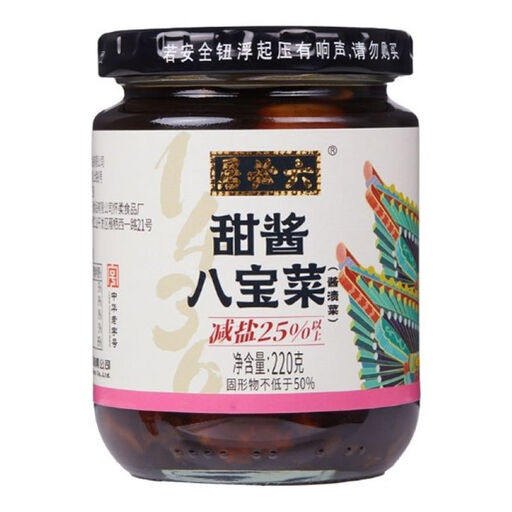
Why we love it: With origins dating back to the Ming Dynasty, Liu Bi Ju isn't just a brand; it's an institution and a guarantee of ancestral know-how. This mix of eight vegetables and peanuts is marinated in a sauce made from soy and sweet fermented wheat paste. The result? A complex flavour that is salty, subtly sweet, and rich in umami, all without a hint of spice.
Key Features:
Who is it for? Perfect for those who want to explore the authentic flavours of Chinese pickles, without the heat. It's the classic accompaniment for congee, steamed buns (mantou), or a simple bowl of rice.
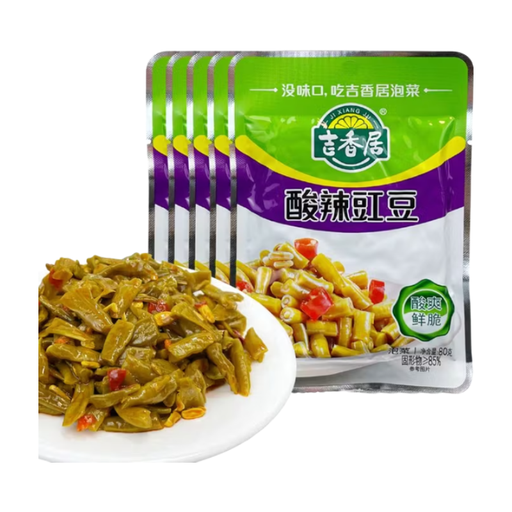
Why we love it: This product is a taste of Sichuan cuisine, with its signature balance of sour and spicy. The cowpeas (a type of long bean) remain tender but with just the right amount of bite. The 80g individual packets are incredibly convenient for lunchboxes or to prevent waste.
Key Features:
Who is it for? For fans of Sichuan cuisine and anyone looking for a flavourful, convenient, and on-the-go solution to jazz up their meal.
Our selection is just a starting point. To discover other varieties, different spice levels, or other vegetables, feel free to explore our full catalogue.
? Discover our complete collection of Spicy Pickled Foods to find the perfect condiment for you.
1. How should I store Chinese pickled vegetables after opening? Most jarred pickled vegetables should be kept in the refrigerator after opening to maintain their freshness. Always remember to use a clean utensil to serve yourself to prevent contamination. As for products in packets, it's best to consume them quickly after opening.
2. Are all Chinese pickled vegetables very spicy? Not at all! While spicy versions are very popular, there is a huge variety of mild Chinese pickles. The Liu Bi Ju assortment, for example, is marinated in a sweet soy sauce and offers a rich, complex flavour without any trace of chilli.
3. What can I eat with Chinese pickles? Their versatility is their greatest strength. They are perfect as a simple side for a bowl of rice, noodles, or congee. You can also finely chop them to add to scrambled eggs, a pork stir-fry, or even slip them into a sandwich for an unexpected touch of crunch and flavour.