
Livraison le jour même ou le lendemain

Qualité garantie

Débloquez vos offres de bienvenue: Livraison GRATUITE | Jusqu'à -80 % | 30 jours d'essai gratuits à JoyPlus
Téléchargez l'application
Chinese herbal drinks, also known as liangcha (凉茶), are gaining popularity in France. Valued for their thirst-quenching properties, they offer a compelling alternative to traditional sodas and juices. Faced with a growing selection, French consumers who are conscious of quality and value can feel overwhelmed. As a Product Recommendation Manager at Joybuy, my role is to provide clear guidance to help you make an informed choice, cutting through the marketing noise.
This guide focuses on objective criteria to steer you towards authentic, high-quality products, especially the popular canned Chinese herbal drinks found in many households.
Navigating the world of Chinese herbal tea is simpler than it seems. Here are a few key points to watch for.
In accordance with European regulations, the ingredient list is a wealth of information. A quality Chinese herbal drink is based on a traditional recipe.
Traditional liangcha is known for its subtle bitterness, balanced by a touch of sweetness. However, some mass-produced versions can be overly sweet.
In the world of traditional beverages, a brand's history is often synonymous with expertise. Names like Wang Lao Ji and Jia Duo Bao have been benchmarks in Asia for decades. Their popularity is built on recipes that have stood the test of time and satisfied generations of consumers, making them a significant indicator of trustworthiness.
Taking the above criteria into account, here are two iconic options that perfectly represent the world of refreshing Asian drinks.
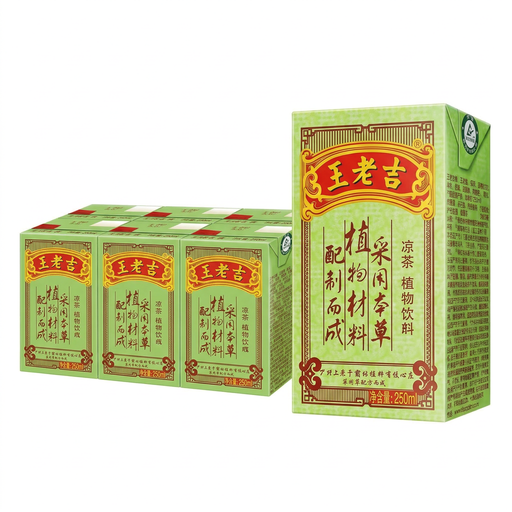
Why We Recommend It
Wang Lao Ji is arguably the most iconic brand of Chinese herbal drink. Its recipe, which dates back to the 19th century, is a timeless classic. It offers a very balanced taste, where the sweetness of cane sugar offsets the characteristic bitterness of the herbs. It's an excellent starting point for anyone looking to discover liangcha. Its consistent and recognisable flavour profile explains its loyal following of millions of consumers.
Pros
Who Is This Product For? This product is perfect for people of Asian descent in France looking for the familiar taste of their childhood. It's also suitable for newcomers who want to try Chinese herbal tea with a reliable choice, often enjoyed alongside spicy dishes like Sichuan hot pot.
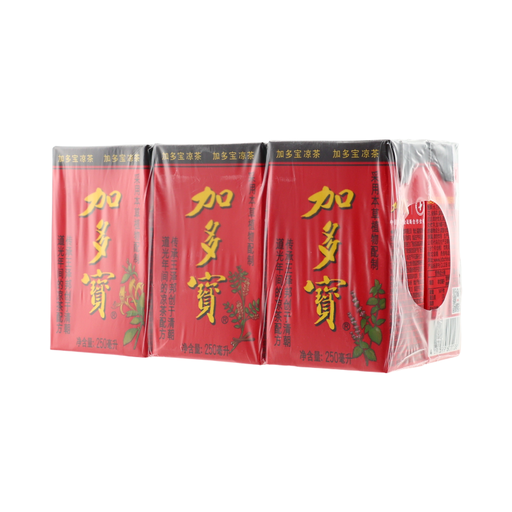
Why We Recommend It
Jia Duo Bao is the other major name in the market. While it shares a common history with Wang Lao Ji, the brand has developed its own identity. Its recipe highlights a blend of nine traditional herbs, giving it a distinct aromatic profile. The flavour is also refreshing and lightly sweet, but with herbal notes that may be slightly more pronounced for a discerning palate. It's a very popular drink for quenching thirst on hot summer days.
Pros
Who Is This Product For? This drink is for those who already know and appreciate Chinese herbal tea and are curious to discover variations on the classic recipe. It is also an excellent choice for anyone seeking an authentic refreshing Asian drink to accompany a meal or simply for a thirst-quenching break.
Wang Lao Ji and Jia Duo Bao are the mainstays of canned Chinese herbal drinks. However, the world of Asian infusions is vast and full of flavours to discover. If you wish to explore other varieties, such as chrysanthemum, winter melon, or other traditional blends, we invite you to browse our complete selection of brewed herbal tea.
1. What exactly is liangcha? Liangcha (凉茶), which literally translates to "cooling tea," is not a tea in the strict sense of the term (it does not contain leaves from the Camellia sinensis plant). It is a Chinese herbal tea or infusion made from a blend of medicinal herbs according to the principles of Traditional Chinese Medicine. It is traditionally consumed in Southern China for its supposedly cooling properties, especially in hot and humid weather.
2. How should you drink a Chinese herbal drink? The canned Chinese drink is ready to serve. For the best experience, it is recommended to drink it well-chilled, or even iced. It can be enjoyed at any time of day, but it is particularly popular:
3. What is the main difference between Wang Lao Ji and Jia Duo Bao? Both brands share a common origin and offer a Chinese herbal drink with a similar profile. Historically, they were linked to the same recipe. Today, they are two separate companies with slightly different formulas. Consumers often describe subtle nuances in the balance between the sugar and the bitterness of the herbs. The choice between the two is primarily a matter of personal preference, much like choosing between two major competing soda brands. The best way to decide is to try both and form your own opinion.