
Livraison le jour même ou le lendemain

Qualité garantie

Débloquez vos offres de bienvenue: Livraison GRATUITE | Jusqu'à -80 % | 30 jours d'essai gratuits à JoyPlus
Téléchargez l'application
The Chinese chef's knife, with its characteristic rectangular blade, is an incredibly versatile tool. Capable of chopping, slicing, mincing, and even transferring ingredients from the cutting board to the pan, it can single-handedly replace a large portion of your knife collection. However, choosing the right model can often be a daunting task. The result: many buyers end up disappointed with a tool that doesn't meet their expectations, thanks to misleading marketing or a lack of clear information on the key features.
To avoid making the wrong choice, here are the three classic mistakes to steer clear of:
This guide is here to help you navigate these pitfalls and identify the technical criteria that truly make a difference in finding the perfect Asian kitchen knife for you.
To avoid being fooled by marketing, focus on concrete technical criteria. Here are the three points to scrutinise before any purchase.
The label "stainless steel knife" is a good start, but it's far from enough. For a long-lasting edge and simplified maintenance, look for a high-carbon stainless steel. This alloy offers the best of both worlds:
Quality steel is the foundation of any good professional chef's knife.
The "tang" is the part of the blade that extends into the handle. A full tang construction, where the steel runs the entire length of the handle, is an essential mark of quality for several reasons:
For a Chinese cleaver or any knife intended for heavy use, a full tang is a non-negotiable feature.
This is where the distinction between different types of Chinese knives becomes crucial.
By defining your primary use, you will naturally gravitate towards the right blade profile.
To illustrate these criteria in action, we have selected three models, each designed for a specific purpose.
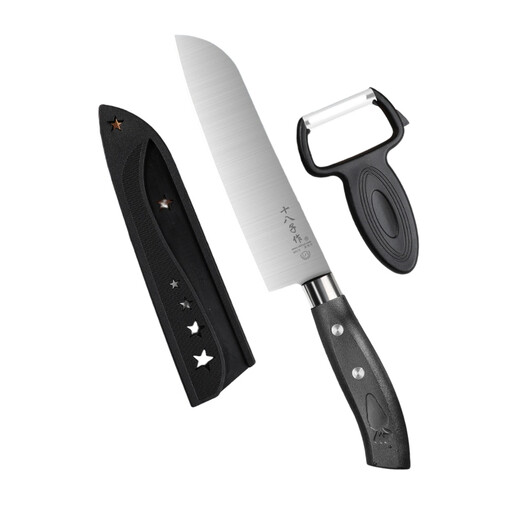
Why we chose it: Ideal for home cooks who want to discover the versatility of a Chinese knife without breaking the bank. It effortlessly handles daily vegetable prep and boneless meat, making it the perfect all-rounder to get started.
It's clearly marketed as an "all-purpose" knife for vegetables and slicing, not a bone chopper. This prevents any confusion between blade types.
Excellent versatility for the price. Comes with useful accessories for immediate use in the kitchen.

Why we chose it: Designed for discerning cooks seeking impeccable cutting quality for Asian cuisine, stir-fries, or fine vegetable work. Its construction, balance, and sharpness are its key strengths.
Its full tang construction ensures perfect balance, eliminating the risk of a poorly weighted knife. The blade is specifically designed for slicing, which removes any ambiguity about its use and prevents accidents.
A razor-sharp edge for ultra-clean cuts that preserve the texture of ingredients. Balance and ergonomics designed for perfect control.
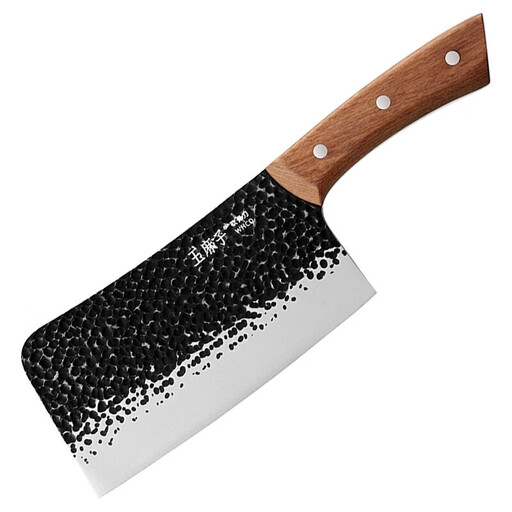
Why we chose it: Perfect for those who regularly cook whole poultry or bone-in cuts of meat. Its weight and blade thickness are optimised to deliver the necessary cutting power without strain.
Its "Bone Chopper" designation leaves no room for doubt. The thick blade is built for force, preventing damage from improper use.
Thick, robust blade for breaking bones and tackling the toughest ingredients. Weight is optimised for powerful cuts without causing fatigue.
Explore our full selection of models that meet our quality criteria and current safety standards.
Maintenance is simple but crucial. Always wash your knife by hand with a soft sponge and a little dish soap, then dry it immediately and thoroughly. Above all, never put it in the dishwasher! Store it on a magnetic strip, in a knife block, or in its sheath to protect the blade. Regular honing with a sharpening steel will help maintain the edge between full sharpenings.
In most cases, yes! It's a perfect all-purpose knife for chopping, mincing, and slicing vegetables and boneless meats. The wide blade surface is also very practical for crushing garlic or ginger, as well as for scooping up chopped ingredients and transferring them directly to the pan. However, a classic chef's knife will remain better suited for precision tasks that require a fine tip, such as trimming sinew from a piece of meat.
Not necessarily, but some are more suitable than others. High-carbon stainless steels (like the 40Cr13, 50Cr15MoV series, or similar) are excellent choices. They represent the ideal compromise between the ability to achieve a very fine edge, good edge retention, and sufficient rust resistance for hassle-free daily use.