
Livraison le jour même ou le lendemain

Qualité garantie

Débloquez vos offres de bienvenue: Livraison GRATUITE | Jusqu'à -80 % | 30 jours d'essai gratuits à JoyPlus
Téléchargez l'application
Finding the perfect toy—one that's fun, smart, and built to last—can sometimes be a real puzzle. Yet, one classic stands the test of time: the children's wooden kitchen. A true star of pretend play, it's a fantastic platform for developing creativity, motor skills, and independence in young children.
But with a huge range of options available, how do you navigate the choices? To help you make sense of it all and choose the perfect play kitchen for your child (and your living room!), this guide breaks down the essential criteria and presents our favourite models.
Before we unveil our top picks, here are a few essential points to consider to guide your decision.
This is the most critical factor. Wooden kitchens, typically made from fibreboard (MDF), are prized for their sturdiness and timeless look. A label to look for? The FSC certification, which ensures the wood comes from sustainably managed forests. The overall stability, the absence of splinters, and the quality of the finishes (non-toxic water-based paints, smoothed edges) are points to check scrupulously for the safety of your little chefs.
A play kitchen with lights and sounds adds that touch of magic that makes all the difference. The sizzle of frying, the glow of the hob... these details mimic the grown-up world and make playtime much more immersive.
Also, be sure to check if the kitchen comes with accessories. A model supplied with pots, utensils, and a starter play food set is a real bonus: the fun can begin right out of the box, and your wallet will thank you.
The space you have available is obviously a key factor. A small children's kitchen will easily fit into a bedroom or a corner of the living room. Above all, check the height of the worktop: it must be suitable for your child's height to ensure good posture and hours of comfortable play. Finally, rely on the manufacturer's recommended age (often 3 years and up), especially due to small parts that can pose a choking hazard.
Our editorial team has reviewed the most popular models on the market to bring you a selection that meets every need and budget.
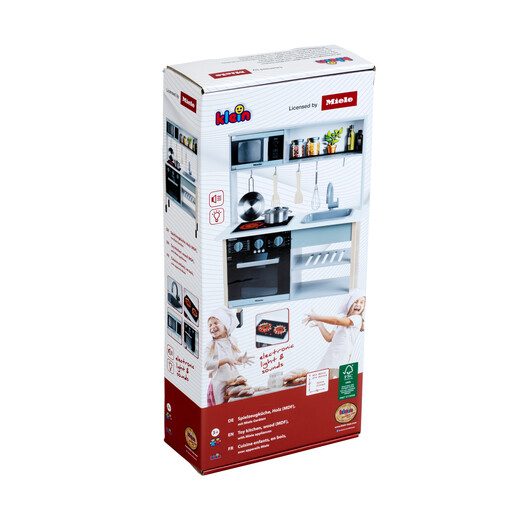
Why This Model Stands Out
Officially licensed by Miele, this children's kitchen successfully combines the elegance of wood with well-designed interactive features. Made from FSC-certified MDF wood, it's a choice that is both sustainable and stylish. Its generous equipment and versatile dimensions (70 x 30 x 91 cm) make it an excellent all-rounder.
Key Features
Who Is It For?
For parents and grandparents looking for a high-quality children's wooden kitchen that is sturdy, functional, and ready to use. Its clean, modern design fits seamlessly into any home decor.
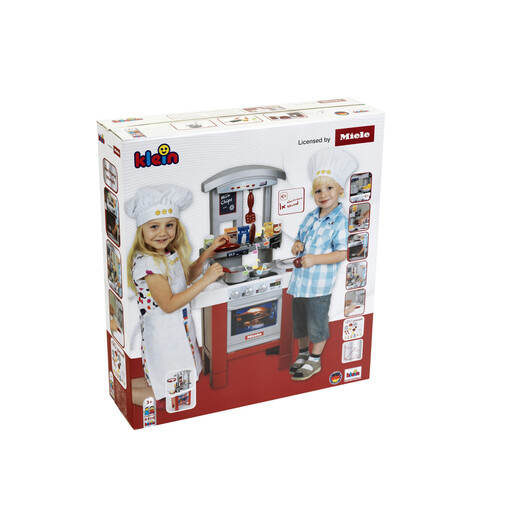
Why This Model Stands Out
Yes, it's made of plastic, but it's impossible not to include it in our selection because it's so comprehensive. It's a true all-in-one play station, delivered with an abundance of play food accessories. It's designed to offer an incredibly rich play experience right out of the box.
Key Features
Who Is It For?
For those who want a turnkey solution with a maximum of accessories and play possibilities. It's the perfect option to stimulate imagination and encourage children to play together.
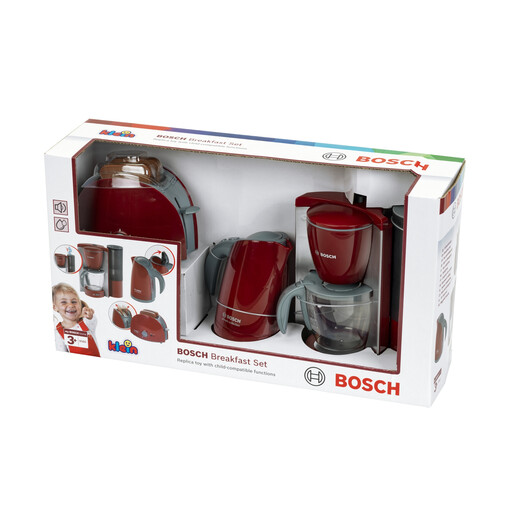
Why This Model Stands Out
The ideal complement to any play kitchen, or an excellent entry point into the world of play food sets. These faithful replicas of Bosch appliances are stunningly realistic, with real mechanical functions and the ability to use water.
Key Features
Who Is It For?
For those who want to complement a kitchen or give a quality pretend-play toy without the bulk of a large structure. A small gift that always makes a big impression.
The kitchen world is a classic, but pretend play doesn't stop there. Workbenches, doctor's kits, market stalls... a child's imagination is limitless.
? Discover our complete selection of imaginative play toys to find the gift that will make your child's eyes light up.
The generally recommended age is 3 years old. At this age, children have better motor skills, fully grasp the concept of pretend play, and the risk of swallowing small parts decreases. In any case, always follow the manufacturer's recommendations and supervise play, especially at the beginning.
A children's wooden kitchen is known for being more durable, stable, and aesthetically pleasing. Wood is a noble and warm material, and the FSC label guarantees an eco-friendly approach. On the other hand, plastic models are often lighter, can feature more original shapes, and sometimes include more electronic functions for the same budget. Ultimately, it's a matter of priorities between design, durability, and features.
It's often a very smart move. A play kitchen with accessories ensures that the fun can start right away. It's also generally more cost-effective than buying play food accessories one by one. Nothing stops you from giving new accessories later on to renew the child's interest and enrich their play world.