
Livraison le jour même ou le lendemain

Qualité garantie

Débloquez vos offres de bienvenue: Livraison GRATUITE | Jusqu'à -80 % | 30 jours d'essai gratuits à JoyPlus
Téléchargez l'application
Finding a creative hands-on activity for your child that is fun, educational, and safe can be a real challenge. Watercolor painting is often an excellent entry point into the world of art, thanks to its ease of use and vibrant colors.
However, with so many options available, it's easy to feel overwhelmed. Which kit should you choose? What are the important criteria? This guide is here to help you make sense of it all and select the right children's paint set, presenting a selection of practical and recommended options for 2026.
By our Joybuy product experts
Before we dive into our top picks, here are a few key points to consider to make an informed choice.
Safety is the number one criterion. For peace of mind, it is essential to choose non-toxic paint for children. Check that the products comply with current European standards, particularly the EN 71 toy safety standard.
Another major practical benefit is washability. A washable watercolor paint will save you a lot of hassle. Look for labels indicating that the pigments can be easily cleaned from skin, clothes, and most surfaces with a little soap and water.
For a successful first experience, an all-in-one beginner's watercolor kit is the ideal solution. These sets usually include everything needed to start right away: paint pans, one or more brushes, and often a lid that doubles as a palette.
This compact and organized format prevents mess and allows the child to manage their supplies more independently. A kit with an included brush guarantees simplicity.
A 12-color paint palette is an excellent starting point. It offers a wide enough range for a child to explore mixing and create an infinite number of new shades, without being overwhelming. Bright, highly pigmented colors will make the experience more rewarding and encourage their creativity.
Here are a few options that meet the criteria for safety, convenience, and creativity, perfect for introducing young artists to painting.
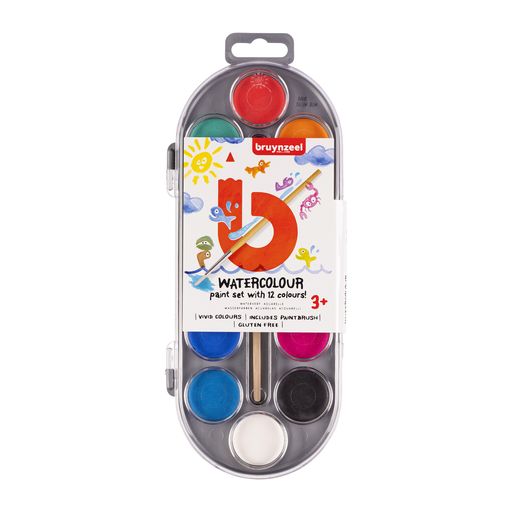
What sets it apart: This Bruynzeel set is a prime example of a well-designed starter kit. Its main advantage? A sturdy case with a lid specially designed with wells to serve as a mixing palette. Everything is integrated, which makes for easy organization and cleanup.
Key features:
Who is it for?: Ideal for budding young artists (ages 3 and up) and parents who appreciate well-organized, low-mess supplies.
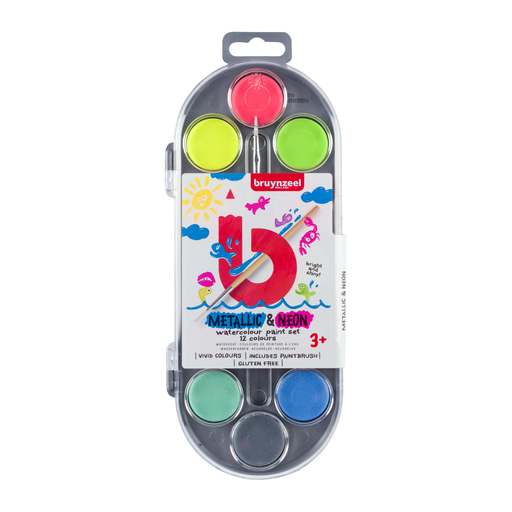
What sets it apart: For kids who love a bit of sparkle, this set offers a touch of originality. It combines 7 metallic and 5 fluorescent colors that create striking visual effects, on both white and black paper.
Key features:
Who is it for?: Perfect for children (ages 3+) who want to experiment with unconventional colors and give their artwork a special shine.
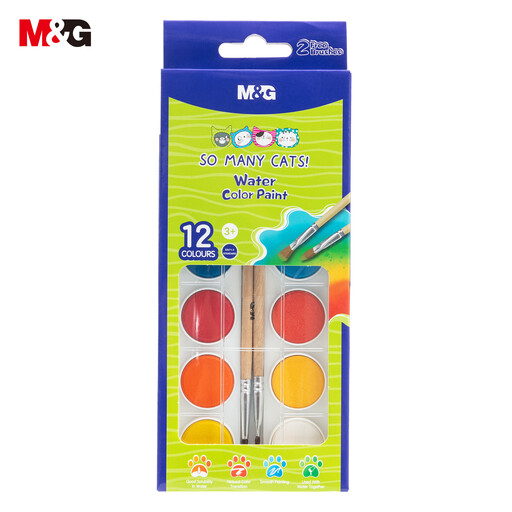
What sets it apart: This M&G set focuses on easy cleanup. Its washable formula is designed so that pigments come off hands, clothes, and most surfaces with ease—a huge plus for parents.
Key features:
Who is it for?: A top choice for the youngest artists (ages 3 and up, with supervision), schools, and any parent whose priority is quick and easy cleanup.
If our selection doesn't quite match what you're looking for, or if you want to explore a wider variety of products like gouache, finger paint, or other types of children's paint, feel free to browse our full category.
Discover the Full Children's Paint Category
Generally, a child can start exploring watercolor around the age of 3, always under adult supervision. At this age, the focus is on discovering colors and the joy of handling a brush, rather than on technique. Make sure to choose a kit with non-toxic materials and parts that are large enough to avoid any choking hazards.
Most watercolors for children are designed to be washable. For stains on skin or clothing, a quick wash with warm water and mild soap is usually enough. It's best to act quickly before the paint dries completely. Always check the packaging for a "washable" label.
The main difference lies in their transparency. Watercolor is transparent and lets the white of the paper show through, which is ideal for creating light and airy effects. Gouache, on the other hand, is opaque and provides full coverage. It allows you to layer light colors over dark ones. For a first introduction to painting, watercolor is often preferred for its simplicity and the minimal supplies required.