
Livraison le jour même ou le lendemain

Qualité garantie

Débloquez vos offres de bienvenue: Livraison GRATUITE | Jusqu'à -80 % | 30 jours d'essai gratuits à JoyPlus
Téléchargez l'application
Choosing a children's scooter is about more than simply comparing colours or the character printed on the handlebars. Between two- and three-wheeled models, balance bikes, foldable versions and light-up wheels, the differences in everyday use can be considerable.
Parents often make the same mistakes. A model described as “growing with your child” may have handlebars that are too high for a young child. A light-up scooter easily attracts attention, but it will be less practical if its deck is narrow. A toddler scooter should not be confused with a balance bike or a model intended for children aged 3 and over: the recommended age and the manufacturer's warnings should always take priority.
A three-wheeled children's scooter generally provides a more stable base during those first sessions. It is suitable for children learning to steer by shifting their weight, particularly with a “lean-to-steer” system. On the other hand, it is bulkier than a two-wheeled model and does not provide the same smooth gliding sensation.
A balance bike is ridden while seated, with the feet on the ground. It can support a child's first balance exercises before they move on to a standing scooter. It is therefore better to choose according to the child's actual abilities rather than relying solely on a marketing promise.
Adjustable handlebars allow the position to be adapted as your child grows, but not all mechanisms offer the same range of adjustment. Check the maximum height and how easy the handlebars are to lock in place. If they are too low, the child will have to lean forwards; if they are too high, steering may be harder to control.
A light-up scooter catches the eye and makes trips more fun. However, illuminated wheels are no substitute for a helmet or adult supervision. You should also check the deck width, wheel type and maximum load. An appealing visual effect should not overshadow the essential features.
The age stated by the manufacturer is an initial safety guide, but your child's build and confidence are just as important. Between 1 and 3 years old, a balance bike or a scooter with a seat may be more suitable. From the age of 3, a three-wheeled model often makes learning easier.
The maximum load must be respected without exception. In the selection below, it ranges from 20 kg, 25 kg and 30 kg, depending on the model. A capacity stated for an adult on a product page does not mean that the scooter is suitable for a young child.
EVA wheels, polyurethane wheels and elastomer-coated wheels do not behave in exactly the same way. Solid wheels reduce the risk of punctures and require little maintenance. Quiet wheels can be particularly useful indoors or in a residential setting, provided they are used on a flat, clear surface.
Wheel diameter also affects the ability to handle small bumps and uneven surfaces. For use in the garden, at home or in the park, chassis stability and deck grip remain the most important criteria.
A rear brake allows the scooter to be slowed by pressing down with the foot, provided the child learns to use it gradually. The deck should be non-slip and wide enough for the child's foot to rest on comfortably.
For a foldable children's scooter, check that the locking mechanism is secure before every use. Folding makes it easier to store in a car boot or cupboard, but adds a mechanism that needs regular inspection. Whatever the model, avoid stairs, steep slopes, busy areas and public roads.
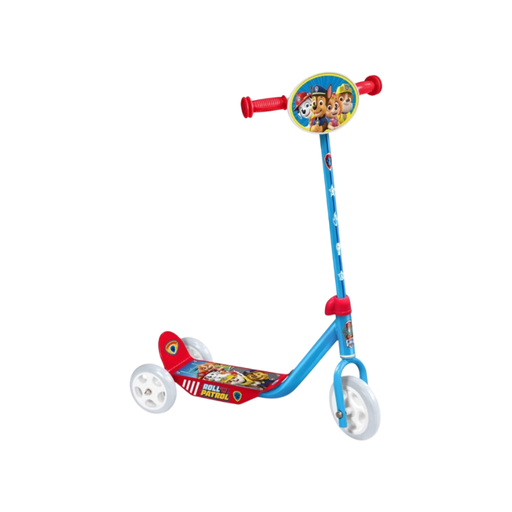
Why this choice suits this profile : Its three-wheel configuration and wide deck are suitable for children aged 2 to 4 who are starting to move around on flat surfaces.
The product details mention adjustable handlebars, a non-slip deck and a maximum load of 20 kg, so the essential features are clearly stated.
Three wheels, anti-pinch handles, a wide deck and adjustable height.
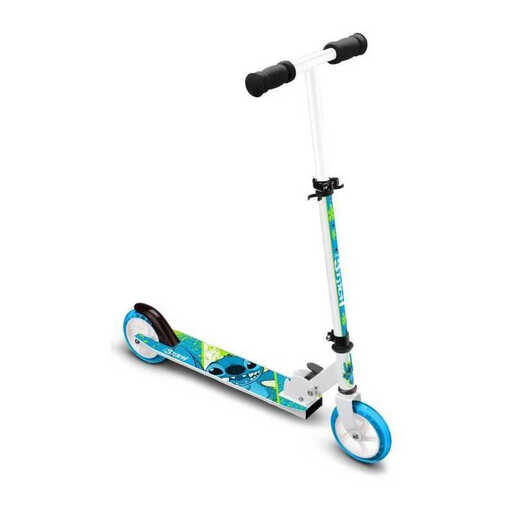
Why this choice suits this profile : This Disney Stitch model is designed for children aged 3 and over and for families who want to transport the scooter easily between home, the garden and the park.
The folding mechanism includes a locking system, so the promise of compact storage is not based solely on a marketing claim.
145 mm polyurethane wheels, ABEC 5 bearings, adjustable handlebars and a rear brake.
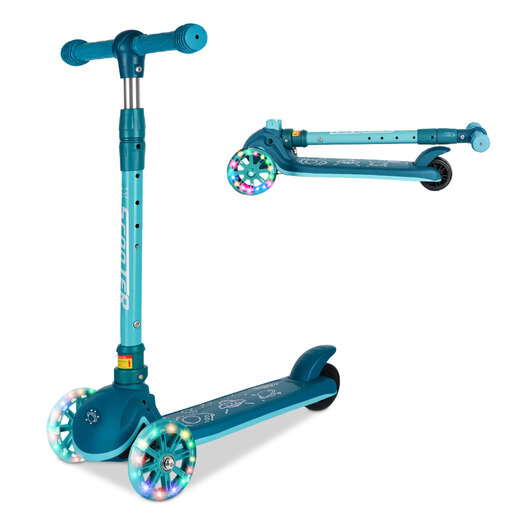
Why this choice suits this profile : Its foldable design and adjustable handlebars may suit families who alternate between car journeys, trips to the park and frequent storage at home.
The product details mention folding, lean-to-steer control and a non-slip deck, so the riding experience does not depend solely on the light-up wheels.
Three wheels, light-up wheels, two adjustable heights and convenient storage.
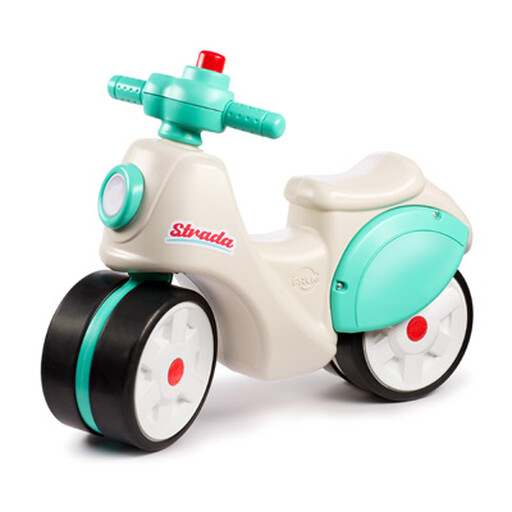
Why this choice suits this profile : This seated model is designed for children aged 1 to 3 and is intended for use at home on flat surfaces.
The product details specify the recommended age — 1 to 3 years —, the maximum load of 30 kg, adult supervision and the recommended use of protective equipment.
Comfortable seat, quiet wheels, integrated reflectors and a steel chassis with plastic components.
We have put together a comprehensive, real-time updated list of products that meet these strict selection criteria and European safety regulations.
Before every outing, check that the screws are tight, the handlebars are secure, the wheels are in good condition and the brake is working, where fitted. A helmet is essential; depending on your child's age and confidence, add knee and elbow protection.
Clean the frame and deck with a slightly damp cloth. Avoid submerging the scooter, using solvents or applying abrasive products. Store it in a dry place, away from prolonged exposure to sunlight. Using it on a flat, dry and clear surface helps to minimise premature wear.
A children's scooter from age 3 with three wheels generally offers a stable base for beginners. Before buying, check for adjustable handlebars, a non-slip deck and a maximum load suited to your child's weight.
The folding mechanism alone does not determine stability. Examine the deck width, number of wheels, locking mechanism and handlebar rigidity. The system must be securely locked before every use.
Routine maintenance is limited to cleaning, checking the screws, inspecting the wheels and testing the brake. Solid or EVA wheels generally avoid puncture-related repairs. However, replacing a part depends on the model and the availability of spare parts.