
Livraison le jour même ou le lendemain

Qualité garantie

Débloquez vos offres de bienvenue: Livraison GRATUITE | Jusqu'à -80 % | 30 jours d'essai gratuits à JoyPlus
Téléchargez l'application
A children’s play kitchen can quickly become the centrepiece of daily play: preparing pretend meals, serving in a restaurant or copying grown-ups’ actions. But a pretty picture isn’t enough to make the right choice. Some sets take up a lot of space, contain accessories that are too small, or end up being difficult to tidy away after a few games.
Before buying a play kitchen with accessories, check three things: the recommended age, the quality of the materials, and whether the set’s contents match your child’s play habits.
A set that boasts several dozen pieces isn’t necessarily the most engaging. An avalanche of accessories makes tidying harder, encourages lost items, and can limit play to a few pretend foods. For a young child, a more focused selection — fruit, vegetables, crockery and utensils — often makes those first imitation games much easier.
A large kitchen needs a permanent, clear spot. Measure the height, width and depth you have available, especially in a flat or a shared bedroom. A model that’s accessible from both sides also needs more space around it so that several children can play comfortably.
Sounds and lights add an interactive touch, but they need batteries and can be distracting for children who are sensitive to noise. They don’t replace the truly useful accessories: a saucepan, plates, pretend food and storage space. For regular use, also check the cleaning instructions and the type of batteries required.
Always follow the manufacturer’s recommended age. Several products in this selection are marked as suitable from 3 years and carry a warning about small parts and choking risk. The Theo Klein children’s shopping basket, on the other hand, is recommended from 2 years, but the presence of small items means adult supervision is still needed.
For a gift for a 3-year-old, choose pieces that are easy to grip and accessories that are instantly recognisable. Play food sets with self-adhesive hook-and-loop strips let children mimic cutting without a functional blade, but they should still be used under adult supervision.
A wooden play kitchen should have rounded edges, a carefully sanded surface and paint that’s suitable for its intended use. The Rilso ice cream counter set is described as being made from wood, with rounded edges and water-based paint presented as non-toxic in its product listing. It’s still best to check the safety information and labelling available on the sales page.
Plastic models are often lighter and easier to clean. Examine the joints, handles and corners. For any toy sold in the UK, look for the CE marking, the recommended age, warnings, and the manufacturer’s or responsible person’s details within the European Union.
A kitchen that’s 90 to 95 cm high may suit some preschool children, but always compare this measurement with your child’s height and the space you have. Accessories should be easy to group together on shelves, in a drawer or in a storage bag.
For maintenance, a surface that can be wiped clean with a slightly damp cloth makes daily life much easier. Electronic parts must not be submerged. Remove the batteries before cleaning when the instructions say so.
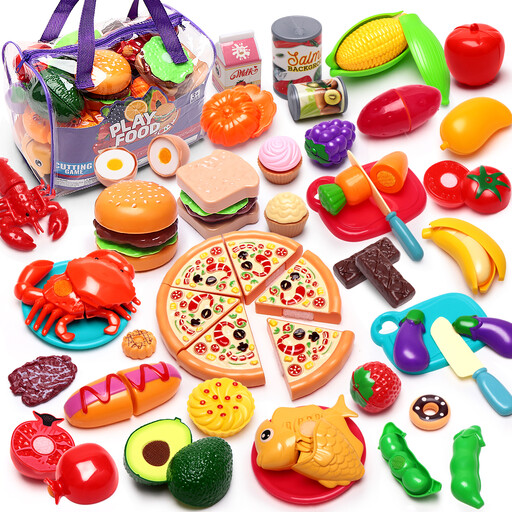
Why this choice suits this profile: This set offers a wide variety of pretend foods without the need for a bulky piece of furniture. The included bag makes it easy to tidy up at home or take to grandparents’ house.
The foods join together with self-adhesive hook-and-loop strips and store in a bag, which helps prevent small pieces from getting scattered.
78 pieces advertised, play knife, interior details and BPA-free plastic as stated in the product listing. Recommended for use from 3 years.
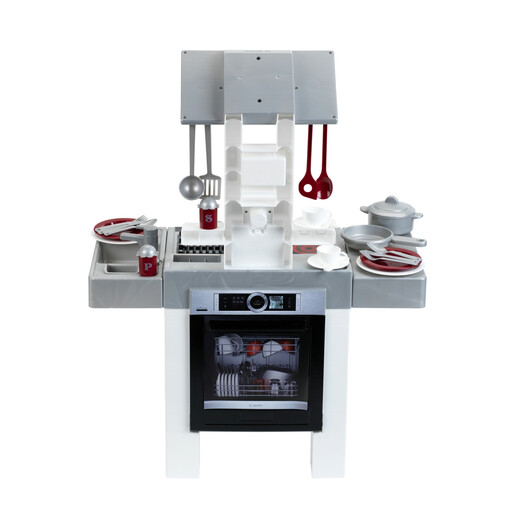
Why this choice suits this profile: This kitchen, accessible from both sides, is ideal for families who want a permanent play area where several children can play together.
Its dimensions of 69 × 33 × 95 cm are clearly stated, along with the electronic functions and batteries required. The listing also specifies that no real heat is produced.
Oven, microwave, sink, espresso machine, crockery and utensils are all included. Model recommended from 3 years, requires 4 AAA batteries (not included).
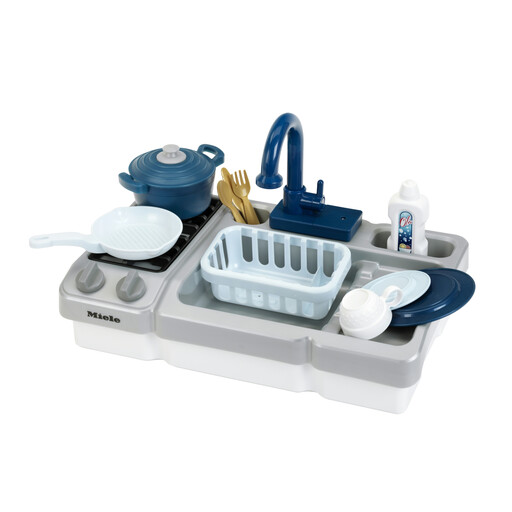
Why this choice suits this profile: For children who love washing up, serving and food preparation, this sink adds a dedicated activity without needing to buy a full kitchen.
The listing details the water flow function, the accessories included and the 3 AA batteries required. This lets adults plan ahead for setup and maintenance.
Sink, working tap, draining rack, saucepans, crockery and colander. Plastic model recommended from 3 years.
To refresh the scenarios, the Rilso wooden ice cream counter set turns the play kitchen into a little shop: counter, shelves, drawer and pretend foods inspired by ice creams and desserts. It could be a hit for a birthday, Christmas or Halloween, as long as you check the recommended age and the space you have.
The Theo Klein children’s shopping basket, recommended from 2 years, invites children to play at the market, sort items and learn to count. A wooden hamburger or a few extra kitchen accessories can then enrich an existing kitchen without replacing its essential parts.
Choose a model with pieces that are large enough, easy to grip and not too many in number. Carefully check the warnings about small parts. A simple shopping basket may be more suitable than a full kitchen packed with miniature accessories.
Its lifespan depends on the sturdiness of the materials, the quality of the assembly, how well it’s stored, and your child’s interest. A kitchen is easier to keep fresh when its accessories can be replaced individually. Avoid prolonged exposure to dampness and regularly check the handles, doors and small parts.
The main ongoing cost comes from the batteries. Check how many and what type you need before buying. A model without electronics avoids this expense, while a kitchen with sounds and lights simply needs periodic battery changes, depending on how often it’s used.