Joybuy Insights

Children's Nasal Spray: A Guide to Making the Right Choice

A stuffy nose, sleepless nights, difficult mealtimes… When a child has a cold, the whole family suffers. A nasal spray can seem like a miracle solution. But once you're in the pharmacy aisle, it's overwhelming: dozens of products, vague marketing promises… How do you navigate it all and make the right choice?

As a product expert for Joybuy, I'm here to guide you through the marketing traps and help you choose a nasal spray that is truly effective and safe for your child. The goal: to provide effective relief for your little one, without wasting money on ineffective products.

The 3 Common Traps to Avoid at the Pharmacy

Faced with an overloaded shelf, it's easy to fall for certain ploys, especially when our children's health is at stake. Here are the three most common mistakes.

  1. The "family" spray trap: Thinking that one spray fits all is a mistake. Adult formulas often have a jet that is too powerful and an ingredient list that can irritate a child's delicate nasal lining, causing more tears than relief.
  2. The "100% natural" illusion: Natural does not mean risk-free. While sea water is an excellent base, some additives like essential oils are strongly discouraged, or even allergenic, for children under 6. The "natural" label is no guarantee of safety for a young child.
  3. Overlooking the nozzle design: A poorly designed nozzle (too long, no safety collar) is a real danger. With a wriggling child, the risk of injuring the inside of the nostril is real. The safety of the nozzle isn't an option—it's a prerequisite.

The Essential Criteria for an Informed Choice

To avoid buying blind, there are a few key concepts to understand. They will help you choose the product that perfectly meets your child's needs, whether for daily children's nasal hygiene or to clear a child's stuffy nose.

1. Salt Concentration: Isotonic or Hypertonic?

This is the number one criterion, the one that defines the spray's primary function.

  • Isotonic solution: Its salt concentration is the same as our body's (about 9 g/L). This is the perfect solution for daily nose washing, for moisturising a dry nasal lining (due to heating or air conditioning), or for gently removing dust and allergens.
  • Hypertonic solution: More concentrated in salt, it creates a vacuum effect (the famous "osmosis effect") that decongests the nose by drawing out excess water from the mucous membranes. This is the ultimate nasal spray for a child's cold, to be used occasionally for a very stuffy nose (cold, sinusitis), but never for long-term use.

2. The Ingredients: Beyond Sea Water

Most sprays use sea water, which is rich in trace elements. But some added ingredients can make all the difference.

  • Preservative-free: Essential for children with sensitive mucous membranes or allergy tendencies. The fewer the ingredients, the lower the risk.
  • Soothing actives: Extracts like aloe vera or chamomile provide a real bonus for an irritated nose, thanks to their moisturising and soothing properties.
  • Trace elements: Copper, for example, is often highlighted for its anti-infective properties, a helpful asset during cold season.

3. The Child's Age and the Spray System

This is a non-negotiable point: the product must be perfectly suited to the child's age.

  • Recommended age: Always check the age range indicated on the packaging (e.g., "from 2 years" or "2-6 years").
  • Spray system: For young children, opt for a micro-diffusion (a very fine mist), which is much gentler and less startling than a powerful, direct jet.
  • Nasal nozzle: The ideal nozzle is short, anatomically shaped, and, most importantly, equipped with a safety collar that prevents it from being inserted too far into the nostril.

Sprays That Tick Every Box

Rather than an endless list, we have selected products that meet specific needs, applying the safety and efficacy criteria we've just covered.
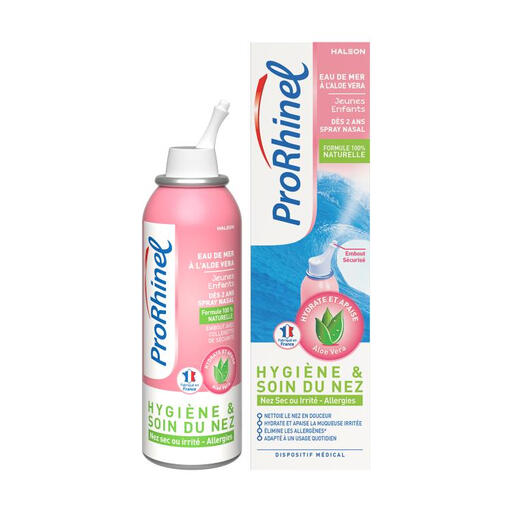
FOR PARENTS OF YOUNG CHILDREN (2-6 YEARS)
PRORHINEL Spray Eau de Mer Aloe Vera Jeunes Enfants, 100 ml

PRORHINEL Sea Water & Aloe Vera Spray for Young Children, 100 ml

Why it's a smart choice: This is the product designed specifically for the 2-6 age group. It combines a gentle isotonic solution, ideal for daily washing, with aloe vera to soothe irritation from recurring colds or allergies.

How It Avoids the Traps

Its formula, safety nozzle, and fine mist spray are 100% adapted to this age group. It ticks all the safety boxes, steering clear of unsuitable "one-size-fits-all" products.

Key Advantage and Strengths

Dual action: cleanses and soothes in a single step thanks to aloe vera. Isotonic formula: perfect for frequent use and good daily hygiene.
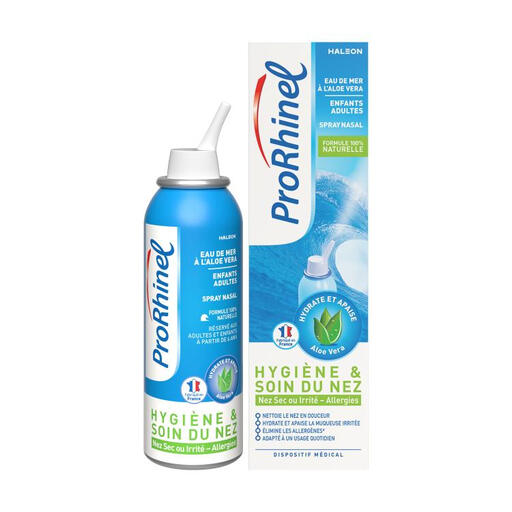
FOR FAMILIES WITH CHILDREN AGED 6 AND UP
PRORHINEL Spray Eau de Mer Aloe Vera Enfants et Adultes 100 ml

PRORHINEL Sea Water & Aloe Vera Spray for Children and Adults, 100 ml

Why it's a smart choice: A versatile and cost-effective solution for families with children over 6. It features the same gentle formula (isotonic + aloe vera), but with a nozzle and jet suitable for older children and adults.

How It Avoids the Traps

It solves the family spray dilemma without falling into the trap of an overly aggressive adult product. It's a single, safe solution for all family members (ages 6 and up).

Key Advantage and Strengths

Versatility: one product for children over 6 and parents. Gentle formula: still preservative-free, with 100% natural sea water and aloe vera.
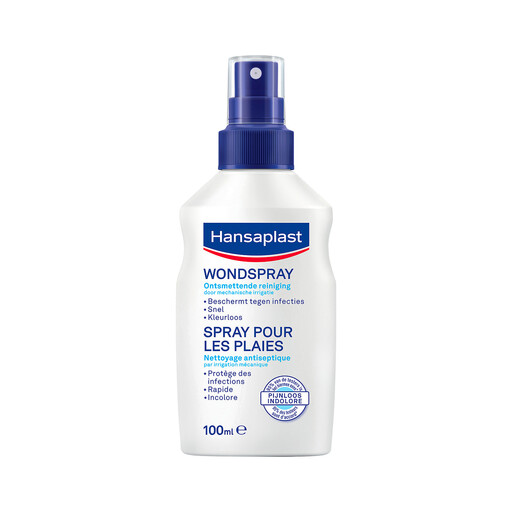
FOR PARENTS WHO WANT TO AVOID MIX-UPS
Hansaplast Wound Cleaning Spray 100ml

Hansaplast Wound Cleaning Spray, 100 ml

Why it's a smart choice: This product is not a nasal spray, and that's precisely why it's here. It perfectly illustrates why you should never confuse an antiseptic skin spray with a nasal hygiene product.

How It Avoids the Traps

This spray is perfect for cleaning a scraped knee, but it is completely unsuitable for the nose. Its antiseptic components would cause severe irritation to the mucous membranes. The lesson: a specific product for every problem!

Key Advantage and Strengths

A lesson in vigilance: an essential item for the first-aid kit for minor wounds, which serves as a helpful reminder: never repurpose a product for an unintended use, especially with children.

Looking for More Options?

Discover our full selection of products that meet our safety criteria and current regulations.

Frequently Asked Questions (FAQ)

How often can I use a sea water nasal spray on my child?

For an isotonic spray (daily washing), 1 to 2 sprays per day in each nostril is sufficient. If they have a cold, you can increase this to 4 to 6 times a day, ideally before meals and bedtime to help them breathe better. For a hypertonic spray (decongestant), use should be limited to the duration of the cold (a few days at most).

What is the difference between an isotonic and a hypertonic spray for a child?

To put it simply:

  • Isotonic = To Wash. It cleanses, moisturises, and prevents. It's the everyday hygiene step.
  • Hypertonic = To Unblock. It acts as a powerful decongestant during a bad cold. It's a short-term, supportive treatment.

What is the proper way to wash a child's nose with a spray?

The golden rule: always be gentle. The method may vary slightly with age, but the key steps are the same:

  1. Ask your child to blow their nose if they can.
  2. Tilt their head to the side (never backwards!).
  3. Gently insert the nozzle into the upper nostril.
  4. Spray briefly. The liquid and secretions should come out through the other nostril.
  5. Straighten their head and wipe away any runoff.
  6. Tilt their head to the other side and repeat.
  7. Remember to always clean the nozzle with warm water after use.