
Livraison le jour même ou le lendemain

Qualité garantie

Débloquez vos offres de bienvenue: Livraison GRATUITE | Jusqu'à -80 % | 30 jours d'essai gratuits à JoyPlus
Téléchargez l'application
A children’s lunch box needs to withstand daily journeys, open easily and keep food separate until lunchtime. However, the features highlighted in product listings do not always guarantee the right choice. Whether it is for children aged 3 and over or adults at work, a few checks can help you avoid unpleasant surprises.
A press-stud or clip closure can keep the lid in place without stopping liquids from escaping. If you plan to carry fruit purée, sauce or very juicy fruit, check for a seal and review the manufacturer’s recommended use. A children’s snack box designed for biscuits and dried fruit may not offer the same level of protection as a leakproof children’s lunch box.
A large capacity may seem convenient, but a bulky children’s lunch box can quickly make a schoolbag heavier. Conversely, a compact model may not fit a sandwich, fruit and a side dish. The external dimensions are just as important as the capacity stated in millilitres: measure the available space in the bag or the compartment intended for it.
A pattern your child likes can help them get into the habit of eating lunch, but it does not replace an easy-to-use closure, a washable surface or a sufficiently robust design. Also look out for small parts, particularly for children under 3. Always check the recommended age and the manufacturer’s warnings.
For a school lunch box, the capacity depends on the child’s age, appetite and what you plan to pack. A format of around 300 ml is more suitable for a small snack. A 900 ml model provides more room for a complete meal, a snack and a piece of fruit.
A compartmented lunch box keeps food separate and reduces the mixing of textures. Compartments are also useful for adults who prepare meals in advance or want to divide portions. However, check whether the dividers are fixed, removable or genuinely leakproof from one another.
A stainless-steel lunch box generally withstands knocks well and does not retain many odours. However, stainless steel is not microwave-safe. Some models combine a stainless-steel container with a polypropylene lid, which must be cared for according to the instructions provided.
Plastic is often lighter for a child, but it needs to be inspected regularly. Cracks, a warped lid or a closure that no longer stays shut are all signs that it is time to replace the box. Dishwasher use is not always permitted: when a box is described as hand-wash only, do not automatically put it in the dishwasher.
For a child, a large clip or two easy-to-spot side closures can make opening the box simpler at lunchtime. If the box needs to hold moist food, look for clear information about its leak resistance. Always close it on a stable surface and carry it flat when its contents require this.
Most of the models featured here are not microwave-safe. You will therefore need to transfer the food to a suitable container before reheating it. For a picnic, allow prepared food to cool before closing the children’s picnic box, to help limit condensation.
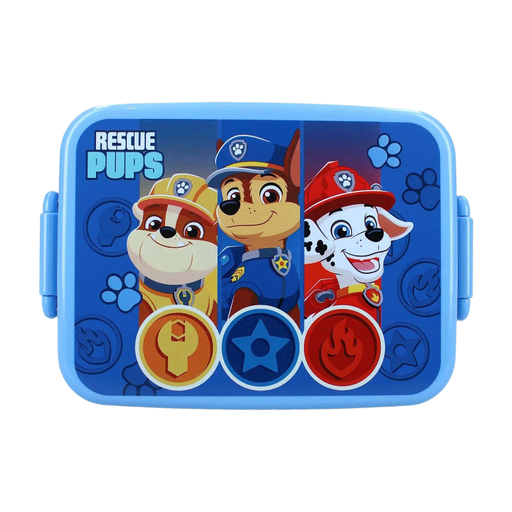
Why this choice suits this profile: Measuring 16 × 13 × 5 cm and described as lightweight, it is suitable for children’s first packed meals at school or when out and about.
The press-stud closure keeps the contents enclosed, while hand washing avoids putting it in the dishwasher, which is not recommended.
Compact format, durable plastic, secure closure and recommended for children aged 3 and over.
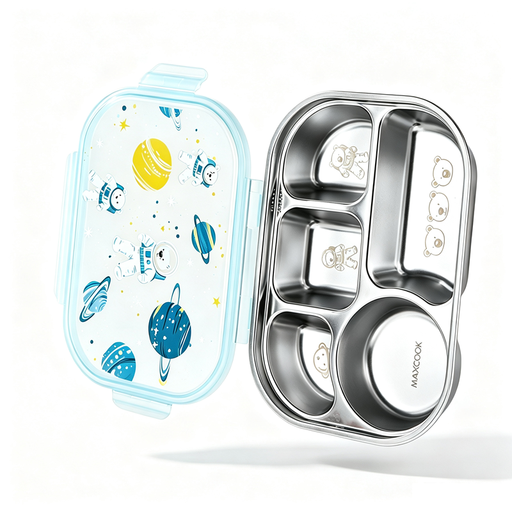
Why this choice suits this profile: Its five compartments are ideal for families preparing varied meals, as well as adults organising portions for the office.
Separating the food helps prevent mixing. The four lid clasps must be properly fastened before transport.
316L stainless steel, divided tray, polypropylene lid and a design intended to make portion control easier.
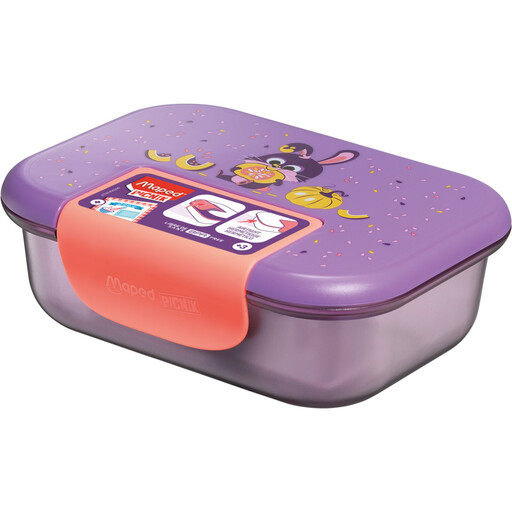
Why this choice suits this profile: Its 900 ml capacity and rectangular shape are suitable for school days, picnics and activities that call for a more substantial meal.
The attached lid reduces the risk of losing it, while the large fluorescent clip makes it easier for a child to open. However, the product information specifies that the box is not microwave-safe.
Stainless steel, 900 ml capacity, attached lid, fluorescent clip and dishwasher-safe cleaning according to the instructions provided.
We have put together a complete, real-time updated list of products that fully meet these strict selection criteria and European safety regulations.
To help a children’s lunch box last longer, rinse it promptly after the meal and dry the lid separately whenever possible. Avoid abrasive sponges and harsh cleaning products. Do not store it closed while it is still damp.
Before each use, check:
A school lunch box should be replaced if it is cracked or misshapen, or if its closure no longer holds the lid securely. Its lifespan depends on how often it is used, how it is washed and the knocks it receives.
A small format of around 300 ml may be suitable for a snack. For a lunch with a sandwich, fruit and a side dish, a capacity close to 900 ml provides more room. Your child’s appetite and the size of their bag should guide your choice.
No. Compartments separate the food, but they are not necessarily leakproof from one another. To carry sauce or very moist food, check the manufacturer’s information and, if necessary, use a separate sealed container.
No. Metal containers, including stainless-steel ones, must not be placed in the microwave. For plastic models, also check the recommendations for each product: if there is no explicit information, it is best to transfer the meal to a microwave-safe container.