
Livraison le jour même ou le lendemain

Qualité garantie

Débloquez vos offres de bienvenue: Livraison GRATUITE | Jusqu'à -80 % | 30 jours d'essai gratuits à JoyPlus
Téléchargez l'application
A children’s lunch box needs to withstand school days, slip easily into a bag and remain simple to open. However, the features highlighted in product descriptions do not always guarantee a pleasant everyday experience. A box that is too small, a lid that is difficult to handle or poorly insulated compartments can quickly turn an appealing purchase into a disappointment.
Here are the criteria to consider before choosing a children’s lunch box, bento box or snack box suited to their age.
A dinosaur, character or animal design may make a child keen to use their lunch box. But its appearance says nothing about its capacity, the strength of the closure or how easy it is to clean. For regular school use, start by checking the dimensions, weight and how the lid works.
A compartmentalised lunch box allows food to be separated, but that does not necessarily make each section airtight. Juicy fruit, sauces and liquid foods can move from one compartment to another if the seal or closure system was not designed to keep them separate. If leak-proofing is essential, look for a clear description of the seal, clips and locking mechanism.
Many food boxes are not microwave-safe, particularly stainless-steel models. Others can be washed in the dishwasher, but with specific precautions for the lid or seal. A box advertised as BPA-free may also contain other materials, such as silicone or polypropylene: always check the details for the model you have chosen rather than making assumptions about an entire range.
For a child aged 3 to 6, a small snack box intended for a few pieces of fruit or biscuits may be perfectly suitable. For a complete lunch, 900 ml models offer more space, provided their weight and overall size remain compatible with the bag.
The dimensions matter just as much. A rectangular box is generally easier to pack in a school bag than a very deep or rounded model. Measure the available space in the bag and make sure the box can be carried flat.
Food-grade stainless steel is valued for its durability and its surface, which retains few odours. However, it is not microwave-safe and may be heavier than a plastic box. Plastic and polypropylene are lightweight and easy to carry, but inspect the lid and box regularly: a crack may be enough to compromise the closure.
To make life easier, choose a box that is dishwasher-safe if this applies to the entire product. In all cases, dry the box and its lid thoroughly before closing them.
A wide clip may be easier for small hands to operate than a particularly tight-fitting lid. Systems with one or two latches should open without effort while remaining secure enough to prevent the box from opening accidentally in the bag.
For children under 3, several models warn of a risk associated with small parts. Follow the recommended age, supervise younger children when they use the box and regularly check the condition of the clips, seals and lids.
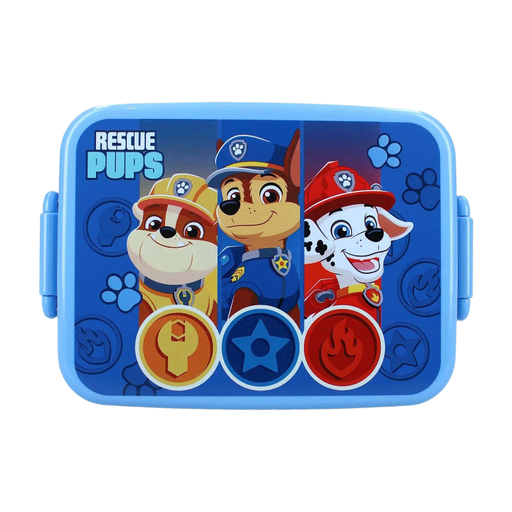
Why this choice suits this profile : Measuring 16 × 13 × 5 cm and lightweight, it is suitable for small meals, snacks and a child’s first school trips. The familiar design may also help a young child get used to using their lunch box.
The product details mention a press-fit closure, as well as hand washing and that it is not microwave-safe. These limitations should be understood before placing your order.
A compact format, press-fit closure and durable plastic construction. According to the information provided, the model is suitable for children aged 3 and over.

Why this choice suits this profile : Its five compartments, 316L stainless-steel tray and four fasteners are ideal for anyone who wants to organise meals precisely, whether at school, at work or on a picnic.
The product details specify that the box must not be used in the microwave and recommend hand washing. This helps avoid assuming that a divided stainless-steel box is compatible with every appliance.
316L stainless steel, five sections, a PP lid and four fasteners. Children may like the space-themed design, while the box remains suitable for preparing meals for adults.
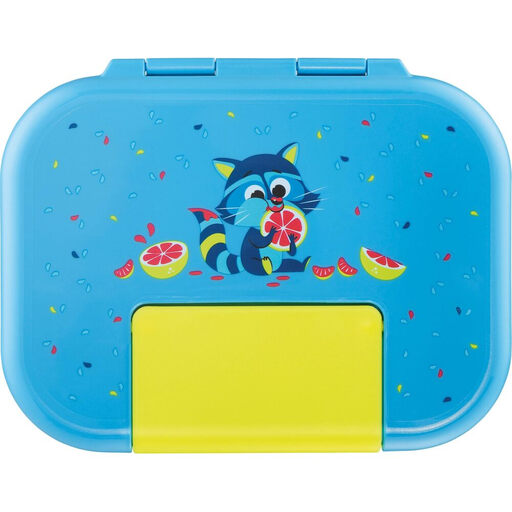
Why this choice suits this profile : Its 900 ml capacity is suitable for hearty lunches as well as days out. The attached lid also reduces the risk of losing a piece at the bottom of a school bag.
The fluorescent clip is easy to spot and handle. The product details also state that the box is not microwave-safe and must not contain hot liquids.
An 18/8 stainless-steel base, a silicone seal, an attached lid and stated dishwasher compatibility. The product details also mention BPA-free plastic for the lid and clip.
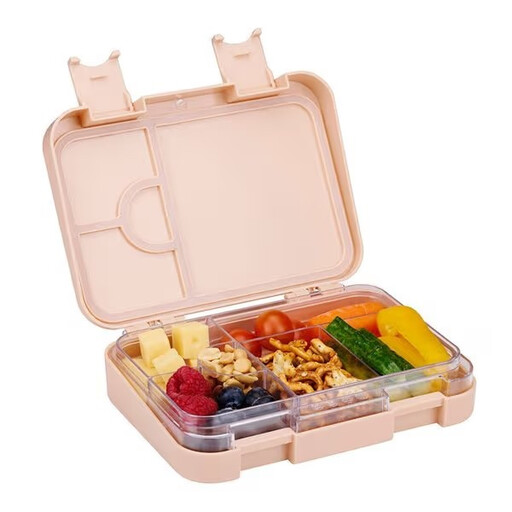
Why this choice suits this profile : Its six removable compartments are suitable for meals made up of several foods, well-organised snacks and business travel.
The product details recommend avoiding very liquid foods, as the compartments do not guarantee that sections will remain leak-free from one another. This is worth bearing in mind for sauces and very juicy fruit.
Six removable compartments, a 21 × 15 × 4.5 cm format and stated dishwasher compatibility. The colour is selected at random.
We have selected a comprehensive, real-time updated list of products that meet these demanding criteria as well as European safety standards.
For a simple snack, a compact format may be enough. For a lunch consisting of a sandwich, a piece of fruit and a side, a capacity of 600 to 900 ml offers greater flexibility. Consider the child’s age, appetite and the amount of space available in their bag.
No. The number of compartments alone does not guarantee leak-proofing. Check whether it has a seal, the type of closure and the recommendations regarding liquid foods. To carry soup or sauce, it is better to choose a box specifically designed for liquids.
Wash it after every use, dry the different parts separately and regularly check for cracks, warping or signs of wear. Follow the instructions relating to the dishwasher, microwave and high temperatures. Replace the box if the lid no longer closes properly or if the seal is damaged.