
Livraison le jour même ou le lendemain

Qualité garantie

Débloquez vos offres de bienvenue: Livraison GRATUITE | Jusqu'à -80 % | 30 jours d'essai gratuits à JoyPlus
Téléchargez l'application
The back-to-school season is approaching, and with it, the quest for the perfect children's lunch box. Caught between promises of perfect food preservation and designs that are cuter than the last, it's easy to get lost. However, a poorly chosen box can turn lunchtime into a headache for your child and a cleaning chore for you. To avoid buyer's remorse, here are the common pitfalls that can make a lunch box unusable in just a few weeks.
Choosing the right school lunch box goes far beyond its design. It's ultimately a balance of safety, convenience, and durability.
To make the right choice, here are the technical features that make all the difference in daily use. These are the points to check first before you buy.
The choice of material is crucial, both for food safety and for the lunch box's lifespan.
stainless steel lunch box: Food-grade stainless steel (type 18/8 or 304) is a reliable choice. Known for its robustness, it withstands both bumps and drops. It doesn't retain odours or stains, ensuring perfect hygiene over time. It's a more sustainable investment, even if the initial cost is often higher. Note: It is generally not microwave-safe.A children's lunch box must be easy for little hands to open and close. Examine the locking mechanism closely. Systems with large, ergonomic clips are often easier for a child to handle than multiple small latches or overly tight screw-on lids. A lid that's attached to the box is also a real bonus to prevent it from getting lost at school.
The internal organisation of the box plays a key role in meal prep.
children's bento box: Boxes with compartments, or bento boxes, are perfect for creating a varied meal without the foods mixing. They allow you to separate the main dish, vegetables, and dessert, which preserves the texture and flavour of each item.To help you decide, we've selected a few models that meet specific needs while adhering to our criteria for practicality and safety.
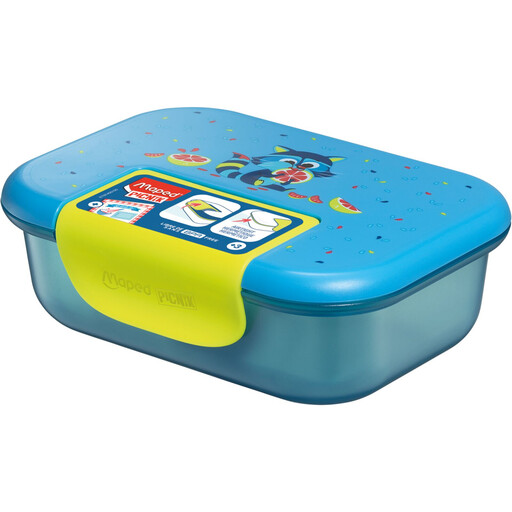
Why we love it: Perfect for parents who want a playground-proof product. Its stainless steel base is built to last and isn't afraid of bumps.
Its stainless steel construction prevents it from warping, staining, or retaining odours, unlike low-quality plastics. The attached lid eliminates any risk of it getting lost.
Healthy and durable material. Large closing clip that's easy to handle (and find!). Dishwasher-safe.
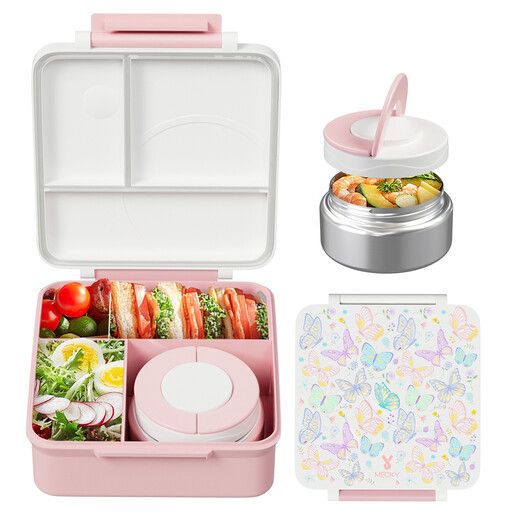
Why we love it: Ideal for kids who like to have options. Its fixed compartments perfectly separate foods for a more appetising presentation and preserved flavours.
Its children's bento design solves the problem of foods mixing and getting soggy. Its single-latch closing system is much simpler to handle than an army of small clips.
Multiple compartments to organise the meal. Large capacity for big appetites. Fun design.
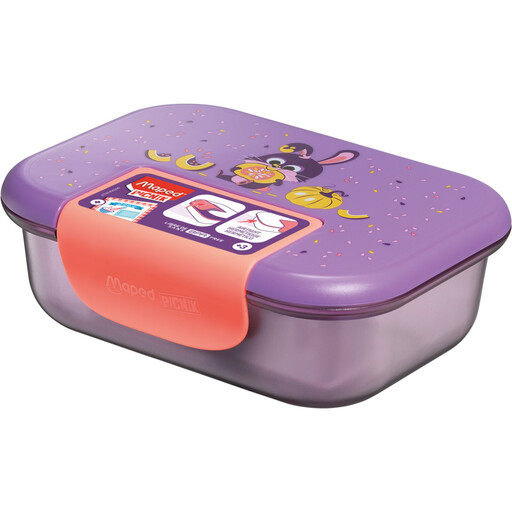
Why we love it: This model is designed for the independence of the youngest children. Its colourful design and simplified opening make it an excellent choice for a very first lunch box.
It tackles the number one problem: a lock that's too complicated. The large clip is specially designed to be easy for little hands to grab and open, so they can manage it all by themselves.
Kid-friendly opening. Robust and healthy stainless steel base. Attached lid so it never gets lost.
Explore our full selection of products that meet our quality criteria and current safety standards.
No, you should never put metal objects, including a stainless steel lunch box, in a microwave oven. The metal can create sparks and damage your appliance. If you need to reheat the meal, remember to transfer the food to a microwave-safe container (glass or plastic).
Ideally, you should wash the box right after use. If it's compatible, the dishwasher is the easiest solution. Otherwise, washing by hand with hot water and dish soap is sufficient. Don't forget the seal! On many models, it's removable for a thorough cleaning. For stubborn odours, a soak in water and baking soda works wonders.
The two terms are often used interchangeably. Originally, the lunch box is a generic English term for any box used to carry a meal. The bento, on the other hand, comes from Japan. It specifically refers to a compartmentalised box designed to organise a complete and balanced meal. Today, most children's lunch boxes are inspired by the bento format because it is simply more practical.