
Livraison le jour même ou le lendemain

Qualité garantie

Débloquez vos offres de bienvenue: Livraison GRATUITE | Jusqu'à -80 % | 30 jours d'essai gratuits à JoyPlus
Téléchargez l'application
For a child aged 7 to 12, choosing a football isn’t just about picking a nice colour or their favourite club’s badge. The size, the cover material and the water resistance all have a direct impact on playing comfort, ball control and how long the ball lasts.
That said, some marketing claims are worth taking with a pinch of salt. A ball described as suitable for “all surfaces” won’t necessarily last long on a stony pitch. Conversely, a very lightweight model can lack stability when passing. Before you place an order, it’s worth knowing the most common pitfalls.
Age gives you a starting point, but the child’s ability and build also matter. A ball that’s too big can make control and keepy-uppies more difficult. On the other hand, a ball that’s too small won’t always feel the same as the one used at the club.
A ball used for outdoor training can quickly end up on damp grass, in the rain or on wet sand. If its cover absorbs water, it can become heavier and less pleasant to handle. Go for a construction that’s clearly described as waterproof, and dry the ball after every use.
When they’re not included, you’ll need to buy the pump, inflation needle and storage bag separately. A football that comes with a pump lets you start playing straight away and keep the pressure right without extra expense.
For children and young players, the most common sizes are:
For a 7-year-old beginner, size 3 can be easier to handle. Between 8 and 12, size 4 is generally a sensible choice for training and outdoor games. However, the club’s or coach’s guidance should always come first.
A rubber football or one with a rubberised foam cover can offer a softer touch. A seamless construction also reduces the areas that can trap moisture. Longsail product descriptions mention a seamless rubberised foam casing, designed to absorb impact and resist water.
That doesn’t mean you can skip choosing a suitable surface – no ball should be used near sharp objects or on a surface that could damage its structure.
According to the manufacturer’s specifications, a double-layer valve can help reduce air loss. The recommended pressure should be your main guide: for a Longsail size 4, the description states a range of 7 to 9 PSI. Use a suitable needle and moisten it slightly before inserting it to reduce the risk of damaging the valve.
After a session in the rain, wipe the ball with a damp or dry cloth depending on its condition, then let it dry away from direct heat. Store it in a cool, dry place, away from abrasive surfaces.
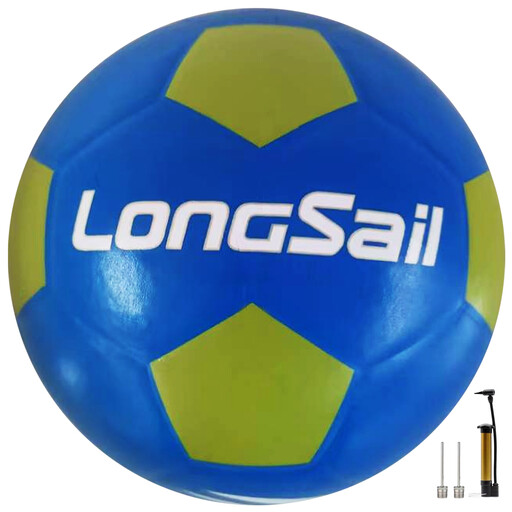
Why this suits this profile: Size 3 makes early dribbling, passing and control exercises easier for young children. The kit is said to include a pump, inflation needle and mesh bag.
The small size stops you choosing a ball that’s too big for a beginner. The construction, described as waterproof, limits water absorption during outdoor play.
Size 3, seamless rubberised foam cover, pump and storage bag included according to the product description.
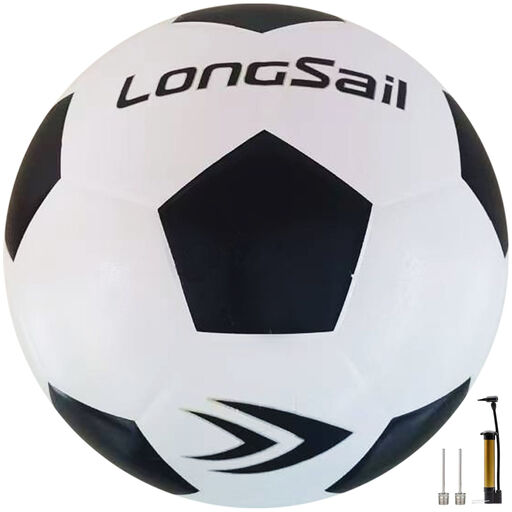
Why this suits this profile: This size 4 model is ideal for young players looking for a versatile training ball for the garden, the park or a grass pitch.
The size is clearly stated and the description distinguishes this model from sizes 3 and 5. The seamless cover is described as water-resistant.
Stated circumference of 63.5 to 66 cm, recommended pressure of 7 to 9 PSI, pump, needle and bag included according to the description.
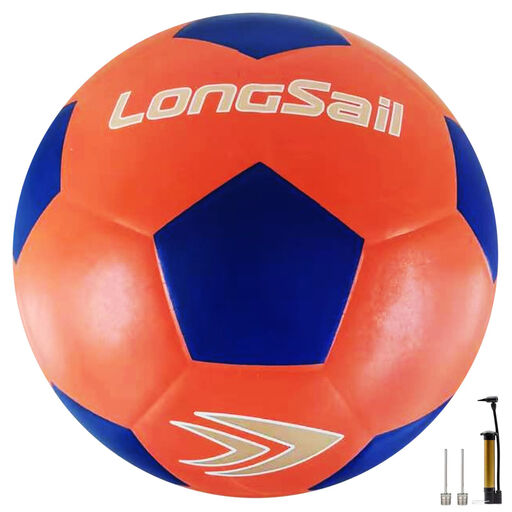
Why this suits this profile: The colour combination makes the ball easier to spot in a garden, park or on damp grass. Size 4 is ideal for regular sessions.
The description specifies the size, material and care instructions. That helps you avoid a purchase based only on looks or a vague promise of durability.
Rubberised foam cover described as waterproof, double-layer valve and accessories included according to the product description.
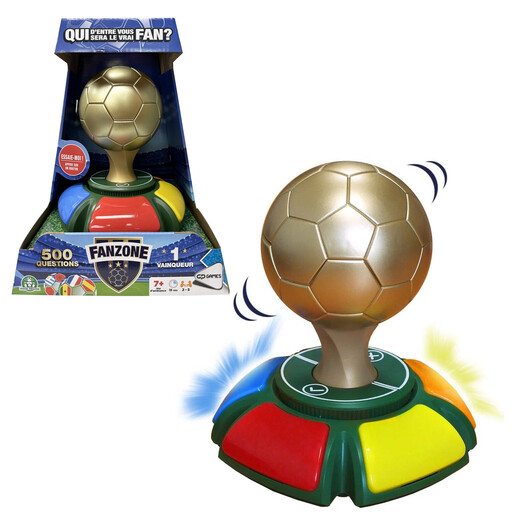
Why this suits this profile: This quiz lets you keep the football passion going at home, with 2 to 5 players and games said to last 15 to 20 minutes.
The two difficulty levels mean children can join in too, rather than the quiz being just for adults. The number of questions and themes are stated before you buy.
500 questions, five themes, voice system and three AA-LR6 batteries included according to the description. The game contains small parts and must be used under adult supervision.
We’ve put together a full list, updated in real time, of products that meet these selection criteria and European safety requirements.
Size 4 is generally suitable for children aged 8 to 12, especially for training. At age 7, a size 3 ball can be easier to control, particularly for a beginner. The rules of the age group and the club’s recommendations are still the best guide.
Wipe the surface after every use on damp or sandy ground. Avoid radiators, prolonged exposure to sunlight and sharp objects. Check the pressure regularly, then store the ball in its bag or in a dry place.
Yes. Having a pump and needle included usually means you don’t need to buy them separately to begin with. However, you still need to keep an eye on the condition of the pump and valve, because how often you need to inflate the ball depends on use, storage and the type of bladder inside.