
Livraison le jour même ou le lendemain

Qualité garantie

Débloquez vos offres de bienvenue: Livraison GRATUITE | Jusqu'à -80 % | 30 jours d'essai gratuits à JoyPlus
Téléchargez l'application
Choosing children’s colouring and painting supplies isn’t just about counting how many colours come in a set. Between products promising to be “washable”, tips that dry out in a few days, and boxes that are impossible to tidy away, some purchases can prove disappointing from the very first use.
Parents, teachers, schools and activity centres should first check the recommended age, how easy it is to clean, the durability of the tools, and the type of surface they’re intended for. Here are the criteria to run through before you buy, along with a selection suited to different needs.
A washable felt-tip pen or washable wax crayon will generally come off skin and many fabrics more easily. However, this doesn’t guarantee that every mark will disappear from every surface. The time you take to act also matters: a fresh ink or paint mark is much easier to clean than one that has already dried.
To avoid nasty surprises:
A large number of colours isn’t necessarily a sign of practicality. Little ones can easily lose crayons and lids, while a classroom mainly needs sturdy storage that’s easy to check. For a first activity, 10 to 24 colours are usually enough. A wider assortment really comes into its own for mixing, gradients or longer-term art projects.
So the format should match the use: a small set that’s easy to carry, a rigid box for school, or a complete assortment for a creative workshop.
Crayons that are too thin can slip through young children’s fingers. A fragile lead or a lid that doesn’t fit well also shortens the life of the materials. Triangular shapes make them easier to grip and stop crayons from rolling off the table. Very thick crayons, like the wax crayons designed for the youngest children, are easier to hold but less suited to fine detail.
The age stated on the packaging remains an essential guide. Products containing small parts are not suitable for children under 3 and must be used under adult supervision when the instructions say so.
Look for a clearly visible age indication, as well as warnings about ingestion, small parts and contact with eyes. A statement of compliance with the relevant European requirements for toys or articles is a useful indicator, but it never replaces adult supervision.
Soft pastels produce a fine dust: they are better suited to older children, in a well-ventilated room and with an adult present. Acrylic markers, on the other hand, can adhere to surfaces such as wood, glass or ceramic. So it’s best to protect the table before using them.
For drawing supplies intended for a classroom or workshop, sets that include several formats can save you from buying each tool separately.
Felt-tip pens must be recapped immediately after use. Some should be stored horizontally, others with the tip pointing down: follow the manufacturer’s instructions. Paint tubes must be closed carefully to prevent them drying out. A compartmentalised box or a dedicated pencil case reduces losses and makes tidying up easier after children’s art activities.
For paper, choose a weight that suits the technique you’re using. Paper that’s too thin may buckle with watercolour or diluted paint, while a thicker surface will be better for washes.
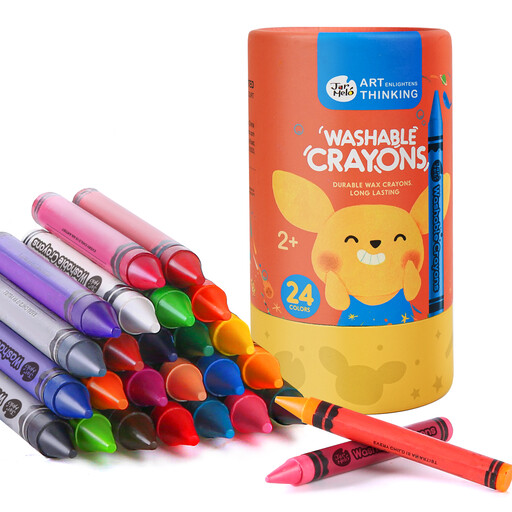
Why this choice suits this profile: These 24 generously sized wax crayons are easy for young children to hold and are perfect for first colouring activities, at home or in the classroom.
The chunky format makes them easy to grip, and the formula described as washable simplifies cleaning from skin and many fabrics. You still need to act quickly on marks, though.
24 colours, jumbo format and no sharpener needed for wax crayons.
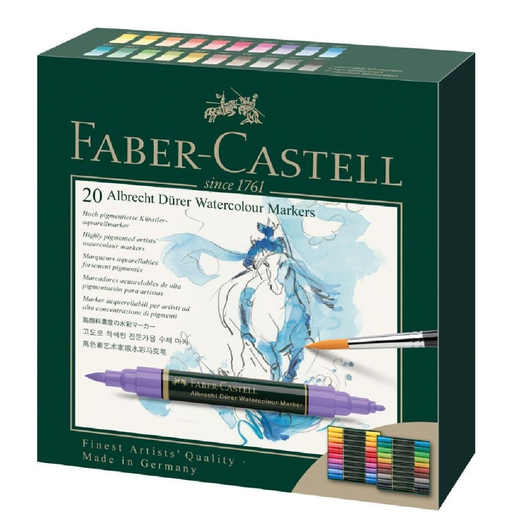
Why this choice suits this profile: With their dual tips, these markers are aimed at teenagers, budding artists and adults who want to combine precise drawing with watercolour effects.
The two tips mean you don’t need to buy a fine liner and a brush separately. The water-based ink can be worked with water on suitable paper; however, it shouldn’t be confused with pan watercolours.
20 markers, flexible brush tip, fine tip and water-soluble ink.
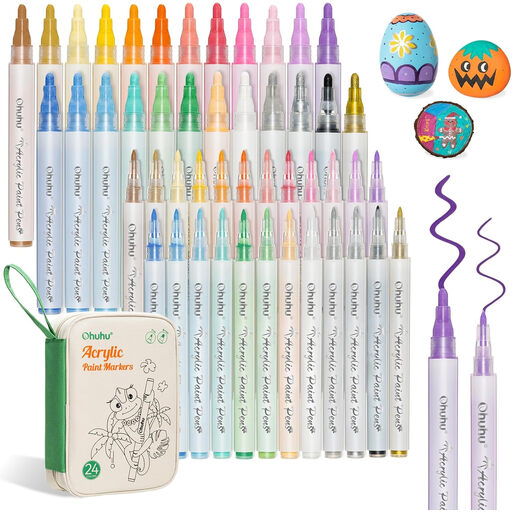
Why this choice suits this profile: Its range of tip styles and compatibility with different surfaces make it an appealing option for creative workshops, decorating objects and ongoing projects.
The product description states a water-based ink and 48 markers split between fine, round and chisel tips. These acrylic markers are not, however, described as washable on all fabrics.
24 colours in double format, ink described as highly pigmented and compatibility with paper, wood, glass, ceramic and plastic.
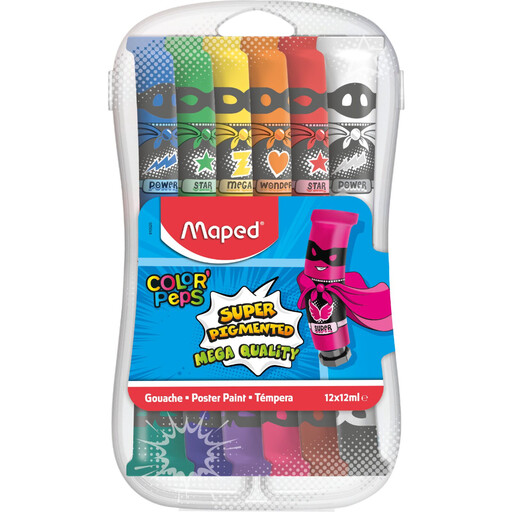
Why this choice suits this profile: The 12 tubes and the box that doubles as a palette are ideal for classroom projects, craft activities and painting sessions at home.
The attached lids reduce the risk of losing them, and the built-in compartments stop you from accumulating extra accessories. The paint still needs to be closed after each use.
12 colours, sturdy storage box and the ability to achieve more transparent effects by adding water.
We’ve put together a comprehensive list, updated in real time, of products that meet these demanding selection criteria and European safety regulations.
A creative kit for children should stay practical and contain only the tools needed for the project. For a colouring activity, include children’s coloured pencils, water-based felt-tip pens and paper. For painting, add an apron, a washable tablecloth, suitable brushes and a stable container.
Triangular coloured pencils made of wood or resin are well suited to learning the drawing motion. Pencils that don’t need sharpening, such as some all-lead models, reduce waste and interruptions. For a more sensory activity, soft pastels offer an interesting powdery texture, but they require more precautions and a suitable surface.
Start with thick wax crayons, easy-to-hold coloured pencils or washable felt-tip pens with a broad tip. A palette of 12 to 24 colours is usually enough for learning to fill in a shape, recognise shades and control the pressure applied to the tool.
It all depends on how often they’re used, the storage conditions and how well the lids and tubes are closed. A felt-tip pen left uncapped can dry out very quickly. Store felt-tip pens according to the manufacturer’s recommendations and close paints as soon as the activity is finished. Replace any tool whose tip is damaged or whose ink has changed in appearance.
Watercolour is suitable for washes and transparent mixes on suitable paper. Children’s gouache paint gives a more opaque finish and is applied with a brush. Acrylic markers are handy for decorating different surfaces, but they require you to protect the work area and don’t offer the same cleaning properties as washable felt-tip pens. The choice should depend on the child’s age, the surface and the planned activity.