
Livraison le jour même ou le lendemain

Qualité garantie

Débloquez vos offres de bienvenue: Livraison GRATUITE | Jusqu'à -80 % | 30 jours d'essai gratuits à JoyPlus
Téléchargez l'application
Choosing children’s colouring supplies isn’t just about counting how many colours come in a box. For a little one, a felt-tip pen that’s too thin can be hard to hold, a fragile nib may push in quickly, and ink labelled as washable can still leave marks on certain surfaces.
Parents, early-years professionals, teachers and anyone looking for creative supplies need to consider several practical criteria before placing an order.
A set of 24 or 36 colours might look like a great deal. But a generous palette doesn’t make up for a format that’s poorly suited to the child’s age. For early activities, how easy it is to hold, safety and how sturdy the items are often matter more than quantity.
Washable colouring pens make cleaning skin and many fabrics easier. However, the result depends on the surface, how long the ink has been left to dry and the material of the clothing. If a stain does appear, it’s best to act quickly by rinsing with cold water and soap, while avoiding delicate surfaces.
Caps are small parts that could end up in a child’s mouth. Sharp pencils and the shavings produced when sharpening also need supervision. Before buying, check the recommended age, the manufacturer’s warnings and whether the product carries any applicable safety marks.
Ergonomic colouring pencils and triangular felt-tip pens often give a more stable grip than a perfectly round barrel. A jumbo size is also easier for a beginner to hold.
For activities from 1 year old, look for:
The shape won’t replace learning the skill, but it can make those first sessions much more enjoyable.
Young children often press hard on the paper. Felt-tip pens with a resistant nib or one mounted on a spring reduce the risk of the nib deforming too soon.
Depending on the use, several types of nib can be distinguished:
For children’s markers, always replace the cap after each use to stop them drying out.
A “water-based” or “washable” label gives a useful indication, but it doesn’t guarantee that every stain will come out of every fabric. Also check the usage precautions: minimum age, supervision needed, contact with mouth and eyes, storage conditions and whether there are any small parts.
Metallic markers, for example, are great for adding visual effects to creations. They’re not a replacement for standard felt-tip pens when filling in large areas quickly. Children’s ballpoint pens, on the other hand, are better suited to writing and colour-coding homework than to colouring big illustrations.
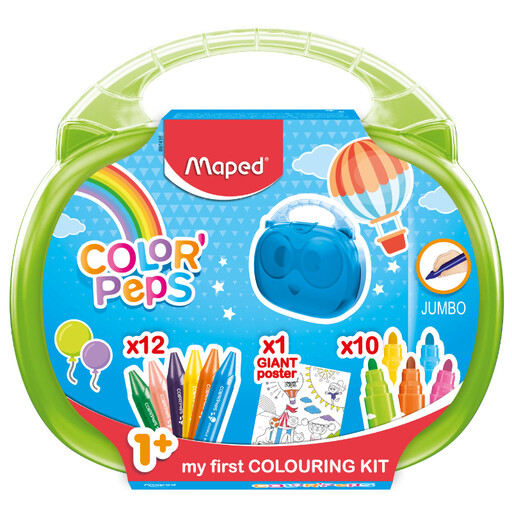
Why this choice suits this profile: This set brings together 10 jumbo felt-tip pens, 12 jumbo wax crayons and a large colouring poster measuring 51 × 33 cm. It’s suitable for first creative activities at home or on the go, according to the age stated on the product page.
The felt-tip pens use ink described as ultra-washable and have locked 5 mm nibs, while the triangular wax crayons don’t need sharpening.
Jumbo format, case with handle and contents linked to a complete colouring activity. To be used under direct adult supervision.
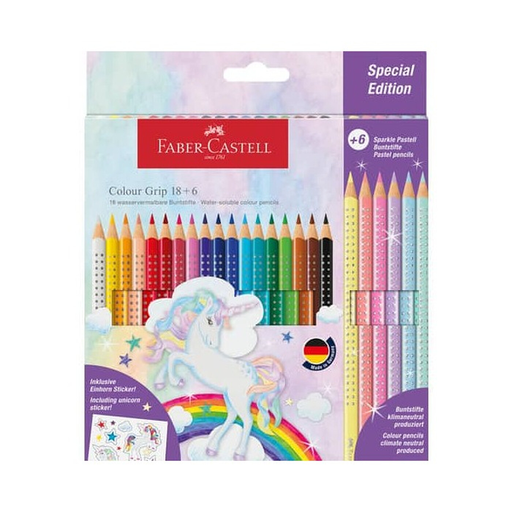
Why this choice suits this profile: With 24 colouring pencils – 18 classic shades and 6 special colours – this set is aimed at children aged 3 and over who enjoy detailed colouring and themed worlds.
The triangular shape and grip zone make control easier, while the leads are described as break-resistant, reducing interruptions from snapped tips.
24 shades, a sturdy box decorated with a unicorn and wooden pencils with a triangular grip. A sharpener is still needed for maintenance.
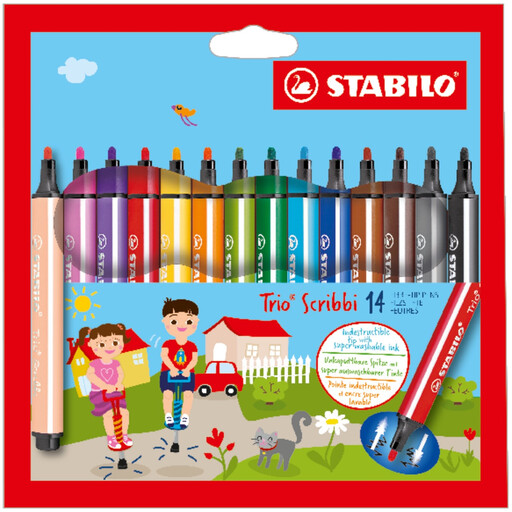
Why this choice suits this profile: This pack of 14 colours is designed for children who colour regularly at home, in class or during group activities.
The spring-mounted nib is designed to withstand heavy pressure. The ink is described as washable from skin and most fabrics.
Thick triangular barrel, 14 colours and a storage pouch. The product is stated as not suitable for children under 36 months.
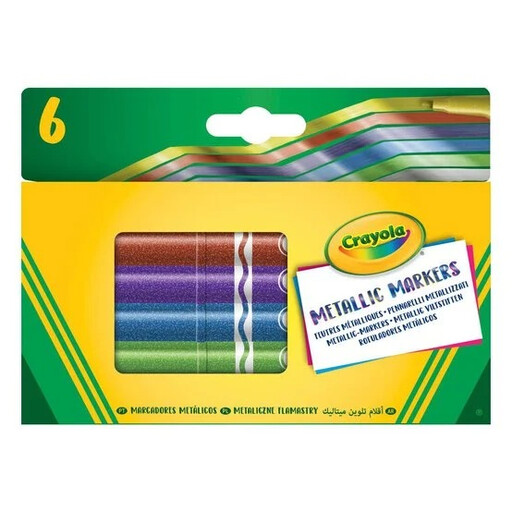
Why this choice suits this profile: These six metallic markers complement an existing pencil case and add decorative details to cards, posters and other creative projects.
This is a specialised six-colour add-on, not a set presented as all-purpose. Caps must be replaced after each use.
Metallic ink, suitable for use on light or dark papers according to the product page, and nibs designed to keep a consistent line.
We’ve put together a comprehensive, real-time updated list of products that fully meet these demanding selection criteria and European safety regulations.
The recommended age depends on the model. Some sets are designed from 1 year old, while other pencils or markers are for children aged 3 and over. Adult supervision is always essential, especially when caps or small parts are involved.
Replace each cap straight after use, store the pens in a dry place and avoid direct sunlight. For colouring pencils, use a suitable sharpener and put them back in their box to reduce knocks.
Go for sets that are easy to identify, with thick barrels, inks described as washable and storage boxes. For groups, children’s markers with a resistant nib can cut down on frequent replacements. However, always check the setting’s guidelines and the recommended ages before putting together a pencil case.