
Livraison le jour même ou le lendemain

Qualité garantie

Débloquez vos offres de bienvenue: Livraison GRATUITE | Jusqu'à -80 % | 30 jours d'essai gratuits à JoyPlus
Téléchargez l'application
Children’s building sets hold a special place among hands-on activities: you can create, take apart, start again, and sometimes even play with your finished creation. However, choosing the right set isn’t simply a matter of counting the pieces listed on the box.
Parents and relatives often fall into the same traps. A large number of bricks can become difficult to sort, a highly detailed model risks discouraging a young child, and a toy marketed as educational isn’t necessarily suited to the age or independence level of the child who will receive it. Here are the key criteria to consider before buying, along with a selection tailored to different profiles.
A set with several hundred pieces isn’t automatically more interesting or easier to use. Young builders can spend their time searching for a tiny brick or feel stuck staring at a box without knowing where to start. Conversely, a simpler set enriched with wheels, eyes, windows or base plates can do much more to encourage creative play.
Small bricks and loose parts pose a choking hazard for children under 3. A set aimed at 7 or 8 year olds also assumes the ability to follow instructions, stay focused and handle small pieces. The age stated by the manufacturer should therefore remain your first reference point when choosing.
Bricks scattered everywhere make the next activity more difficult and increase the risk of losing pieces. A storage box, a carry case or separate compartments make building play much more enjoyable day to day, especially in a bedroom or home where every inch counts.
For a building set for children from 3 years, check that the age is clearly stated and look for warnings about small parts. The LEGO Classic sets featured here are generally suitable from 4 years, while several LEGO Creator sets are aimed at children aged 7 or 8.
An open-ended set that offers a few ideas without imposing a specific model will suit children who love inventing their own creations. A guided model will be better for those who prefer to progress step by step with clear instructions.
Classic building bricks let you construct houses, vehicles, animals or completely free creations. LEGO Creator 3-in-1 sets allow you to rebuild several models from the same pieces – though the different versions cannot be built at the same time.
Magnetic blocks snap together using magnetised pieces to form geometric structures. Before buying, take time to check the recommended age, the presence of magnets, the materials used and the applicable safety standards. A product marketed as a STEM educational toy doesn’t excuse you from checking this essential information.
For a toy sold in France, look for available compliance information, particularly the CE mark and details relating to European toy safety regulations. Some listings also mention compliance with EN 71 or REACH; this information should be verifiable on the product page.
For cleaning, a soft, slightly damp cloth is usually enough to clean plastic bricks. Avoid immersing them or using chemical products if the instructions advise against it. Small pieces should be kept in a closed box, out of reach of very young children.
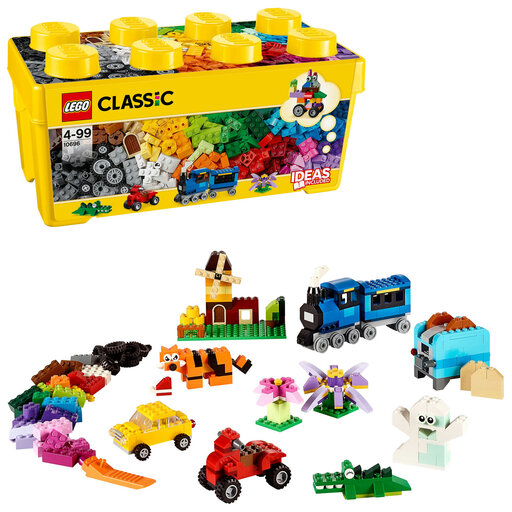
Why this choice suits this profile: With 484 pieces, 35 colours, windows, eyes, wheels and a green base plate, this set provides a versatile foundation for getting started without having to follow a set model. Suitable for children from 4 years.
The included ideas help get started, while the storage box prevents pieces from being scattered all over the bedroom.
Free play, no batteries required, and comes with a LEGO plastic storage box.
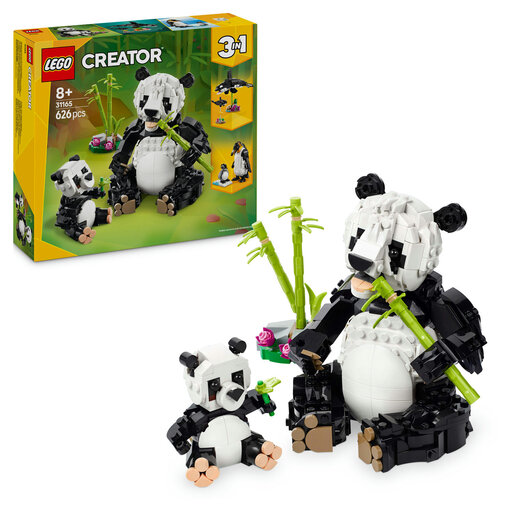
Why this choice suits this profile: This 626-piece set is aimed at children from 8 years who love animals, articulated models and builds good enough to display.
The three animal families allow for varied builds without having to buy a second set straight away.
An articulated panda, orca and penguin; the LEGO Builder app offers 3D views and lets you track your building progress.
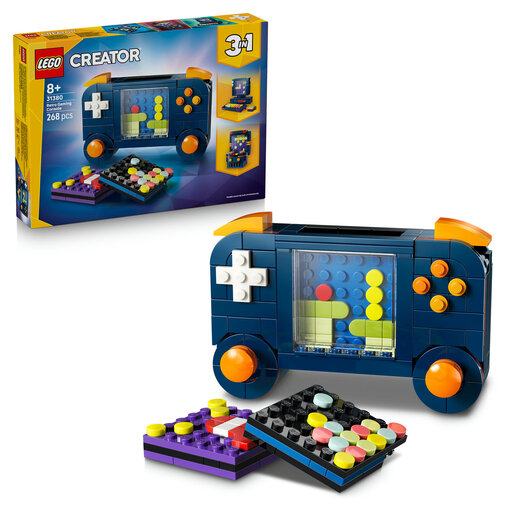
Why this choice suits this profile: From 8 years, children and gaming enthusiasts can build a console, a computer or an arcade cabinet from the same bricks.
Its specific theme provides a concrete starting point, while still offering a choice between three different builds.
268 pieces, rotating buttons, controllers and removable cartridges on the console model.
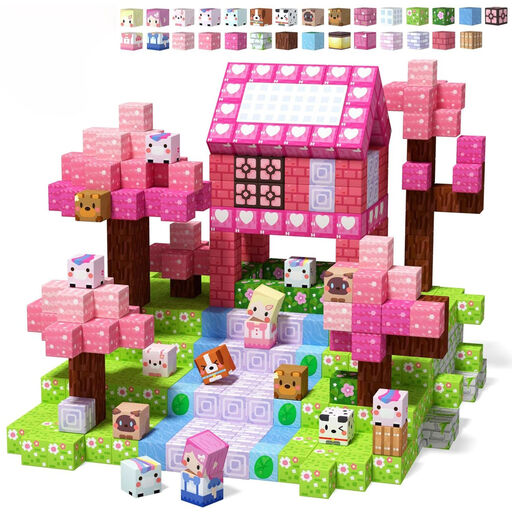
Why this choice suits this profile: Recommended from 3 years, this set combines a themed world with a magnetic assembly system, ideal for children drawn to shapes and colourful builds.
The unicorn theme can inspire the child without locking them into a single build; however, please check the safety information before use.
100 pieces stated and 29 tree models mentioned on the product page.
We’ve put together a comprehensive, real-time updated selection of products that meet these strict criteria as well as European safety requirements.
Choose a product whose recommended age clearly matches this use and check the size of the pieces. Magnetic blocks may suit some children, but the presence of magnets and safety warnings must be checked on the product page. The LEGO Classic sets mentioned here are recommended from 4 years.
Manipulating, slotting together and separating pieces, or recreating a model, engages hand-eye coordination. These activities can therefore contribute to fine motor skill development, without being a guarantee of any educational or medical outcome.
It all depends on the durability of the pieces, the quality of storage and the child’s interest. An open-ended set, like a box of bricks, can be reused in countless scenarios. A themed model can later become a decorative item or be taken apart to make way for a new build.