
Livraison le jour même ou le lendemain

Qualité garantie

Débloquez vos offres de bienvenue: Livraison GRATUITE | Jusqu'à -80 % | 30 jours d'essai gratuits à JoyPlus
Téléchargez l'application
Buying a children’s bike is about more than simply choosing a colour or design. From balance bikes for babies and growing tricycles to pedal bikes, differences in stability, weight and adjustability have a direct impact on learning and comfort.
Some marketing claims also deserve closer attention. A bike described as “growing with your child” will not necessarily be suitable for every stage, while a model packed with features can quickly become heavy and difficult to handle. Here are the key points to check before placing your order.
The recommended age provides a useful starting point, but it does not replace checking your child’s height, inside leg measurement and confidence on the bike. Two children of the same age may need different wheel sizes.
For a children’s bike for ages 2 to 4, pay particular attention to the saddle height and make sure your child can place their feet on the ground when starting to learn. For a children’s bike for ages 4 to 7, 16-inch models are common, but the product details should confirm the suitable height range.
A lightweight frame can make starting off and changing direction easier. However, a bike that is too large or poorly adjusted will remain difficult to control, even if it is made from a lightweight material. Conversely, a heavier model may feel sturdy, but it will require more effort on hills or when carrying it up the stairs.
Even when a product is delivered “almost assembled”, a full check is essential. The brakes, steering, pedals, wheels and fixings should all be inspected before the first ride. The advertised price does not always include essential accessories, such as a helmet, protective gear or lights, depending on the intended use.
A baby balance bike is a first step without pedals, allowing your child to move forwards by pushing along with their feet. For younger children, a tricycle fitted with a parent handle can make accompanied outings easier. The handlebars and saddle should allow a natural position, without overextended legs or strained shoulders.
The terms 16-inch children’s bike and 20-inch children’s bike refer to the diameter of the wheels, but they are not enough on their own to determine whether a model is suitable. The Hiland Starry 16-inch, for example, is stated to be suitable for children measuring between 105 and 135 cm, while the Hiland Roon has 20-inch wheels and an 18-inch frame.
A bike with stabilisers can provide reassurance during the first sessions. However, the stabilisers must be fitted correctly and removed once your child starts finding their balance. On a growing tricycle, limited steering can help prevent sudden, sharp turns of the handlebars. Some models also feature an adjustable parent handle, which is useful on walks when an adult needs to control the direction of travel.
The Smoby Baby Driver, available in pink or grey, supports several stages, from 10 months to over 3 years, according to the product details. It includes a harness, parking brake, retractable footrest and adjustable parent handle.
For a child who is just starting out, choose brakes that are easy to reach and operate. The Hiland Starry combines a front V-brake with a rear coaster brake. The RoyalBaby EZ New Freestyle 16-inch has two V-brakes, as well as an adjustable saddle and handlebars.
A children’s mountain bike or BMX is designed for different needs from a bike intended for leisurely rides. The wide tyres, gears and disc brakes on the Hiland Roon 20-inch may be suitable for a variety of paths, but its stated weight of approximately 16.8 kg should be taken into account. The Hiland Redeem BMX adds a 360° rotor and four foot pegs; these features require closer supervision and regular checks of the fixings.
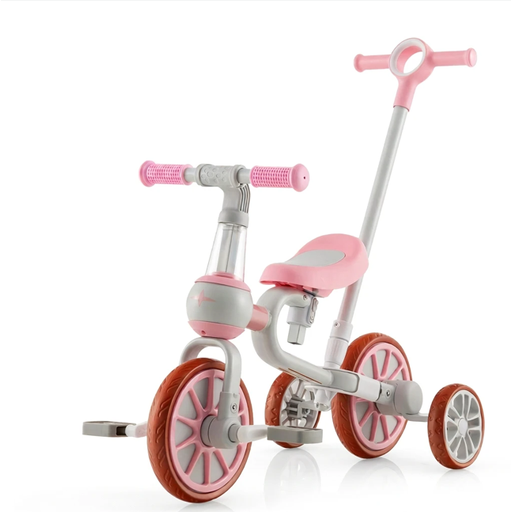
Why this choice suits this profile : This tricycle supports your child’s first outings and can be used with or without the parent handle, depending on their level of independence.
The modes, pedals and parent handle are removable. This means use can evolve gradually, without having to replace the product too soon.
Four handle positions, adjustable saddle from 33 to 37 cm, EVA wheels and a stated maximum load of 30 kg.
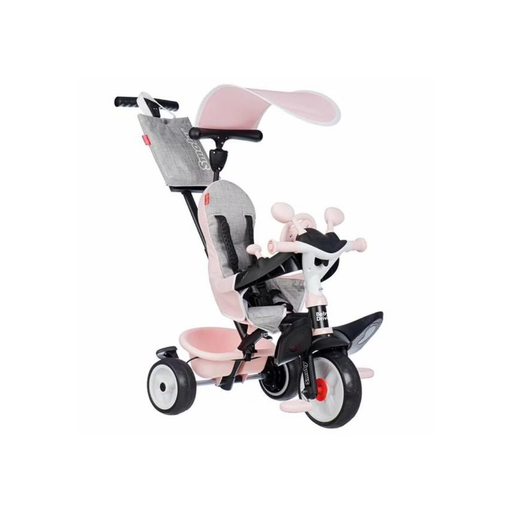
Why this choice suits this profile : It is ideal for families looking for a complete ride-on solution, with several adjustment options and integrated accessories.
The riding and gradual learning functions are clearly separated, with a parking brake and harness for accompanied outings.
Handle adjustable to three positions, washable cover, adjustable sunshade and puncture-proof, quiet tyres.
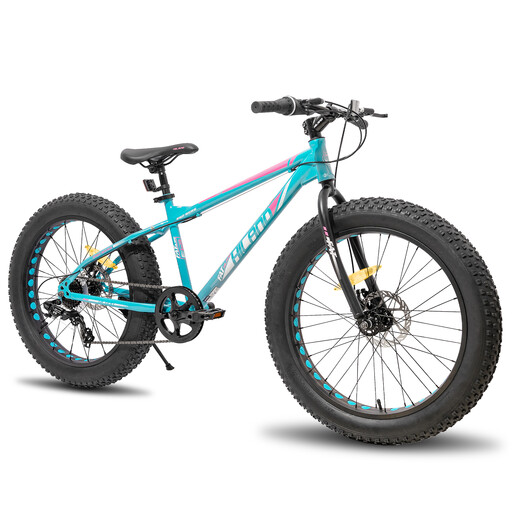
Why this choice suits this profile : This all-terrain bike is designed for young riders who are already independent, for varied paths and longer rides.
The product details specify the tyre dimensions, seven-speed drivetrain and disc brakes, rather than relying on a vague promise of versatility.
20 × 4-inch wide tyres, seven speeds and dual mechanical disc brakes. Stated weight of approximately 16.8 kg.
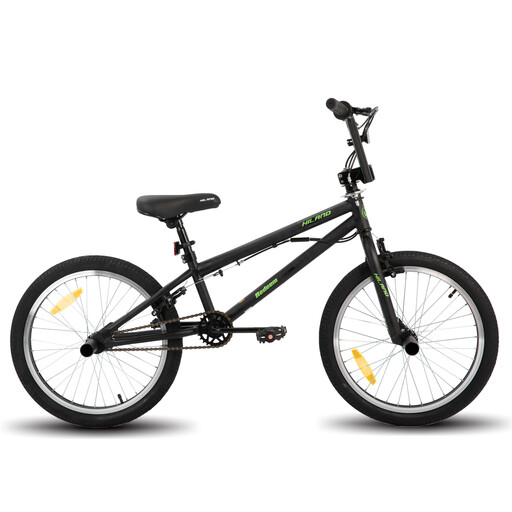
Why this choice suits this profile : This BMX is aimed at riders who want to try freestyle, jumps or dedicated courses.
The 360° rotor and BMX brakes are clearly specified. However, these features do not replace the need to wear a helmet and protective gear.
Hi-Ten steel frame, 20 × 2.35-inch tyres, 360° rotor and four included foot pegs.
We have put together a complete, real-time updated list of products that meet these demanding selection criteria and European safety regulations.
Before every ride, an adult should check the following :
For regular use, clean the frame with a damp cloth, lubricate the chain if necessary and store the bike away from moisture. Always follow the instructions and the weight limits specified by the manufacturer.
A growing tricycle, balance bike or model with a parent handle may be suitable, depending on your child’s level of independence. Check the saddle height, whether your child can place their feet on the ground and how the steering works. A pedal tricycle is more suitable for a child who has already mastered the coordination between propulsion, direction and braking.
The right size depends on your child’s height and inside leg measurement, not just their age. 16-inch wheels are often intended for children aged 4 to 7, while 20-inch models are generally suitable for taller children. Always check the measurements stated on the model’s product page.
How long it can be used depends on your child’s growth, how often they ride, storage conditions and maintenance. An adjustable saddle and handlebars can delay the need for a replacement, but a bike that has become too small, unstable or difficult to brake should be replaced, even if it still appears to be in good condition.