
Livraison le jour même ou le lendemain

Qualité garantie

Débloquez vos offres de bienvenue: Livraison GRATUITE | Jusqu'à -80 % | 30 jours d'essai gratuits à JoyPlus
Téléchargez l'application
Buying a children’s bike is not simply a matter of choosing a colour or a character they like. A model that is too large will be difficult to control, while a heavy or poorly equipped bike could put them off from their very first attempts. Some accessories presented as real benefits can also increase the price without being essential.
Here are the main pitfalls to avoid before choosing a girls’ bike, a boys’ bike, a balance bike or a tricycle.
The age stated by the manufacturer is only a guide. The child’s height and inside leg measurement should take priority. Two children of the same age may need different models: one may need a 16-inch children’s bike, while another may need a 20-inch model.
Once the saddle has been adjusted, the child should be able to place both feet on the ground when using a balance bike or tricycle. On a pedal bike, they should be able to reach the handlebars and levers without stretching their arms or losing their balance.
A lightweight children’s bike is generally easier to handle, lift and carry. However, make sure that the search for a lighter bike does not come at the expense of practicality: brakes that are difficult to reach, a non-adjustable saddle or inadequate protection are all drawbacks to look out for.
By way of indication, a Smoby First Bike balance bike weighs 2.5 kg, while some 16-inch children’s bikes weigh more than 10 kg. This difference is noticeable from the very first outings, particularly when going up or down stairs.
A basket, stand or stabilisers can be useful in everyday life. However, they cannot replace proper adjustment or adult supervision. For rides on paths, a children’s mountain bike with wide tyres and gears will often be more suitable than a city bike with a basket.
The dimensions below provide an initial indication, but they should always be compared with the child’s actual size:
The frame should make it easy to get on the bike. A low frame makes mounting easier, while an adjustable saddle and handlebars allow the bike to be used for longer.
A learning bike should allow the child to brake gradually. Depending on the model, it may have a front V-brake, a rear coaster brake or two handlebar brakes. In all cases, check that the levers remain within easy reach of small hands.
On models intended for younger children, limiting the steering angle can reduce sudden movements. Also examine the bike from every angle: a chain guard, handlebar end caps, non-slip pedals and a stable stand are all details that make a difference in everyday use.
In France, wearing a helmet while cycling is compulsory for children under 12, whether they are riding or travelling as passengers. Choose a helmet that complies with the EN 1078 standard and adjust it correctly. For children’s BMX riding, knee and elbow protection is also recommended.
Wide tyres can improve stability on uneven surfaces. All-terrain tyres are suitable for mixed use, while 4-inch “fat” tyres are designed more for sand, gravel or mud.
A children’s bike with gears becomes useful once the child has mastered the basics and is riding on hilly routes. For beginners, a single-speed drivetrain avoids an extra control to manage and allows them to focus on balance, braking and direction.

Why this choice suits this profile : Its single-speed drivetrain and stabilisers support those first journeys, under adult supervision, on residential roads or suitable cycle paths.
The low-step frame, chain guard and two braking systems reduce the common difficulties associated with bikes for beginners.
16-inch wheels, 1.95-inch tyres, front V-brake, rear coaster brake, basket and stand included.
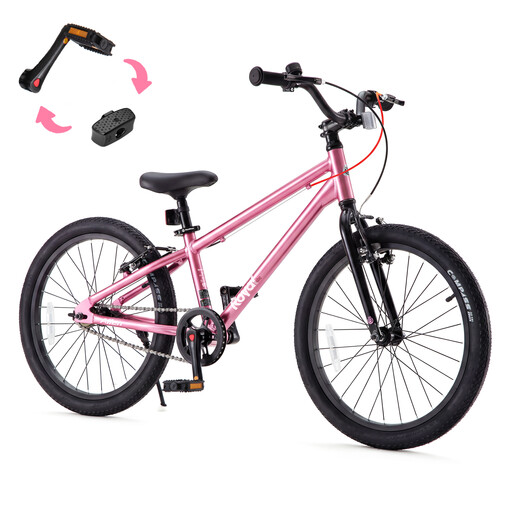
Why this choice suits this profile : Its aluminium alloy frame and 2-in-1 system support the child’s gradual transition from balancing to pedalling.
With a stated net weight of 6.9 kg, it remains relatively easy to handle. Its low step-through height also makes mounting easier.
Aluminium frame, quick-release cranks, dual V-brakes and hybrid tyres for adapting to several surfaces.
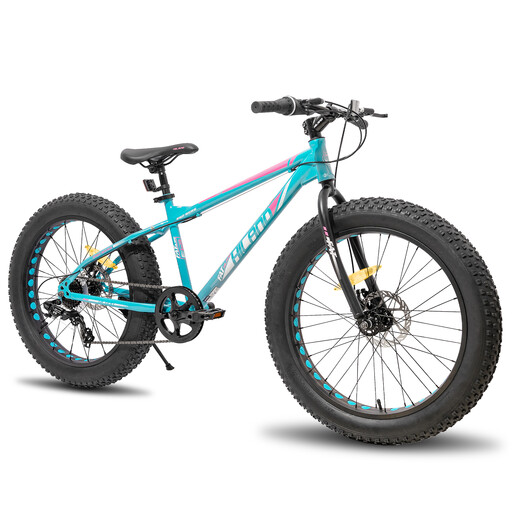
Why this choice suits this profile : It is aimed at families who alternate between paths, gravel, grass and longer rides, with a drivetrain suited to changes in gradient.
Its seven gears and 4-inch tyres make it suitable for a wider range of uses than a single-speed city bike.
7-speed Shimano drivetrain, dual mechanical disc brakes, 20 × 4.0-inch tyres and Hi-Ten steel frame.
We have put together a comprehensive, real-time selection of products that meet these strict criteria and European safety regulations.
Between 1 and 3 years old, a lightweight children’s balance bike allows the child to focus on balance and steering. The Moto “Premier” model weighs 2.2 kg and has wide, quiet wheels. However, its product information states a maximum load of 25 kg and that it must be used under adult supervision.
A children’s tricycle provides a stable base and is suitable for short journeys. The Costway model has non-slip pedals, handlebars limited to 30° and a net weight of 5 kg. Even so, remember to check the seat height and maximum load specified by the manufacturer.
A 4-in-1 growing bike supports several stages thanks to its removable pedals, parent handle and stabilisers. It can be practical between the ages of 2 and 4, provided that you regularly check the fastenings after each configuration change.
When your bike arrives, follow the instructions and always check:
Clean the frame with a damp cloth, dry the metal parts and lubricate the chain when recommended in the instructions. No children’s bike should be used on public roads without following the rules of the road and using the compulsory equipment.
A balance bike or learning bike with an adjustable saddle is suitable while the child is still developing their balance. If they have already mastered pedalling, a 14- or 16-inch single-speed bike can make those first journeys easier.
This mainly depends on the child’s height, inside leg measurement and position on the bike. A 20-inch model may be suitable for a taller child, but always compare the manufacturer’s recommendations with their actual measurements before buying.
No. Stabilisers can provide reassurance at first, but a balance bike or growing bike can also help the child develop their balance. The right choice depends on their confidence, where they will ride and the support available.