
Livraison le jour même ou le lendemain

Qualité garantie

Débloquez vos offres de bienvenue: Livraison GRATUITE | Jusqu'à -80 % | 30 jours d'essai gratuits à JoyPlus
Téléchargez l'application
Choosing a children's bike can quickly become a headache. Between sizes in inches, materials, and marketing jargon, it's easy to get lost. A poor choice can not only dampen your child's enthusiasm but also compromise their safety. Our mission? To help you see things more clearly.
Before we get to our top picks, let's break down the 3 most common pitfalls to avoid when buying a first bike.
To avoid these traps, simply focus on a few key criteria. These are the real deciding factors for evaluating a bike's quality and suitability.
A children's bike size is expressed in inches (") and corresponds to the wheel diameter. While age provides an initial guideline, the child's height and, most importantly, their inseam measurement are the only reliable criteria. Golden rule: while sitting on the saddle, your child should be able to touch the ground with the balls of their feet.
The choice of material directly impacts the weight, and therefore the bike's handling.
Knowing how to stop is just as crucial as knowing how to go.
Here are a few models that meet specific needs, taking into account the criteria of lightness, adaptability, and safety.
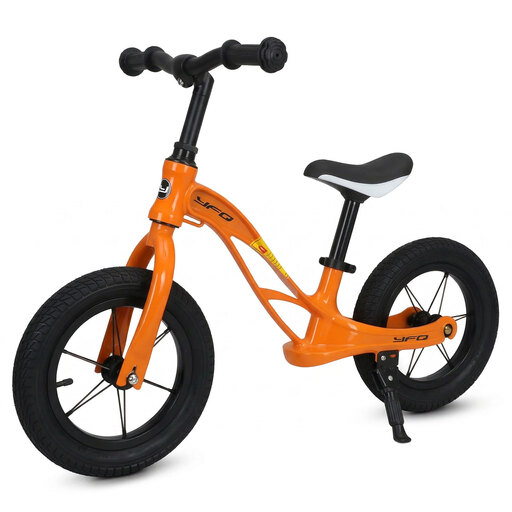
Why we love it : This balance bike is designed for toddlers (3 to 6 years) discovering two wheels. It gets straight to the point : finding balance in an intuitive and fun way, without the distraction of pedals.
Ultra-light, it avoids the trap of a bike that's too heavy and impossible to manoeuvre. Its pedal-free design and adjustable seat ensure a perfect and secure posture right from the first ride.
Puncture-proof solid tyres (zero maintenance) and a height-adjustable seat to grow with your child.
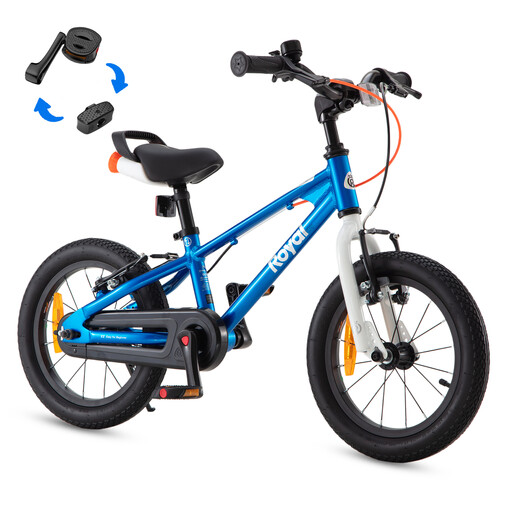
Why we love it : The perfect solution for 3-5 year-olds ready to move on to pedals. Its clever 2-in-1 concept allows it to be used as a balance bike, then have the pedal assembly installed in an instant, tool-free.
Its aluminium frame makes it very light (7.4 kg). The removable pedal system saves you from buying two separate bikes (a balance bike then a pedal bike), making the transition as easy on your child as it is on your wallet.
Patented 2-in-1 system, low step-through frame, and dual hand brakes suitable for children.
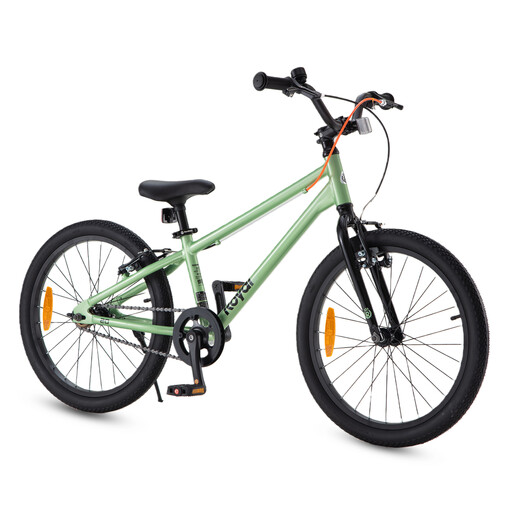
Why we love it : For 6-10 year-olds who are already confident riders and love to venture onto all types of terrain. This 20-inch bike is the perfect balance of lightness and durability for family rides and trips to the park.
Its aerospace-grade aluminium frame weighs only 0.9 kg, providing exceptional handling. The dual V-Brakes ensure responsive braking, a non-negotiable safety feature.
Feather-light weight, sealed bearings for smooth and effortless pedalling, and versatile all-terrain tyres.
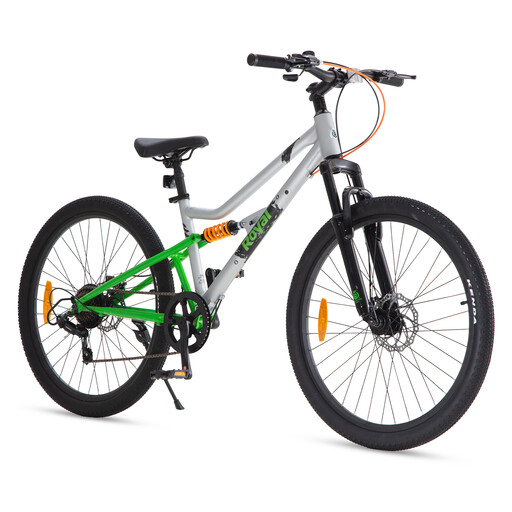
Why we love it : This teen's bike is a true kids' mountain bike built for ages 13 and up who want to tackle trails and rough terrain. It's equipped with high-performance components for more serious riding.
This isn't a toy, but a bike with serious technical specs. The dual suspension and disc brakes provide comfort and safety worthy of off-road use, far from useless gimmicks.
7-speed drivetrain to tackle hills, dual suspension (front and rear), and reliable disc brakes for all-weather performance.
Discover our full selection of bikes that meet our quality criteria and current safety standards.
Yes, and it's non-negotiable. In France, wearing a certified kids' bike helmet (CE EN 1078 standard) is mandatory for any child under 12, whether they are riding or are just a passenger. Beyond the law, it's a vital habit to instil from the very first pedal stroke.
There's no absolute rule; every child learns at their own pace. The sign? When your child is pedalling with ease, has mastered steering and braking, and the stabilisers barely touch the ground anymore. That's the time to try! Go slowly, in a safe, open area, encouraging them without putting on any pressure.
Simple but regular maintenance is the key to the bike's safety and longevity. The best practice before every ride is the 3-point check: