
当日/次日达

品质保障

开启新人专享福利: 全场免邮 | 低至 2 折 | 免费试用 30 天 JoyPlus 会员
下载 Joybuy
Designing your child's room is an emotional journey. Between the desire to create a cosy haven and the need to guarantee a safe environment, the choices can quickly become overwhelming. The market is full of promises, but not all are created equal. As a product expert at Joybuy, my mission is to help you see clearly and give you the keys to a successful, long-lasting purchase.
Before you start, it's best to know the most common pitfalls that can turn a dream into a disappointment.
To avoid these traps, focus on a few technical and objective criteria. These are the true guarantors of the quality and longevity of your nursery furniture.
Compliance with standards is a non-negotiable criterion. For the sleep of little ones, two certifications are essential:
Also, ensure that the materials (wood, paints, varnishes) are certified free of harmful substances.
A good child's mattress should offer firm but not hard support. A baby's and young child's back needs uniform support for optimal development. A density of around 20 to 22 kg/m? for a foam mattress is often recommended. Breathability is also a key point: it helps regulate temperature and wick away moisture for a healthier sleep environment.
A truly convertible piece of furniture should offer simple and intuitive transformations. For example, a bedside co-sleeper that converts into a small bench, or a crib with a removable side to transform it into a first "toddler bed," accompanied by a bed rail to secure the transition. Think ahead: will the furniture still be suitable in two or three years?
Every family has different expectations and constraints. Here are a few options that cater to distinct profiles, always keeping our safety and practicality criteria in mind.
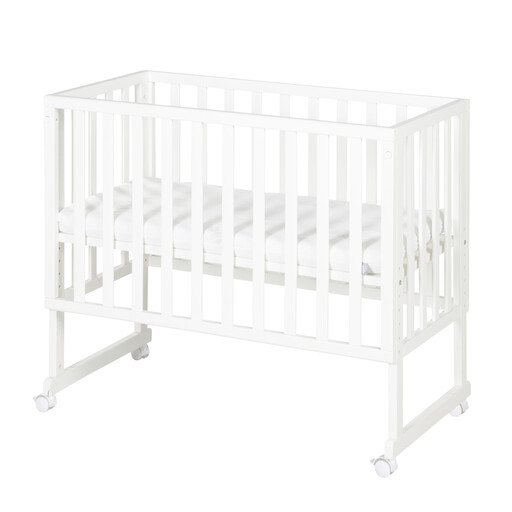
Why we chose it: Ideal for the first few months, this bed allows you to keep your baby close by in complete safety. Its transformation into a standalone bassinet and then a child's bench makes it a smart, long-term investment, perfect for optimising space.
It counters the "false convertible" trap by offering three clear and genuinely useful functions without requiring complex kits. Its compliance with the EN 1130:2019 standard guarantees certified safety.
All-in-one package (bed, breathable mattress, castors with brakes); 7 height adjustment levels to fit most parent beds.
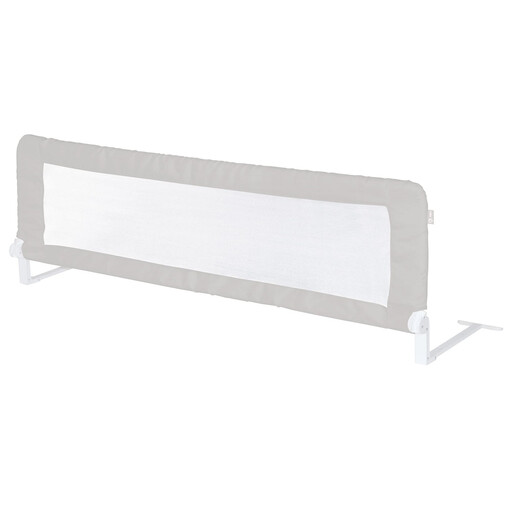
Why we chose it: Moving to a "big kid's bed" is a key milestone. This rail secures your child's sleep without turning the bed into a fortress. It's designed for children from 18 months to 5 years, a transitional period when nighttime falls are common.
It addresses a specific, temporary safety need without forcing the purchase of a new bed. Its 180° folding mechanism is practical and doesn't obstruct access to the bed during the day.
Tool-free installation; compatible with mattresses up to 25 cm thick; breathable mesh fabric for optimal air circulation.
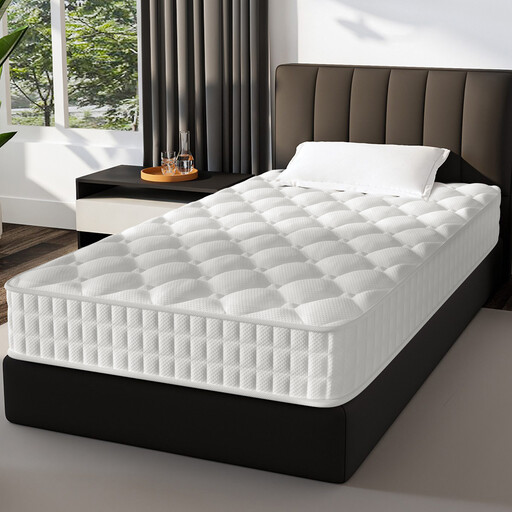
Why we chose it: A good mattress is an investment in health. This 7-zone model is designed to contour to the body and provide perfectly balanced support, promoting a healthy sleeping posture for a growing child.
It avoids the budget mattress trap by focusing on precise technical features: 7-zone orthopaedic support, breathable materials, and independent spring technology to minimise motion transfer.
7-zone design for ergonomic support; breathable and hypoallergenic materials; durability tested for 30,000 cycles.
We have curated a complete list of products that meet our strict selection criteria and current safety standards.
1. At what age should a child move from a crib to a toddler bed? There's no absolute rule, but the transition usually happens between 18 months and 3 years. The main warning sign is often safety-related: if your child starts climbing the bars of their crib, it's high time to switch to prevent falls. Using a bed rail can greatly ease this transition.
2. How can I ensure the furniture is truly safe? The key is to always look for labels mentioning European standards, such as EN 716 for slatted cribs or EN 1130 for bassinets. Also, check that paints and varnishes are water-based and non-toxic. Finally, once the furniture is assembled, check its stability and ensure there are no small, detachable parts.
3. Should a child's mattress be firm or soft? For babies and young children, firm support is essential. A mattress that is too soft can pose a suffocation risk and doesn't provide the necessary support for a developing spine. The surface should be flat and fit snugly within the bed frame, leaving no gaps on the sides.