
Livraison le jour même ou le lendemain

Qualité garantie

Débloquez vos offres de bienvenue: Livraison GRATUITE | Jusqu'à -80 % | 30 jours d'essai gratuits à JoyPlus
Téléchargez l'application
A children’s lunch box needs to withstand daily journeys, open easily and be simple to clean. Yet some models disappoint from the very first use: a leaking lid, too little capacity for a proper meal or a closure that a child cannot manage alone.
Before buying a children’s lunch box, it is therefore worth looking beyond colourful designs and marketing claims. Here are the criteria to consider when choosing a model suitable for school, days out and picnics.
A box with a simple clip-on lid is perfectly suitable for biscuits, less-juicy fruit or sandwiches. However, this type of closure is not necessarily enough for carrying stewed fruit, sauce or moist foods.
To choose a leakproof lunch box, check whether it has a seal, look at the type of closure and read the manufacturer’s precise specifications. Even when a model is advertised as leakproof or spill-resistant, it is best to carry it horizontally and make sure every clip is properly fastened.
A 300 ml box fits easily into a small bag, but it is mainly suitable for a light snack. For a lunch consisting of a sandwich, fruit and a side, a capacity of 700 to 900 ml will often be more practical.
Conversely, a large school lunch box can quickly become cumbersome for a nursery-age child. The right size depends on their age, appetite, what they usually take with them and how much space is available in their schoolbag.
Even a box presented as durable can become damaged if it is cleaned with abrasive products, put away while still damp or placed in the microwave when its material is not microwave-safe.
Check the instructions before buying: hand washing or dishwasher-safe, microwave compatibility, maximum temperature supported and whether it contains any small parts. For children under 3, also take account of warnings concerning clips and removable parts.
For a simple snack, a model of around 300 ml may be enough. For a full meal, a capacity of 700 to 900 ml provides more flexibility. Dimensions are just as important: a rectangular box generally makes better use of the space in a bag than a very rounded model.
A compartmented lunch box allows foods to be separated, but its compartments are not necessarily leakproof from one another. If you plan to place moist foods side by side, check the design of the dividers and inner lids carefully.
If you are looking for a BPA-free lunch box, do not rely solely on a vague statement in the title. Look for this information in the model’s technical details.
For a child, a closure that is easy to spot and understand is preferable. Large, clearly visible clips will often be easier to use than small, concealed mechanisms. A lid attached to the base also reduces the risk of it being lost in the playground or at an activity centre.
However, have your child try the box before their first day at school. They should be able to open it, close it again and access every compartment without constantly asking for help.
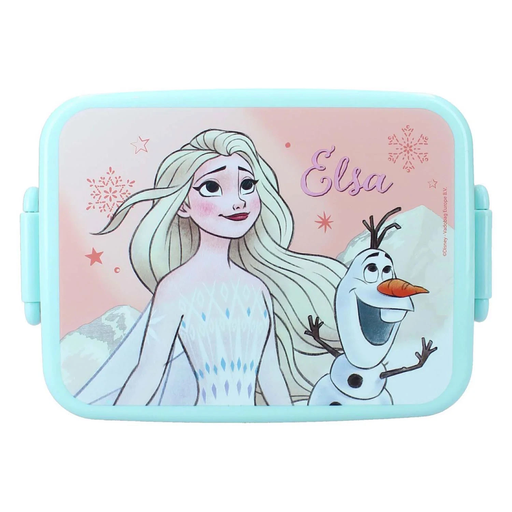
Why this choice suits this profile : With its 300 ml capacity and compact size, it is suitable for a small snack or a light portion in a schoolbag.
Its capacity means you do not pay for a large format that is unnecessary when a child is only taking a few dry foods with them.
Plastic advertised as durable, a compact format and cleaning with water and mild soap. The closure is suitable for simple snacks.

Why this choice suits this profile : Its five compartments will appeal to anyone who likes to put together a varied meal, whether for a child or a packed lunch at work.
The divided tray keeps foods separate and helps prevent textures from mixing. However, all four clasps must be properly fastened before transport.
Advertised 316L stainless steel, five sections and polypropylene lids. Hand washing is recommended to preserve the seals and designs.
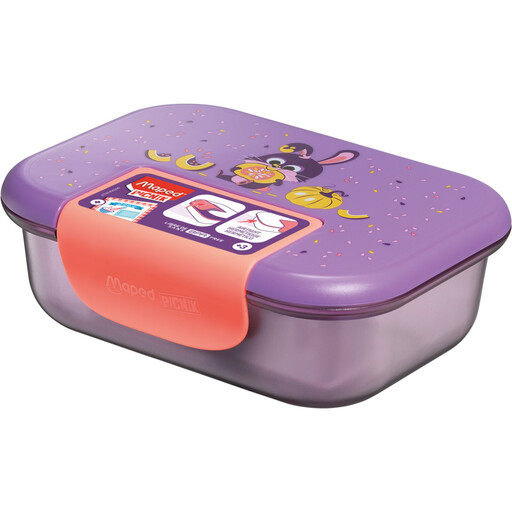
Why this choice suits this profile : With its 900 ml capacity, this stainless-steel lunch box is just as suitable for school days as it is for picnics and heartier meals.
The large fluorescent clip is easy to spot and use. The attached lid reduces the risk of losing a part during the day.
A stainless-steel base, rectangular shape, dishwasher-safe design and a seal advertised as leakproof. This model is not microwave-safe.
We have put together a complete, real-time updated list of products that meet these demanding selection criteria as well as European safety regulations.
To keep a children’s lunch box in good condition, wash it after every use and, where possible, leave the lid, seal and base to dry separately. Regularly inspect the box for cracks, warping, loose clips or a seal that no longer fits correctly.
Never put a metal box in the microwave. For plastic models, also check the instructions before reheating food. A box that is heavily scratched or damaged should be replaced, particularly if it no longer closes properly.
Around 300 ml is enough for a simple snack. For a full lunch, a capacity of 700 to 900 ml leaves more room for a sandwich, fruit and a side. Requirements vary according to the child’s age and appetite.
No. Compartments separate foods, but they are not always airtight from one another. To carry liquid foods, look for a product listing that explicitly mentions a seal or leak resistance. Then close the box according to the manufacturer’s recommendations.
Yes, it is generally robust and well suited to everyday transport. However, it is not microwave-safe and may be heavier than a plastic box. A stainless-steel children’s picnic box should also be dried thoroughly after washing.