Parents who regularly prepare snacks
For a regular snack, it’s not just about finding crisps with less fat. Manger Bouger recommends offering children a variety of snacks and limiting fatty and sugary foods in their everyday diet.


For a regular snack at a childcare setting, it’s better to start with Manger Bouger’s suggestions for varied snacks than to look for crisps labelled “low-calorie”. If potato crisps are planned for an occasional treat, compare the nutritional values per 100 g with the amount actually served, then check the allergens and the childcare setting’s guidance. A stated reduction in fat does not, on its own, mean that a product contains fewer calories.
For a regular snack, it’s not just about finding crisps with less fat. Manger Bouger recommends offering children a variety of snacks and limiting fatty and sugary foods in their everyday diet.
An individual bag or a portion prepared in advance makes it easier to know exactly what will be served. However, you should compare the pack size with the nutritional information for the product you choose.
The ingredients list on the pack and the childcare setting’s rules matter just as much as the pack size. If a child has an individual care plan, the arrangements agreed with the setting must also be followed.
First decide whether you’re preparing a regular snack or bringing crisps for an occasion approved by the childcare setting. Then compare the product and the amount the child will actually receive.
| What to consider | What to check | Who is this for? |
|---|---|---|
| Regular snacks | How often they’re planned, and whether the setting already provides a snack. | When a snack is part of every day, I want to offer the child a variety of foods rather than routinely replacing their snack with crisps. This is a priority for around 33% of consumers. |
| Calories and fat | Energy in kcal and fat per 100 g, followed by the energy in the portion served. | If I choose crisps for a special occasion, I want to compare the values for two specific products rather than relying on the “less fat” claim alone. Around 27% of consumers put this comparison first. |
| A snack to take along | The weight of an individual bag, or the amount taken from a larger pack. | When preparing a snack to take with us, I prefer to know how much the child will be given. Portion control is the main concern for around 20% of consumers. |
| Allergens and childcare guidance | Ingredients and allergen information on the pack you buy, as well as the childcare setting’s guidance. | Before taking a product to the setting, I need to make sure it meets the guidance for the child. Around 20% of consumers prioritise these checks. |
Lay’s states that its Oven Baked product contains less fat, but this comparison alone doesn’t tell you the energy or salt content of the pack you’ve chosen.
Compare the nutritional information for the specific products per 100 g, then work out what that means for the amount you’ll serve.
A large bag doesn’t determine how much a child will be given. Nor do the values per 100 g tell you, on their own, how much the child will eat.
If the childcare setting allows crisps for the occasion, use a small bag or measure out a set amount into a separate container.
Ingredients and “may contain” warnings vary from one product to another. The Directorate-General for Competition, Consumer Affairs and Fraud Control says that allergenic ingredients must be clearly highlighted on the label.
Read the pack you’ve actually bought and confirm the guidance for the child with the childcare setting.
The setting may already provide a snack. Manger Bouger advises against giving children a second snack at the end of the day if they’ve already had one at an activity centre.
Before preparing anything to take along, ask what is served and when.
The brand offers plain potato crisps, multipacks and an Oven Baked range.
Vico lentil crisps are a different type of crunchy snack, not potato crisps.
Carrefour Classic’ Plain Crisps offer a potato crisp recipe to compare.
The plain crisps listed by E.Leclerc come in a pack of six 30 g bags.
This flavoured potato crisp product could be considered for an occasional snack, once you’ve confirmed the childcare setting’s guidance. Its 70 g bag shouldn’t be mistaken for a defined individual portion.
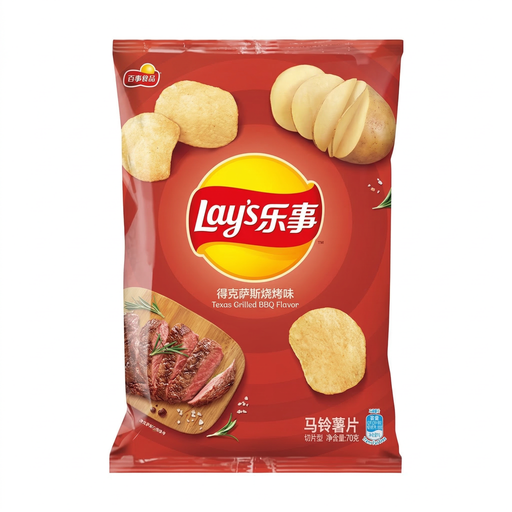 Image unavailable
For an occasion when the childcare setting allows crisps, this bag offers a Texas BBQ flavour. It contains 70 g, so check how much to serve, along with the nutritional information, ingredients and allergens on the pack you buy.
For regular snacks, Manger Bouger recommends offering a variety of foods and limiting fatty and sugary foods in children’s everyday diet. Before taking crisps along, also check whether the childcare setting already provides a snack.
No. A stated reduction in fat for a particular product isn’t enough to establish that it contains fewer calories. Compare the energy in kcal per 100 g on the specific packs, then check the amount you plan to serve.
A mini bag can make it easier to see how much you’re bringing, but it doesn’t change the product’s nutritional values. Check its weight and the corresponding values. If you’re taking a large pack, decide on the portion before you leave.
Read the ingredients, highlighted allergens and any “may contain” warnings on the pack you buy, then ask the childcare setting for its guidance. The Ministry of National Education says that an individual care plan can be put in place for children concerned in settings where this arrangement applies.