Busy team of parents
If you need to make several cakes in a short space of time, plain, pre-cooked chickpeas save you having to plan ahead for soaking and cooking dried chickpeas.


To bake several batches without having to plan ahead for soaking, choose plain, pre-cooked chickpeas. A multipack of small tins lets you open only what you need as you go; a large tin is a good choice if you can use all its contents in one session. Compare pack sizes by net drained weight, and check the ingredients and allergen information for the product you buy.
If you need to make several cakes in a short space of time, plain, pre-cooked chickpeas save you having to plan ahead for soaking and cooking dried chickpeas.
To buy the right amount for your recipes, compare the net drained weight of each pack rather than just the number of tins. This information is listed, for example, for the Bonduelle multipack sold by Auchan.
Before making cakes for the sale, note the ingredients and allergen information for the product you have chosen, and do the same for the other ingredients in the recipe.
Work out how much drained chickpeas you need for your batches, then choose tins you can open to fit your baking schedule. Check the label on the pack you choose before you start cooking.
| Criterion | What to check | Who this matters to |
|---|---|---|
| Usable quantity | The net drained weight needed for your recipes and the net drained weight of each tin or multipack; compare pack sizes on this basis. | I want enough chickpeas for all the batches without opening tins whose contents I won't use. Around 40% of consumers would rank this usable quantity as their main concern. |
| Planning your batches | The number of tins in the multipack and their size, depending on whether you are baking everything at once or at different times. | When there is little time to prepare, I prefer pre-cooked chickpeas that I can drain when I start cooking. This convenience would be the top priority for around 30% of consumers. |
| Ingredients and allergens | The ingredients list and any allergen or ‘may contain’ information for the exact product, as well as for the other ingredients in the cakes. | To give families information about the cakes on sale, I need to know what is stated on the label of every ingredient used. Around 20% of consumers would make this check their main concern. |
| Origin and production standards | The origin of the chickpeas and where they were produced for the pack you choose; check whether it is organic if that matters for the event. | If our team has chosen an origin or production criterion, I want to check that it applies to the tin we are buying. Around 10% of consumers would put this criterion first. |
A tin may contain packing liquid, so the total weight does not necessarily match the amount of chickpeas you can use after draining.
Note down the drained weight needed for each recipe, then add together the net drained weights of the tins you are considering. The DGCCRF explains that this information must appear on the label of foods packed in a covering liquid.
Allergen information varies by product: Monoprix lists traces of gluten and soya for its 265 g tin, while the product listing for the Bonduelle multipack on Auchan’s website warns that it may contain soya and cereals containing gluten.
Check the information on the products you actually use, and remember to check the other ingredients in the cakes too.
The exact pack size you want may not be available when you shop: Carrefour listed the Sabarot 3 × 460 g multipack as unavailable, while E.Leclerc advises customers to check availability with their store or drive-through collection point.
Confirm which pack sizes are available before finalising your quantities and, if needed, plan to use a combination of individual tins.
Changing pack sizes at the last minute means recalculating how much drained chickpeas you will have for your recipes.
At E.Leclerc, the origin and production information for the 530 g Notre Jardin tin differs from that for the 3 × 130 g Notre Jardin multipack.
If origin matters for the sale, distinguish between where the chickpeas were grown and where they were produced, and check the label on the pack you buy.
A retailer where you can compare small tins, a large tin and chickpea multipacks.
A place to compare a 530 g Notre Jardin tin with a 3 × 130 g multipack.
Worth checking if you want several tins of ready-to-drain chickpeas in one multipack.
An option to consider if you need individual 265 g or 530 g tins.
Worth considering if an individual tin suits your needs better than a multipack.
Check local offers by selecting your supermarket.
These two individual packs are worth considering for baking with pre-cooked chickpeas: a 540 g jar and a large 820 g tin. To choose how much to buy, check the net drained weight on the label of each product.
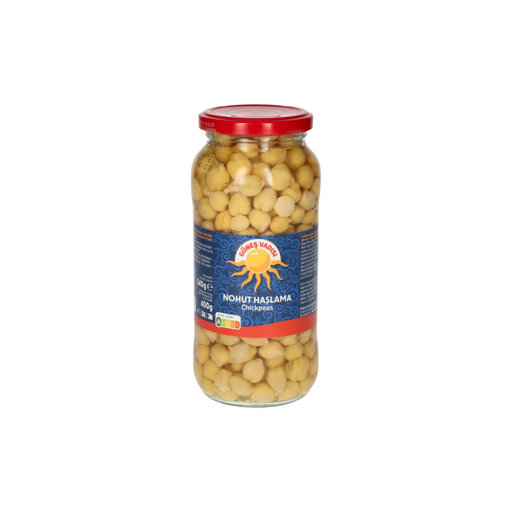 Image unavailable
This 540 g jar could suit you if you want to open one pack for a recipe. Check the net drained weight and the ingredients and allergen information on the label of the jar you buy; this is not a multipack of tins.
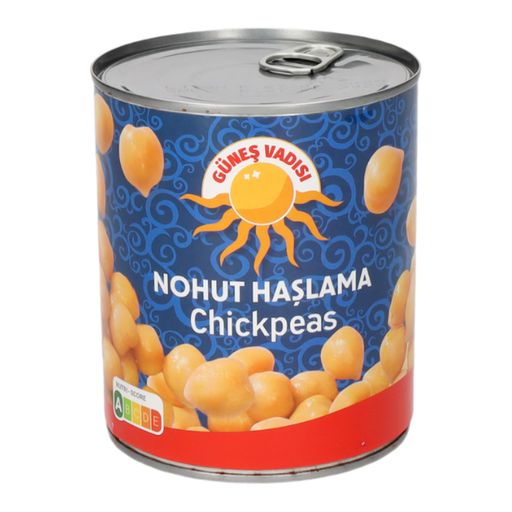 Image unavailable
Consider this individual 820 g tin if you can use all its contents during a group baking session. The total weight does not tell you how much you will have after draining, so check the label. The listing for this product mentions lupin; check the allergen information on the product you buy before cooking.
Choose tinned, pre-cooked chickpeas if you cannot plan ahead for soaking and cooking dried chickpeas. Check that the product you choose is suitable for your recipe.
If your recipe uses drained chickpeas, use the net drained weight and add together the quantities for all the tins you plan to buy. The DGCCRF explains that net drained weight must be shown for food packed in a covering liquid.
No. A short ingredients list does not mean there are no traces. Monoprix lists traces of gluten and soya for its 265 g tin; check the information on the product you plan to use.
Prepare information about the allergens present in the finished cakes. According to the DGCCRF, the requirement to provide allergen information also applies to non-prepacked food. Keep the labels for the chickpeas and other ingredients so you can put this information together.