For storing large amounts of food, a chest freezer is a good choice if you have enough floor space. If you regularly reach for pre-prepared portions, the drawers in an upright freezer make them easier to access. If you only need to store a modest amount, compare a small freezer with the freezer compartment of your fridge-freezer. In every case, base your choice on the space your food actually takes up, and check the installation requirements and energy consumption of the model you choose.
Who are these freezer types for?
Households that stock up on food
If you buy in bulk or prepare lots of portions to keep for several weeks, estimate how much space your food will take up when your freezer is at its fullest. UFC-Que Choisir compares the potential capacities of chest and upright freezers.
People who regularly use their pre-prepared portions
If you often take out a particular meal, being able to reach your tubs and bags matters just as much as capacity. Drawers and compartments can make everything easier to organise; check that they fit the containers you usually use.
Households with limited space
Whether you’re placing it in a narrow kitchen, cellar or garage, measure the access route and the space needed to open the appliance. If the room is unheated, ADEME also recommends checking the ambient temperature range the freezer can handle.
What sets the different types apart?
Chest freezer
Consider it: for bulk purchases or bulky containers, if you have enough floor space.
Bear in mind: food at the bottom can be harder to find, so baskets or storage boxes help keep everything accessible.
Upright freezer
Consider it: for organising pre-prepared portions that you take out regularly.
Bear in mind: the space in each drawer may limit the size of the containers you can store.
Compact freezer
Consider it: as an extra to your fridge if you have limited space and only a modest amount to freeze.
Bear in mind: it can quickly fill up if you’re storing several large batches.
Fridge-freezer
Keep it: if its freezer compartment holds your usual stock and you’d prefer to have just one appliance.
Check: the freezer capacity, which is separate from the fridge-freezer’s total capacity, before planning to store large amounts.
| Criteria | What to check | What matters to shoppers? |
|---|
| Usable capacity |
Compare the freezer capacity in litres with the maximum amount you’ll store and the size of your containers. |
When I need to keep shopping and prepared meals for several weeks, I want to be able to fit everything in when the freezer is full. Around 31% of shoppers put capacity first. |
| Access to portions |
Check the drawers and baskets, and how easy it is to reach food stored at the bottom. |
If I often take out just one portion, I want to find it without moving everything else. Easy everyday access is a priority for around 25% of shoppers. |
| Location |
Measure the appliance and the clearance around it; check the room temperature against the conditions in the manual. |
In a narrow or unheated room, I first need to know that I can install and use the appliance as intended. Around 25% of shoppers put this compatibility ahead of other criteria. |
| Everyday use |
For similar capacities, compare kWh/year; also check the defrosting requirements and the stated power-cut storage time. |
An appliance that runs continuously makes me consider its energy consumption and the maintenance it will need. Around 19% of shoppers prioritise these everyday considerations. |
Mistakes to avoid
-
Choosing based on capacity alone
With a similar capacity, an open space and a set of drawers are organised differently. A large chest freezer may also take up too much room where you plan to put it.
Measure the space and check that the interior layout suits the tubs, bags and dishes you usually use.
-
Assuming a model is suitable for a garage
The suitable ambient temperature depends on the model. Beko states that some chest freezers with Freezer Guard can be used in certain conditions, but this does not apply to every freezer from the brand.
Take note of the room temperature throughout the year, then check the operating range and installation instructions for the exact model.
-
Comparing only the energy label rating
The rating letter doesn’t replace the annual energy consumption in kWh, especially when the appliances you’re comparing differ in type or capacity.
For models with similar capacities, check the kWh/year on the energy label and the product specifications. The European EPREL database may also show capacity and noise levels.
Brands to consider
Bosch
Worth considering if you’re looking for a large-capacity upright freezer; compare models individually.
- Bosch Électroménager France lists a capacity of 328 L and No Frost for the GSN54EWCV.
- Its stated dimensions of 1 760 × 700 × 780 mm mean you’ll need to check the available space and access route. These specifications don’t apply to the entire range.
Liebherr
Worth considering for upright freezers and more compact models.
- Liebherr offers, among other models, a 92 L table-top freezer with NoFrost.
- This capacity won’t meet the same needs as a large upright freezer. Compare the capacity and installation requirements of the model you’re considering.
Beko
Worth considering if you need a chest freezer for large amounts of food or an unheated room.
- Beko France states that some chest freezers with Freezer Guard can operate at ambient temperatures as low as −15 °C.
- Check that the specific model has this feature and read its instructions; don’t assume it applies to other Beko chest freezers.
Haier
Worth considering if you’re comparing different capacities in both upright and chest freezers.
- Haier France lists models in both formats, including a 301 L upright freezer and a 696 L chest freezer.
- The interior layout and energy specifications vary by model. Compare the product details for models that suit your space.
Chest and upright freezers on Joybuy
This selection includes chest freezers for different amounts of food, as well as an upright freezer with drawers for organising portions. Compare their capacities with your needs, then check the product details and manual for the installation requirements of the model you choose.
 Image unavailable
AUCMA, 291 L convertible chest freezer
A good option for storing a substantial amount of food in a chest freezer, if you have enough space. The product title lists a capacity of 291 L, a removable basket, LED lighting, a five-level digital control and an E energy rating. Check the manual for the suitable ambient temperature, particularly if you plan to use it in a cellar or garage.
View on Joybuy
 Image unavailable
Heinrich´s, 161 L stainless steel upright freezer
Choose an upright freezer if you’d rather organise portions in drawers than stack them in a chest freezer. The product title lists drawers, No Frost, an alarm, a reversible hinged door and a C energy rating. Check the dimensions, kWh/year and ambient temperature range before deciding where to put it.
View on Joybuy
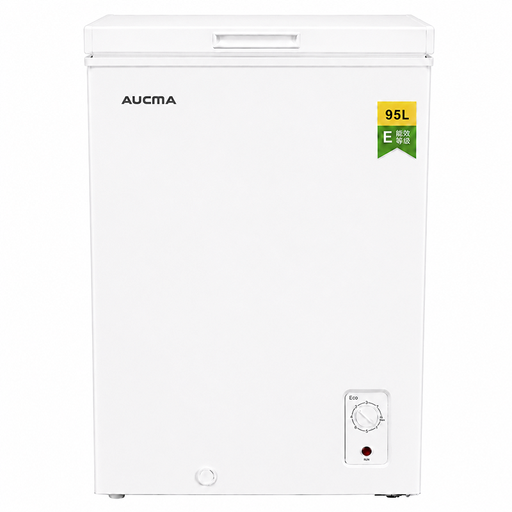 Image unavailable
AUCMA, 95 L convertible chest freezer
Best suited to extra storage rather than large amounts of food kept for several weeks. This 95 L chest freezer is listed with a seven-level thermostat, a removable basket and an E energy rating. The product title mentions garage use, but only the operating range in the manual can confirm whether your room is suitable.
View on Joybuy
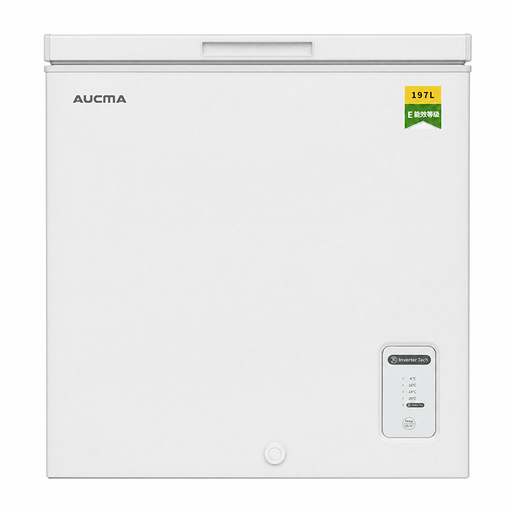 Image unavailable
AUCMA, 197 L convertible chest freezer
A good option for a medium-sized stock of food if you prefer the open space of a chest freezer. The product title lists a capacity of 197 L, a removable basket, a five-level digital control and an E energy rating. Plan how you’ll organise your portions, and check the installation requirements before placing it in a cellar or garage.
View on Joybuy
 Image unavailable
CHiQ JR99DWE, 99 L chest freezer
Suitable for a few portions or as extra storage, rather than for large amounts of food. The product title lists a capacity of 99 L, a removable basket, an adjustable thermostat and an E energy rating. Check the kWh/year and permitted ambient temperature to compare its running costs with those of other models.
View on Joybuy
Frequently asked questions
Chest or upright freezer for make-ahead meals?
An upright freezer is a better choice if you regularly take out individual portions, as its drawers make them easy to organise. If your priority is storing large batches, a chest freezer offers open space, but you’ll need to organise it so you can find food stored at the bottom.
Can I put a freezer in any garage or cellar?
No. The room temperature must fall within the range specified for the exact model. ADEME recommends checking its climate class. If the room is unheated, check the operating range in the manual rather than relying on the word ‘garage’ alone.
How do I compare the energy consumption of two freezers?
Compare their annual energy consumption in kWh/year, ideally choosing appliances with similar formats and capacities. The energy label and the European EPREL database can also provide information about the capacity and noise levels of the models you’re comparing.
Should No Frost determine which freezer I choose?
Not if the capacity or location doesn’t suit your needs. No Frost can reduce the need for manual defrosting on models with this feature. Then check the capacity, dimensions, kWh/year and installation requirements for the specific model.


