If you want to store plenty of food or bulky items, a chest freezer is a good choice if you have enough space; if you often need to grab individual portions, an upright freezer with drawers makes it easier to keep everything organised, as UFC-Que Choisir and Boulanger explain. If you only need a little extra space, consider a compact freezer. If you’re also short on space for fresh food, compare the freezer capacity of fridge freezers separately. Whatever you choose, check the dimensions, the permitted room temperature, annual energy consumption and stated storage time during a power cut.
Which format is right for you?
Households that prepare meals in advance
If you build up a supply of portions and leftovers, an upright freezer with drawers helps you organise them so you can find what you need. A chest freezer offers a different way to store larger quantities, but you’ll need to be able to reach items at the bottom.
Households that buy in bulk
For large shops or family-sized portions, consider the capacity and the floor space available. A chest freezer has an open compartment for bulky packaging, but you’ll also need a way to organise everything so you don’t lose track of what’s inside.
People planning to install their freezer outside the kitchen
Whether you’re putting it in a cellar, utility room or unheated garage, the format alone won’t tell you if the location is suitable. Compare the actual temperatures in the room with the operating range specified for the exact model.
What should you compare before choosing?
Start with how much food you need to store and how often you’ll access it. Then rule out any appliances that won’t suit the room or the delivery route.
| Criteria | What to check | Your needs |
|---|
| Freezer capacity |
Compare the usable capacity in litres with the amount you usually store. For a fridge freezer, check the freezer compartment separately from the total capacity; also check the baskets or compartments. |
I want to store my groceries and meals without filling the appliance straight away, but I don’t want to choose a much larger capacity than I need. |
| Access to food |
Think about opening the drawers or reaching to the bottom of a chest freezer. Check how much room you’ll need to take out food and organise the packaging. |
If I open the freezer often to take out a portion, I want to find meals and bags quickly. |
| Location |
Measure the appliance, its opening clearance and the route to the room. Compare the room’s minimum and maximum ambient temperatures with the conditions specified for the exact model. |
My freezer needs to fit through the doors and open easily. If it’s going in an unheated room, I also need to check it can cope with the cold. |
| Use and maintenance |
Compare the kWh/year on the energy labels of appliances with similar capacities, their stated storage time during a power cut and their defrosting method. ADEME points out that a freezer runs continuously. |
Energy consumption matters for an appliance that stays on all year round. If power cuts are a concern, I’ll also check the stated storage time of the model I’m considering. |
What mistakes should you avoid?
-
Choosing the capacity without measuring the route in
A wide chest freezer can take up too much floor space, while a tall upright model may be difficult to get up the stairs or fit under a low ceiling.
Measure the doors, corridors and stairs all the way to the planned location. Then check there’s enough clearance to open the lid or door and remove the drawers.
-
Assuming any chest freezer will work in a cold garage
The temperature in a cellar or garage may fall outside the appliance’s specified operating range. Haier’s or Liebherr’s low-temperature operation guidance applies to specific models or ranges.
Note the temperatures in the room and compare them with the instructions and operating conditions for the model you’ve chosen.
-
Relying on the energy rating letter alone
ADEME points out that a freezer runs continuously. The rating letter alone won’t tell you how much the appliance you’re considering uses each year.
Compare the kWh/year shown on the energy labels of appliances with capacities suited to the amount you store.
-
Forgetting what to do with your old freezer
You’ll need to get a bulky old appliance out of your home. Having it there could make delivery and installation of the new one more difficult.
Arrange to have it removed before you order, and check what collection options are available when the new appliance is delivered.
A few brands to consider
Haier
The HCE520E chest freezer is worth considering if you’re looking for a large appliance for a cellar or outbuilding: Haier says this model can operate in indoor environments down to −15 °C.
- Haier lists electronic controls and a fast-freeze function among this model’s features.
- The HCE520E product information gives two different capacities: 508 L and 418 L. Check the capacity on the energy label or in the manual for the appliance on offer.
Liebherr
If you’re planning to use your freezer in an unheated room, check that the specific chest freezer has FrostProtect rather than assuming the feature is available across the whole brand.
- Boulanger lists a capacity of 359 L, a storage time of 50 h during a power cut and FrostProtect down to −15 °C for the CFd 2505-26.
- Liebherr describes StopFrost as a frost-reduction system on selected models. Check the features and installation conditions of the model you choose.
Beko
The RFNE448E35W is an example of an upright freezer designed to organise portions and meals: Boulanger Location lists a capacity of 404 L and eight compartments for this model.
- Boulanger Location lists a storage time of 17 h during a power cut.
- Its stated dimensions of 70 × 192 × 77 cm mean you’ll need to check the delivery route and clearance for opening. These specifications don’t apply to other Beko upright freezers.
Options available on Joybuy
This selection includes two chest freezers of around 140 L, an upright freezer with a capacity of 161 L and a fridge freezer. If you mainly want to store very large quantities, compare their freezer capacity with what you actually need to store rather than relying on the format alone.
 Image unavailable
AUCMA convertible chest freezer, 141 L
Worth considering if you need a little extra freezer space rather than room for a very large stock of food. The product name lists fridge or freezer modes, a seven-setting thermostat, a removable basket, a defrost drain and an E energy rating. If you’re planning to install it in a garage, check the model’s ambient temperature range.
View on Joybuy
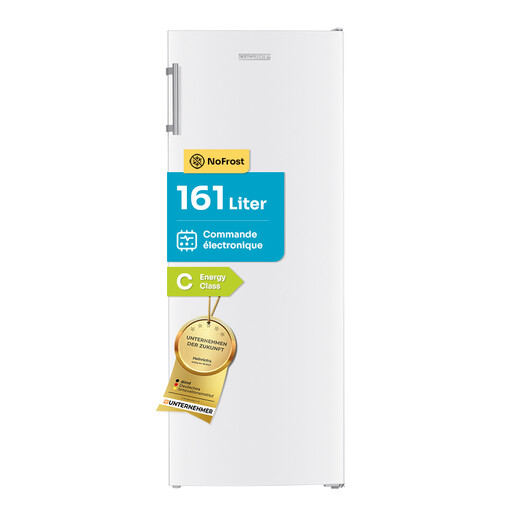 Image unavailable
Heinrich´s No Frost upright freezer, 161 L
An upright freezer is a good choice if you want to organise food into compartments and often take out individual portions. The product name lists a capacity of 161 L, three freezer drawers, an LED display, an alarm and a C energy rating. Check the dimensions and the route to the planned location.
View on Joybuy
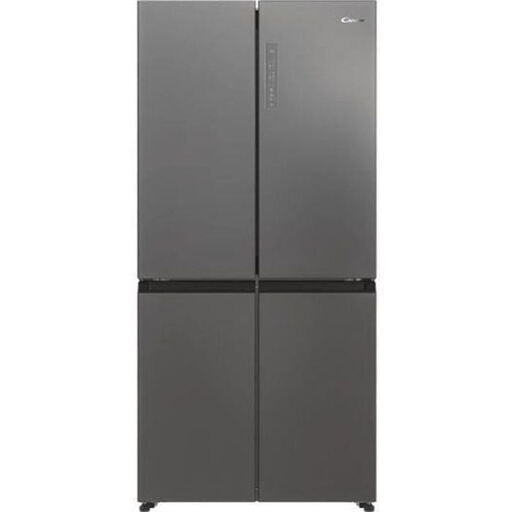 Image unavailable
Candy CFQQ5T817EPS, 4-door fridge freezer, 467 L
Consider this fridge freezer if you also need more space for fresh food. Its name lists a total capacity of 467 L, four doors, Total No Frost and an E energy rating. Compare the freezer compartment’s capacity separately with the amount of food you need to store.
View on Joybuy
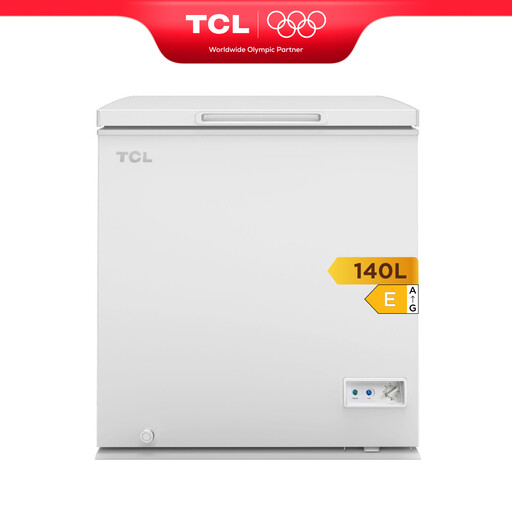 Image unavailable
TCL CF182EWE0FR, 140 L chest freezer
This chest freezer could give you extra room if your existing freezer compartment is full, but check that 140 L is enough for what you plan to store. Its name lists a basket, a counterbalanced lid, temperature control and an E energy rating. Measure the space needed to open the lid.
View on Joybuy
Frequently asked questions
Can a chest freezer go in any garage?
No. Compare the temperatures in your garage with the operating range for the exact model. Haier says the HCE520E can be used down to −15 °C, and Boulanger lists FrostProtect down to −15 °C for the Liebherr CFd 2505-26. These details don’t apply to all chest freezers.
What should I compare on the energy label?
Check the annual consumption in kWh/year, taking into account the freezer capacity you need. Ideally, compare appliances with similar capacities: the energy rating letter is no substitute for the annual figure. ADEME points out that a freezer runs continuously.
What does the stated storage time during a power cut mean?
It helps you compare how long appliances can keep food frozen without a power supply, particularly if power cuts are a concern in the room you’ve chosen. Check how the stated figure is defined: in its test procedure, UFC-Que Choisir measures how long food stays below −9 °C.
Should I choose a chest freezer with a frost-reduction system?
Consider this feature if you want to reduce how often you need to defrost, but don’t let it be the only deciding factor. Liebherr lists StopFrost on selected models. Check that the specific chest freezer has the feature, then compare its capacity, annual energy consumption and ease of access to food too.


