Buying priorities
Start by calculating how much food you need to freeze, then check everyday access and the actual conditions in the room where the appliance will be installed.
| Priority |
What to check |
Your needs |
| Frozen storage capacity |
Compare the net capacity of the freezer compartment, not the total capacity of a fridge freezer. Chest freezers can reach 600 L according to UFC-Que Choisir; upright freezers are often around 200 L and can go up to 400 L. |
I want to store portions, bulk purchases or bulky products without filling the existing compartment too quickly. |
| Organisation |
Check the drawers, compartments and baskets, as well as the clearance needed to open the door or remove the drawers. A chest freezer requires a system for arranging its contents. |
I want to find a labelled dish without moving my entire supply. |
| Room temperature |
Compare the climate class with the minimum and maximum temperatures of the room. Bosch states a range of 10 to 43 °C for the SN-T class; below 10 °C, look for a clearly stated lower operating limit. |
My freezer will be in a cellar, garage or utility room where the temperature is not always the same as in the kitchen. |
| Power cuts and freezing performance |
Compare the storage time during a power cut, the freezing capacity in kg/24 h and whether a door alarm is included. UFC-Que Choisir's test protocol notably measures whether the temperature stays below -9 °C during a power cut. |
I want to protect food I have already stored and be able to add a large quantity of shopping or prepared meals. |
| Energy consumption |
Use the European energy label from A to G and compare annual kWh consumption between appliances of similar capacity and format. The label's QR code provides access to model information in EPREL. |
I want a like-for-like comparison for an appliance that will run continuously. |
Joybuy products
Joybuy options for building up a supply of meals and food, including an upright freezer for portion-based storage and several chest freezers for dedicated storage.
 Image unavailable
Heinrich´s 161 L No Frost upright freezer
An option for separating portions and labelled dishes, with three drawers and two shelves.
Capacity of 161 L, LED display, reversible door, alarm and an advertised temperature range of -14 to -22 °C. Check the dimensions, climate class, storage time during a power cut and annual energy consumption before installation.
Joybuy
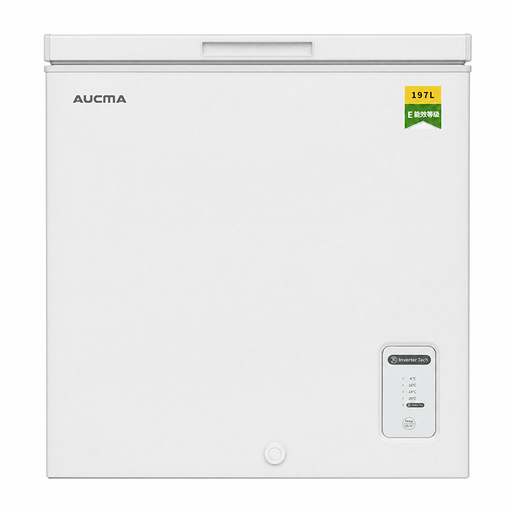 Image unavailable
AUCMA 197 L convertible chest freezer
This chest freezer is suitable for dedicated meal storage or bulk shopping when top-opening access works for you.
197 L, removable basket, five-level digital control, defrost drain and advertised dimensions of 816 × 554 × 848 mm. Refrigerator and freezer modes are alternatives; also check the climate class and storage time during a power cut.
Joybuy
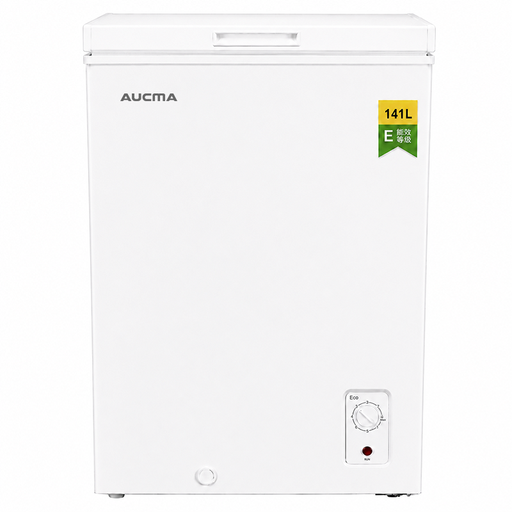 Image unavailable
AUCMA 141 L convertible chest freezer
An intermediate-capacity option for prepared meals and bulk shopping, with a basket for smaller items.
141 L, seven-level mechanical thermostat, removable basket, defrost drain and advertised dimensions of 632 × 554 × 848 mm. Confirm that freezer mode will be available for your needs and check the climate class.
Joybuy
 Image unavailable
AUCMA 95 L convertible chest freezer
This format can add to your existing capacity in a home where keeping the footprint small is a priority.
95 L, seven-level mechanical thermostat, removable basket, defrost drain and advertised dimensions of 550 × 475 × 848 mm. Check the selected mode, permitted ambient temperature and storage time during a power cut before use.
Joybuy
 Image unavailable
TCL CF182EWE0FR 140 L chest freezer
A storage chest freezer for bulkier food, with castors to make it easier to move within its intended location.
140 L, lid that stays open, castors, front drainage, adjustable feet and advertised dimensions of 637 × 556 × 846 mm. Plan how you will organise portions and check the climate class and storage time during a power cut.
Joybuy
Frequently asked questions
Which climate class should you choose for a cellar or garage?
First record the actual minimum and maximum temperatures in the room, then compare them with the model's climate class. Bosch states a range of 10 to 32 °C for SN and 10 to 43 °C for SN-T; below 10 °C, look for a function specifically designed for this situation, such as FrostProtect -15 °C on the Liebherr CFe 2500 Pure or Freezer Guard -15 °C on certain Beko models.
What does storage time during a power cut mean?
It is the length of time food remains at a freezing temperature after a power cut. In its test protocol, UFC-Que Choisir measures the time taken for the temperature to rise from -17 °C to -9 °C without power; compare this storage time between models rather than judging it by capacity alone.
Is the energy label enough to assess running costs?
No. The European A to G label provides a standardised basis, but you should also compare annual energy consumption in kWh, frozen storage capacity, noise level and format. The European Commission states that the QR code provides access to model information in EPREL.
Can a large-capacity fridge freezer replace a separate freezer?
Not necessarily: compare the capacity of the freezer compartment alone with the amount you expect to store. The LG GBV22NCCPY listed on Joybuy France offers 387 L in total, including 110 L of freezer space, whereas UFC-Que Choisir describes upright freezers of around 200 L and up to 400 L, as well as chest freezers that can reach 600 L.
Which regulatory information should you check before buying a new freezer?
For domestic refrigeration appliances sold in the European Union, check the A to G energy label and the accompanying information. The European Commission states that ecodesign and energy-labelling requirements apply to electric refrigeration appliances with a capacity of more than 10 L and up to 1,500 L.


