What sets the different formats apart?
First decide what matters most: easy access to food, storage capacity, where the appliance will go, or replacing your main fridge-freezer. This will help you choose a format; then compare the specifications of the exact model you’re considering.
| What matters to you |
What to check |
Who this matters to |
| Access to portions |
Usable drawer dimensions and the clearance needed to open the door. |
If I use portions several times a week, I want to find them without moving other food around. Around 36% of consumers prioritise easy everyday access. |
| Storage capacity |
Freezer capacity in litres, room for large packs and basket storage. |
If I store large packs, a spacious chest matters more to me than separate drawers. This is the main priority for around 29% of consumers. |
| Suitability for the room |
The model’s ambient temperature range and required ventilation clearances. |
If I have a cellar, garage or cramped room, I need to be able to install the appliance somewhere it will work as intended. For around 21% of consumers, suitability for the room comes before the format. |
| Replacing a fridge-freezer |
Freezer compartment capacity and the dimensions of the new main appliance. |
If I also need to replace my fridge, I’d rather check whether a fridge-freezer can meet both needs than add another appliance. Around 14% of consumers prioritise replacing their existing appliance. |
For domestic refrigeration appliances sold in the European Union, the European Commission says the energy label provides details including annual energy consumption, storage volumes and noise emissions. Compare these figures with the capacity you actually need: the total capacity of a fridge-freezer is not the same as its freezer capacity.
Appliances to suit your needs
These Joybuy options include upright and chest freezers, as well as a fridge-freezer if you’re replacing your main appliance. Choose a format to suit the amount of food you store and how easily you need to access it, then check the dimensions and installation requirements of the model you’re interested in.
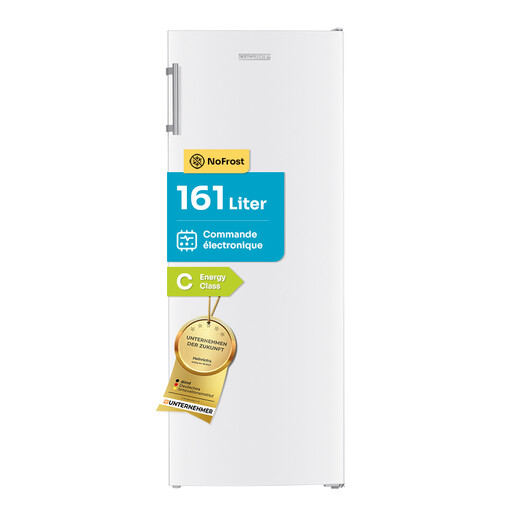 Image unavailable
Heinrich’s upright freezer, 161 L, white
Worth considering if you want to keep portions separate in an upright freezer rather than stacking them in a chest.
The product name specifies three freezer drawers, a No Frost system, an energy rating of C and a temperature range of −14 °C to −22 °C. Measure the space and check the permitted ambient temperature before installing it in an unheated room.
View on Joybuy
 Image unavailable
AUCMA, convertible chest freezer, 291 L
This chest freezer is suited to households that prioritise space for large quantities and don’t mind reaching into the bottom to find food.
The product name specifies a removable basket, an energy rating of E and convertible fridge and freezer modes. Check how much room you’ll need to open the lid, as well as the ambient temperature range if you plan to put it in a cellar or garage.
View on Joybuy
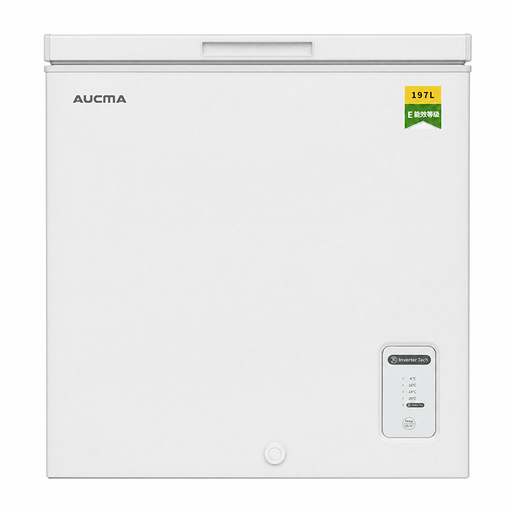 Image unavailable
AUCMA, convertible chest freezer, 197 L
Worth comparing if you want a chest freezer but don’t need the 291 L AUCMA model. Bear in mind that small portions can be harder to reach from the top.
The product name specifies a removable basket, an energy rating of E and two modes: fridge and freezer. Check the dimensions, lid clearance and permitted ambient temperature for the room you have in mind.
View on Joybuy
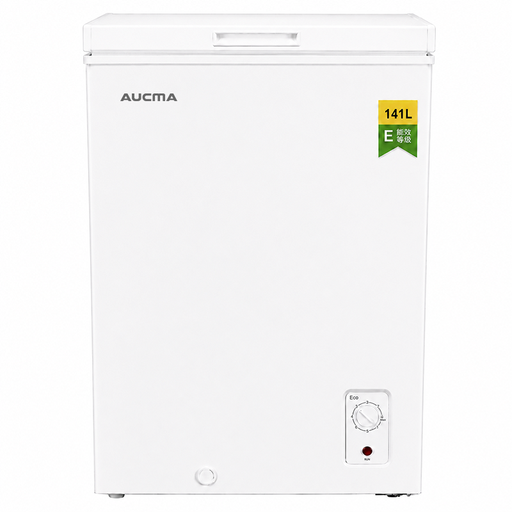 Image unavailable
AUCMA, convertible chest freezer, 141 L
This model offers less capacity than the other two AUCMA options in this selection. It may suit you if an open chest fits the way you like to store food.
The product name specifies a removable basket, a seven-setting thermostat, an energy rating of E and convertible fridge and freezer modes. Check the dimensions and ambient temperature range before deciding where to put it.
View on Joybuy
 Image unavailable
Candy CFQQ5T817EPS, four-door fridge-freezer, 467 L
Worth considering if you’re also replacing your main fridge, rather than looking for a separate freezer to provide extra capacity.
The product name specifies a total capacity of 467 L, a Total No Frost system and an energy rating of E. To see whether this replacement will give you the extra space you need, compare the capacity of its freezer compartment with that of your current appliance.
View on Joybuy
Frequently asked questions
Can I put any freezer in a garage or cellar?
No. Check the ambient temperature range for the exact model and compare it with the room temperature. For example, Beko says its HSM14540 can operate at ambient temperatures as low as −15 °C, while Liebherr features FrostProtect on some chest freezers. These specifications don’t apply to every model from either brand.
What should I look for on a freezer’s energy label?
Compare annual energy consumption, storage volumes, energy rating and noise emissions across appliances with similar capacity. The European Commission says this information appears on the labels of relevant domestic refrigeration appliances in the European Union. The energy rating letter alone won’t tell you how much room there is for your frozen food.
When should I freeze portions or leftovers?
Plan to freeze them as soon as you buy or prepare them, following the storage instructions. Anses points out that freezing food at home at −18 °C stops bacteria multiplying but doesn’t destroy most micro-organisms. The French Ministry of the Economy says you must not freeze a product on or after its use-by date.
What should I do with my old appliance if I replace my fridge-freezer?
When you replace an appliance, ADEME says you can hand the old one to the retailer or delivery team, or take it to a suitable collection point for electrical equipment. Don’t dispose of it as ordinary rubbish: refrigeration appliances need specialist handling.


