How do the options compare?
Upright freezer
Best if: you take food out frequently and want to organise it in compartments that are easy to access from the front.
Bear in mind: the door and drawers need room to open, and its maximum capacity is generally lower than that of a chest freezer, according to UFC-Que Choisir.
Chest freezer
Best if: you need to store bulky items and have enough floor space.
Bear in mind: you’ll need to leave room above the lid and organise your food so you can find items stored at the bottom.
Larger fridge freezer
Worth considering: if you’re already replacing your fridge and your stock will fit in the freezer compartment of the new appliance.
Check: the usable capacity of the freezer compartment, rather than the total capacity quoted for the appliance.
To compare models, start by considering the food you need to store at the same time, then check the constraints of the room and the specifications of each model.
| Criterion |
What to check before buying |
Who is it for? |
| Usable capacity |
Compare the freezer compartment’s capacity in litres with the amount you want to store at once; for a fridge freezer, don’t use its total capacity. |
When bulk purchases and prepared meals regularly exceed the available space, my first priority is finding room for everything. Around 33% of consumers prioritise this need for capacity. |
| Access and storage |
Look at the layout of the drawers or baskets and check whether they can hold the packaging you usually use. |
If I take out portions almost every day, I want to find them without moving other food. Access and storage come first for around 27% of consumers. |
| Installation |
Measure the delivery route, the space where the appliance will go and the required clearances; check the room temperature against the model’s climate class. |
In a small or unheated room, I need to be able to install and use the appliance under the conditions it’s designed for. This compatibility is the top criterion for around 20% of consumers. |
| Power-cut performance and energy use |
Check the storage time in the event of a power cut, in hours, and the stated energy consumption, in kWh/year; compare energy use across models with similar capacities. |
I want to factor in continuous running costs and know how long the appliance is expected to keep food cold if the power goes off. Around 20% of consumers put these practical considerations first. |
Freezers to consider on Joybuy
These models include three convertible chest freezers to consider based on how much extra capacity you need, and an upright freezer if drawer access matters more to you. Compare each capacity with what you actually need to store: the 141 L and 197 L chest freezers may suit you if you need some extra space, but may not be suitable for storing very large quantities.
 Image unavailable
AUCMA, 291 L convertible chest freezer
Worth considering if you need a chest freezer for larger quantities and have enough room to open the lid.
The product name lists a capacity of 291 L, an E energy rating, fridge or freezer mode, LED lighting, a removable basket and a defrost drain.
Before choosing this freezer for a cold room or if you need it to keep food frozen for a specific length of time during a power cut, check its climate class and storage time. Also measure the delivery route and the space needed to open the lid.
View on Joybuy
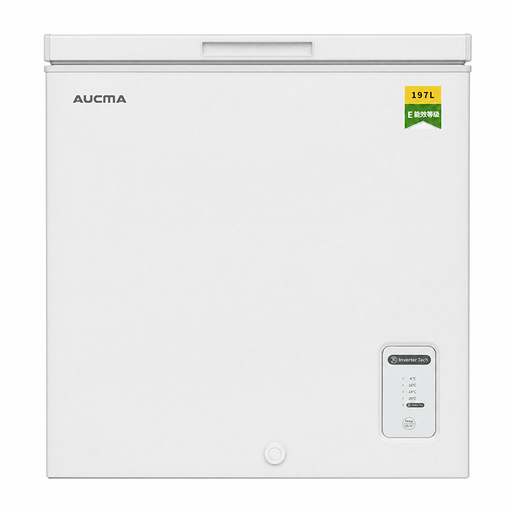 Image unavailable
AUCMA, 197 L convertible chest freezer
Compare it with your inventory if you’re looking for extra freezer space rather than room for very large quantities.
The product name lists a capacity of 197 L, an E energy rating, fridge or freezer mode, a removable basket and a defrost drain.
Check the space needed for the lid and ventilation, as well as the climate class and storage time for your installation.
View on Joybuy
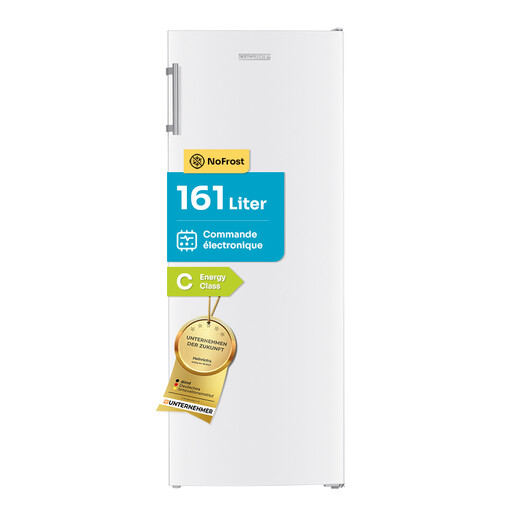 Image unavailable
Heinrich´s Freezer 161 L No-Frost, white
Worth considering if you prefer front access and drawer storage, provided 161 L is enough for what you need to store.
The product name lists No-Frost, a C energy rating, an LED display and a reversible door hinge.
Check the dimensions, annual energy consumption in kWh, climate class and storage time before confirming where it will go and comparing it with other capacities.
View on Joybuy
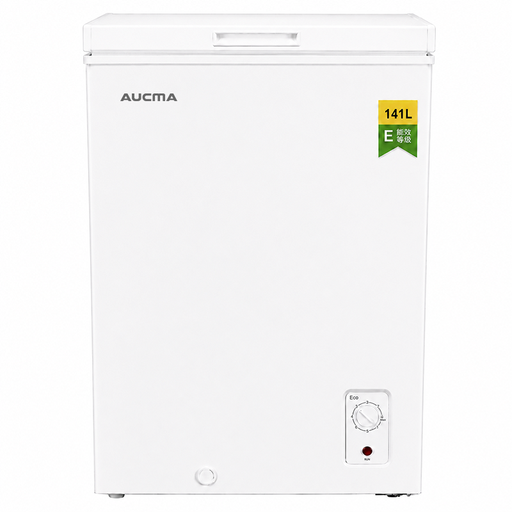 Image unavailable
AUCMA, 141 L convertible chest freezer
Consider it as extra freezer space if your inventory will fit in 141 L; check this carefully if you need to store larger quantities.
The product name lists an E energy rating, fridge or freezer mode, a 7-setting thermostat, a removable basket and a defrost drain.
Measure the clearance above the lid and check the climate class and storage time for the conditions in your room.
View on Joybuy
Frequently asked questions
What should I measure before choosing a chest or upright freezer?
Measure the space where the appliance will go, the delivery route and the room needed to open it fully. Also allow for the ventilation clearances specified in the manual: an upright freezer needs room for its door and drawers, while a chest freezer needs space above the lid.
How do I compare the capacity and energy consumption of two models?
Start by comparing the usable freezer capacity, then compare the annual energy consumption in kWh of models with similar capacities. The model’s product information and the European EPREL database list details including declared capacity, dimensions and annual energy consumption. For a fridge freezer, be sure to distinguish the freezer compartment’s capacity from the total capacity.
Can I install a freezer in a garage or cellar?
Yes, if the temperatures in the room fall within the ambient temperature range specified for the model you’ve chosen. Check its climate class and manual rather than relying on whether it’s a chest or upright freezer. Beko says that the ability to operate at temperatures as low as -15 °C, stated for some Freezer Guard models, applies only to those specific models.
What after-sales rights should I bear in mind in France?
If an individual buys a freezer from a professional seller in France, the legal guarantee of conformity applies, as the Directorate-General for Competition Policy, Consumer Affairs and Fraud Control points out. Keep your proof of purchase, the description of the promised features and the manual: these documents may be useful if the product doesn’t match what was agreed.


