For storing large harvests or bulk buys, choose a chest freezer if you have enough room and prefer an open storage space. An upright freezer is a better fit if you often take out individual portions and want to organise them in drawers. Before choosing a model, compare its capacity and dimensions with your stock and the space available, then check its ambient temperature range, annual energy consumption and stated power-cut storage time.
Who is this choice for?
Households with harvests or bulk buys
If your fruit, vegetables, prepared meals or bulk buys take up more room than your fridge freezer can offer, a separate freezer gives you extra storage. The choice between a chest and an upright model depends on how much you need to store and how often you take food out.
Households with a pantry or outbuilding
A cellar, garage or pantry may offer the space you need, but the name of the room tells you nothing about its actual temperature. Compare the room’s minimum and maximum temperatures with the installation conditions for the specific model.
Households that check their supplies often
If you regularly need to find portions or bags of vegetables, access matters just as much as capacity. The drawers in an upright freezer make it easier to keep things organised; in a chest freezer, plan how to store food so that less visible items don’t get left at the bottom.
What should you check before buying?
Chest and upright freezers both provide separate storage, but give you different access to your food. An under-counter model is better suited to smaller needs; if you also need to replace your fridge, compare the freezer compartment capacity of a fridge freezer with the space you actually need.
| Criteria |
What to check |
Your needs |
| Capacity and storage |
Estimate how much you need to store during harvest time or after your biggest shops. Compare the freezer compartment capacity and the space taken up by baskets or drawers. UFC-Que Choisir describes chest freezers with capacities of up to 600 L and upright models that are generally around 200 L, with the largest reaching 400 L. |
I want enough room for my supplies when they’re at their most plentiful, while keeping the portions I need to use first in sight. |
| Available space |
Measure the space, the route to the room and the clearance needed to open the lid or door and remove the drawers. Check the dimensions of the model you’re considering. |
I’m interested in a large chest freezer if I can open it and reach what’s inside without blocking the way; otherwise, an upright freezer may fit the space better. |
| Room temperature |
Check the room’s minimum and maximum temperatures, then consult the model’s climate class and manual. For example, Liebherr gives ranges of +10 °C to +32 °C for SN, +16 °C to +32 °C for N and +16 °C to +38 °C for ST. Any stated suitability for lower temperatures must apply to the exact model. |
If my freezer is going in a cellar or garage, I want to check that it can operate at the temperatures the room actually reaches. |
| Energy use and power cuts |
Compare the stated kWh/year for appliances of a similar size and capacity, rather than relying on the energy rating letter alone. Also check the stated storage time during a power cut and how it was measured: UFC-Que Choisir’s testing protocol assesses energy use at 25 °C and 32 °C, as well as how long food stays below −9 °C during a simulated power cut. |
The freezer will stay plugged in all the time and may hold a harvest that’s difficult to replace. I want to compare its energy use and understand what its stated storage time means. |
What mistakes should you avoid?
-
Choosing a chest freezer based on capacity alone
An appliance may fit in the room but still be difficult to fill or empty if there isn’t enough clearance for the lid or it’s awkward to reach the bottom.
Measure the appliance and the space, including the delivery route and room needed to open it. If you choose a chest freezer, organise food using baskets and labels.
-
Assuming any model will work in a garage
Climate classes cover different ambient temperatures. A feature stated for a freezer designed for a cold room doesn’t automatically apply to other models from the same brand.
Measure the room temperature as it changes, then check it against the rating plate and the manual for the model you’ve chosen.
-
Comparing energy ratings alone
Freezers with different capacities or designs won’t meet the same storage needs, so the energy rating letter alone isn’t enough to compare the energy use of the model you choose.
Check the capacity and kWh/year for each model, then look separately at noise and storage time during a power cut. The European Commission’s EPREL database lets you check the main specifications of listed models.
-
Treating freezing as a reset button
According to Anses, freezing food at home at −18 °C stops bacteria from multiplying, but most micro-organisms survive. Freezing therefore doesn’t make unsafe food suitable for storage.
Freeze food while it’s fresh, as soon as you buy or prepare it, then label each pack with its contents and the date to help you rotate your supplies.
Which brands should you consider?
These brand examples can help you identify features to compare. Always check that they’re available and confirm their terms of use on the model you’re considering.
Beko
Beko chest freezers are worth considering if installing your appliance in an unheated room is a priority.
- Beko states that some chest freezers in its range feature Freezer Guard −15 °C.
- This stated temperature doesn’t apply to every Beko model, so check the exact model and its installation conditions.
Liebherr
Liebherr is a brand to compare if the temperature of the room where you plan to install your freezer is an important factor.
- The brand details the temperature ranges for climate classes SN, N and ST, and says the class is shown on the rating plate.
- Stated suitability for operating at low temperatures applies only to certain models, not to all of its freezers.
Haier
Haier offers chest freezers in different capacities as well as drawer-style upright models. Compare the two designs based on the capacity and access you need.
- Haier’s chest freezer collection includes models with capacities of 196 L and 696 L. The brand also describes the 276 L H4F272WCH1 upright freezer, which has four drawers.
- The specifications stated for the H4F272WCH1, including its C energy rating and Total No Frost system, don’t describe other models in the range.
Chest and upright freezers on Joybuy
These models show two ways to add separate freezer storage: two chest freezers with a basket and an upright freezer with drawers. Compare their capacity with the amount you want to store, then check the installation conditions and usage information for the model you’re interested in.
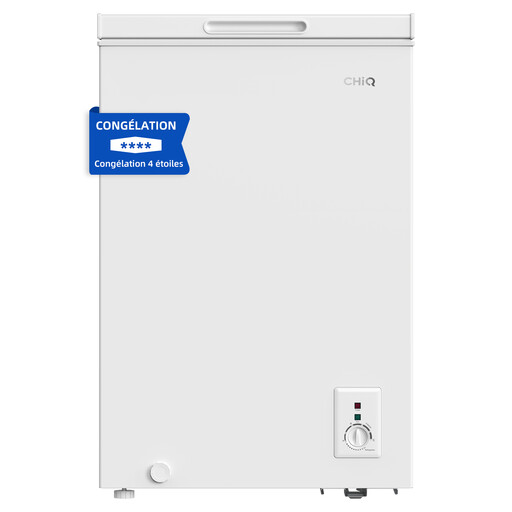 Image unavailable
CHiQ JR99DWE, 99 L chest freezer
This 99 L chest freezer provides extra storage for smaller needs. Compare its capacity with your biggest harvests or bulk buys.
The product name mentions a removable metal basket, sliding lid, adjustable thermostat, four-star freezer rating and E energy rating. Before installing it in a cold room, check the ambient temperature range for this model. Also check its kWh/year and storage time during a power cut.
View on Joybuy
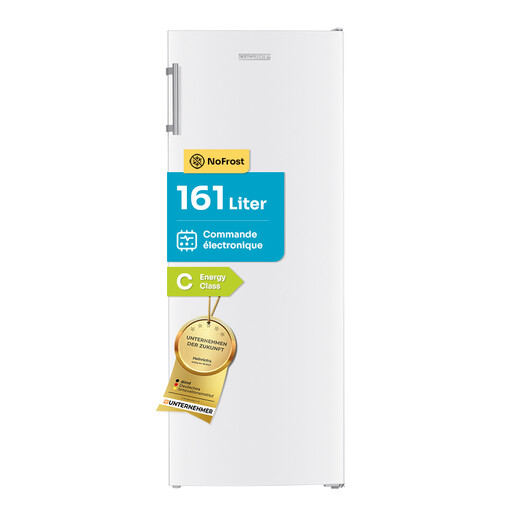 Image unavailable
Heinrich´s, 161 L No Frost upright freezer
This 161 L upright freezer lets you separate supplies in drawers rather than storing them in the open space of a chest freezer. Check that it has enough capacity for the times of year when you freeze the most food.
The product name mentions No Frost, an LED display, an alarm, a reversible door hinge and a C energy rating. Measure the clearance needed to open the door and check the ambient temperature range, kWh/year and storage time during a power cut for this model.
View on Joybuy
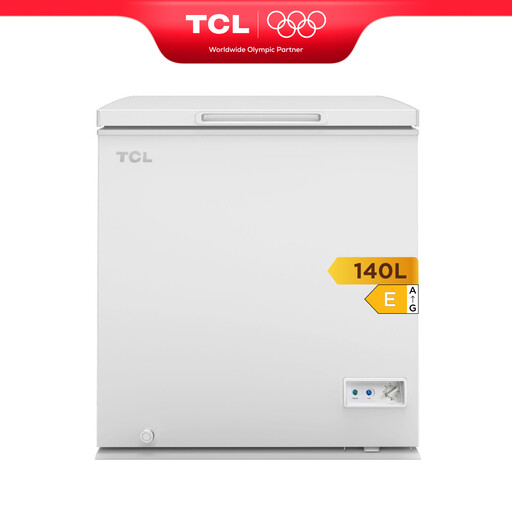 Image unavailable
TCL CF182EWE0FR, 140 L chest freezer
This 140 L chest freezer gives you separate storage, with a basket to keep some of the contents apart. Compare its capacity with the size of your harvest or bulk buys.
The product name mentions a counterbalanced lid, temperature control, adjustable feet and an E energy rating. Check the clearance needed for the lid, along with this model’s ambient temperature range, kWh/year and storage time during a power cut.
View on Joybuy
Frequently asked questions
How can I tell if a freezer is suitable for a cellar or garage?
Compare the room’s minimum and maximum temperatures with the climate class and installation conditions for the exact model. For example, Liebherr gives ranges of +10 °C to +32 °C for SN, +16 °C to +32 °C for N and +16 °C to +38 °C for ST. Any stated suitability down to −15 °C applies only to models for which this is expressly specified.
How should I compare the energy use of two freezers?
Compare their stated annual energy consumption in kWh/year, taking into account the size and capacity of each appliance rather than relying on the energy rating alone. You can check a model’s main specifications in EPREL, the European Commission’s database for energy labelling.
What does storage time during a power cut mean?
It’s a figure that needs to be read alongside the conditions under which it was measured, not a guarantee that will apply in every situation. To compare freezers, check the stated figure for each model and how it was measured: UFC-Que Choisir’s testing protocol measures how long food stays below −9 °C during a simulated power cut.
Can I wait until food is close to its use-by date before freezing it?
No. Anses recommends freezing food as soon as you buy or prepare it, rather than waiting until the end of its use-by date. It explains that freezing food at home at −18 °C stops bacteria from multiplying, but most micro-organisms survive.


