What should you check before choosing ?
Start by choosing a format that suits the amount you need to store and how often you’ll access it. Then check that the specific model is suitable for the room and for year-round use.
Chest freezer
Worth considering : for a harvest or large bulk buys, if you have enough floor space; Que Choisir describes chest freezers with capacities of up to 600 litres.
Keep in mind : you’ll need baskets, storage zones or an inventory to find food stored at the bottom.
Upright freezer
Worth considering : if you regularly take out individual portions and want to organise your harvest, meals and bulk buys in drawers.
Keep in mind : check the available height and the space needed to open the door and remove the drawers.
Compact or under-counter freezer
Worth considering : as an extra freezer or for a smaller space; Que Choisir gives these models a capacity of 30 to 100 litres.
Keep in mind : this capacity may be too limited for a whole harvest or large bulk buys that need to be stored at the same time.
| Priority |
What to check |
Think about your needs |
| Capacity and dimensions |
Compare the capacity in litres with the amount you need to store. Measure the width, depth and height, as well as the delivery route and the clearance needed for the lid or drawers. |
A harvest arrives all at once: I want to be able to store it without blocking access to food that’s already in the freezer. |
| Where you’ll install it |
Compare the room’s minimum and maximum temperatures with the ambient temperature range specified for the exact model. Follow the instructions on ventilation and clearance, too. |
My appliance will be in a cellar or garage: I need to make sure the model is designed for the temperatures the room actually reaches. |
| Energy use |
Check the stated consumption in kWh/year and compare appliances of a similar type and capacity. The European Commission says the energy label for domestic fridges and freezers uses a scale from A to G ; you can find model details in the EPREL database. |
As the freezer runs all year round, I’d rather look at its annual consumption than just its energy rating. |
| Power cuts and everyday use |
Check the stated storage time during a power cut for each model, as well as the internal layout, any alarm and the defrosting method. These features don’t replace checking the storage time. |
I want to find my portions easily and know how long the food is expected to stay frozen if the power goes off. |
Which brands should you consider ?
These brands offer examples of features to compare on a specific model; they don’t necessarily reflect the models available on Joybuy.
Beko
Worth considering for a chest freezer in an unheated room, provided the specific model clearly states a suitable ambient temperature range.
- Beko says some chest freezers with Freezer Guard can operate at ambient temperatures as low as −15 °C.
- This doesn’t apply to the whole range : check the climate class, capacity and storage time for the model you’re considering.
Liebherr
Worth considering for a chest freezer if the capacity, basket layout and installation requirements suit your household.
- Liebherr says StopFrost reduces ice build-up; the brand also offers selected FrostProtect chest freezers for unheated rooms.
- Check that these features are available on the exact model and confirm its ambient temperature range. A chest freezer will always need some organisation to make food at the bottom easy to reach.
Whirlpool
Worth considering for an upright freezer if keeping food separate and accessing drawers regularly matter more to you than the open space of a chest freezer.
- Whirlpool offers upright freezers with drawers and No Frost models; its product pages let you compare the features of the model you choose.
- Don’t assume the capacity, annual consumption or defrosting method is the same across different Whirlpool models.
Freezers available on Joybuy
These options include chest freezers in a range of capacities for home-grown produce or bulk buys, plus an upright model for more regular access to individual portions. Compare their capacity with the amount you plan to store and check the installation requirements for each model.
 Image unavailable
AUCMA convertible chest freezer, 291 L, energy rating E
Designed for storing home-grown produce or large bulk buys, this chest freezer has a stated capacity of 291 L, a removable basket and LED lighting. Its description lists fridge and freezer modes, plus a five-level digital control. Check the space needed to open the lid, the permitted ambient temperature and the storage time during a power cut.
View on Joybuy
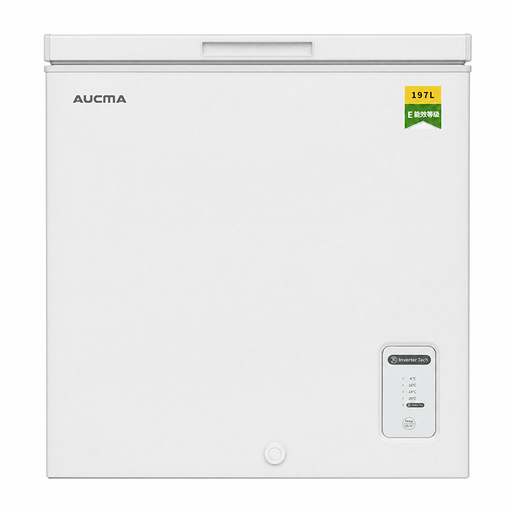 Image unavailable
AUCMA convertible chest freezer, 197 L, energy rating E
This 197 L chest freezer could help you keep bulk buys and prepared portions separate from the food in your everyday freezer, if its capacity suits the amount you plan to store. Its description lists a removable basket, fridge and freezer modes, and a five-level digital control. Organise food stored at the bottom, and check the ambient temperature range and stated storage time.
View on Joybuy
 Image unavailable
Heinrich´s upright freezer, 161 L, stainless steel, No Frost, energy rating C
For regular access to individual portions, this 161 L upright freezer has drawers, according to its product description, which also lists No Frost, an LED display and an alarm. Check the dimensions and clearance needed to remove the drawers, then compare the model’s annual consumption, ambient temperature range and storage time.
View on Joybuy
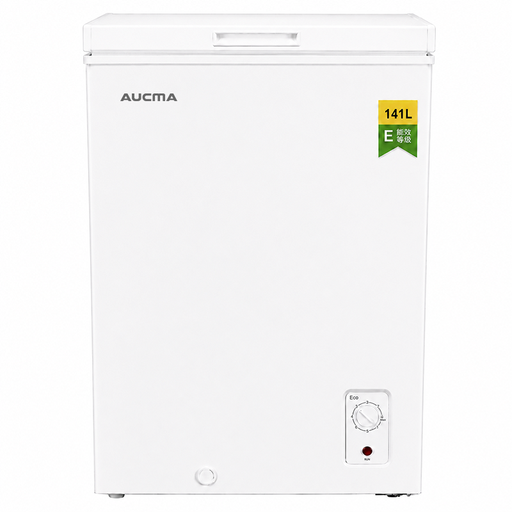 Image unavailable
AUCMA convertible chest freezer, 141 L, energy rating E
Compare this 141 L chest freezer with the amount of bulk-bought or home-grown food you need to store; its capacity may be restrictive if you need to freeze everything at once. Its description lists a removable basket, fridge and freezer modes, and a seven-level thermostat. Check the space available, the permitted ambient temperature and the storage time during a power cut.
View on Joybuy
 Image unavailable
TCL CF182EWE0FR chest freezer, 140 L, energy rating E
With a stated capacity of 140 L, this chest freezer is worth considering for extra storage rather than assuming it will hold a large harvest. Its description lists a basket, a counterbalanced lid and a temperature control. Measure the space needed to open it and check the annual consumption, permitted ambient temperature and storage time for this model.
View on Joybuy
Frequently asked questions
Can you put a freezer in a garage or cellar ?
Yes, as long as the temperatures the room actually reaches stay within the ambient temperature range specified for the exact model. Compare the room’s temperature extremes with the model’s climate class and instructions : some chest freezers, including selected Beko models, are designed for unheated spaces, but you shouldn’t assume this applies to other models.
What should you look for on the energy label ?
Check the annual consumption in kWh as well as the energy rating, then compare appliances of a similar type and capacity. The European Commission says the energy label for domestic fridges and freezers uses a scale from A to G ; you can find details of a specific model in the EPREL database.
How do you compare storage times during a power cut ?
Compare the stated time for each model and check the temperature conditions it refers to. In its test procedure, Que Choisir measures how long food stays below −9 °C during a simulated power cut : a figure based on a different criterion isn’t directly comparable.
Is a compact or under-counter freezer big enough for a harvest ?
Not necessarily : Que Choisir gives these models a capacity of 30 to 100 litres. They’re mainly worth considering for extra storage or a smaller space; estimate how much food you’ll need to freeze at once before choosing one as your main freezer.
What should you do with food during a power cut ?
Keep the freezer closed as much as possible and check its stated storage time and instructions. Anses points out that keeping food at a low temperature slows the growth of micro-organisms : don’t judge the condition of your food by the stated storage time alone, without taking the actual power-cut conditions into account.


