Choose a chest freezer if you prioritise capacity and have a suitable floor space; an upright freezer is a better fit when you need to sort through and remove food frequently. A large fridge freezer is only sufficient if its freezer compartment genuinely meets your needs, while a compact model is mainly useful as an extra; also compare dimensions, kWh/year, storage time during a power cut, noise levels and climate class.
Which households is it for?
Households that buy in bulk
You buy in bulk, cook in advance or store home-grown produce and family meals: usable capacity, floor space and storage time during a power cut become essential. Que Choisir particularly highlights large chest freezers, which can offer substantial capacity.
Households that want organised everyday access
If you often look for small portions or several categories of food, an upright freezer with drawers makes everything easier to find. However, check that the compartments are large enough and easy to handle for the packaging you usually use.
Users with a garage, cellar or unheated room
Outside the kitchen, the temperature range covered by the climate class must match the temperatures actually recorded in the room, both in winter and summer. Bosch explains that this class defines the ambient temperature range in which the appliance is designed to operate.
What to look for
Start with the available space and the amount you need to store, then check access to the food, performance during a power cut and annual energy consumption.
| Priority |
What to check |
Your needs |
| Capacity and footprint |
Compare usable litres, width, depth and height without packaging. Also measure access points and the opening space needed for the door or lid. |
I want to store more than I can in a fridge freezer without obstructing a walkway or choosing an appliance that cannot be installed. |
| Access and organisation |
Look at the number and size of the drawers, baskets and compartments. Check whether the exact model is No Frost or requires manual defrosting. |
I want to find food quickly and arrange the storage around my bags, boxes and dishes. |
| Performance during a power cut |
Compare the stated storage time in hours according to a recognised definition, along with alarms and freezing capacity in kg/24 h where these figures are provided. |
I want to protect a large stock during a power cut and spot an open door or rising temperature more quickly. |
| Energy consumption and location |
Compare kWh/year between appliances of a similar size and capacity. Check the climate class specified for the installation room. |
I am looking for an appliance that can run continuously without overlooking its energy consumption or the temperatures in my garage or cellar. |
Mistakes to avoid
-
Choosing based only on the litre capacity
A chest freezer may offer plenty of space but require more floor width and depth; an upright freezer is often easier to access, but its drawers limit the size of some packages. An appliance that cannot fit through the access points or whose lid cannot open properly will not meet your needs.
Measure the space, passageways and the opening clearance for the door or lid before comparing capacities. Then check that your dishes, boxes and bulky bags fit inside the compartments.
-
Installing the appliance in a garage without checking the climate class
According to Bosch, a room that is too cold may stop the motor, while a room that is too warm may cause it to run continuously. The actual temperature of the room therefore affects both operation and energy consumption.
Record the room’s minimum and maximum temperatures throughout the year, then compare them with the range stated in the manual or on the product page for the exact model.
An unsuitable climate range can make everyday use more demanding and put extra strain on the appliance.
-
Comparing the energy class without checking kWh/year and capacity
A freezer runs continuously, and a class letter alone is not enough to compare a small appliance with a large chest freezer properly. European labelling covers refrigeration appliances, but capacity and format remain important when interpreting energy consumption.
Compare kWh/year, usable capacity and appliance type on a like-for-like basis, then apply your own electricity tariff to estimate annual running costs.
Brand guide
Whirlpool
Worth considering for a household looking for a high-capacity chest freezer with clearly stated storage time during a power cut and basket details on the product page for a specific model.
- According to Whirlpool France, the WHM4612 offers 437 L, three baskets, a lock and a stated storage time of 32 hours.
- These specifications apply to the WHM4612 only; also check the availability and dimensions of the model you choose.
Bosch
Worth comparing if you need a slim, well-organised upright freezer, particularly for a kitchen, utility room or pantry with available vertical space.
- Bosch Home Appliances France lists 249 L, a width of 60 cm, 11 hours of storage time during a power cut and an open-door alarm for the GSV36VWEV.
- This model is not No Frost; its class E rating and stated noise level of 42 dB should be compared with appliances of a similar capacity.
Beko
Worth considering for a chest freezer intended for a garage or unheated cellar, but only if the model selected is suitable for the room’s temperatures.
- Beko France states that some chest freezers featuring Freezer Guard can operate at temperatures as low as -15 °C.
- This does not apply to the entire range: check the product page for the exact model and the minimum temperature of your room.
Haier
Worth comparing if you are deciding between a small top-up chest freezer, a vertical upright freezer and a high-capacity chest freezer.
- Haier’s French collection includes upright and chest freezers in a range of capacities, including the 196 L HCE200E.
- Check the model page for energy consumption, noise, storage time during a power cut and climate class before making your choice.
Options available on Joybuy
These Joybuy options include chest freezers for increasing frozen-food storage and an upright freezer for more organised everyday storage.
 Image unavailable
AUCMA 197 L convertible chest freezer
A chest freezer for households that need dedicated capacity and suitable floor space.
197 L, energy class E, stated consumption of 197 kWh/year, five-level digital control, removable basket and defrost drain. Stated dimensions: 816 × 554 × 848 mm.
Confirm the freezing mode for long-term storage, along with performance during a power cut and the climate class before installing it in a garage or cellar.
Joybuy
 Image unavailable
AUCMA 141 L convertible chest freezer
A chest-freezer format for adding to your frozen-food storage where space is more limited.
141 L, energy class E, stated annual consumption of 179 kWh, seven-level thermostat, removable basket and defrost drain. Stated dimensions: 632 × 554 × 848 mm.
Check the setting used in freezing mode, performance during a power cut and the ambient temperature range before installing it outside the kitchen.
Joybuy
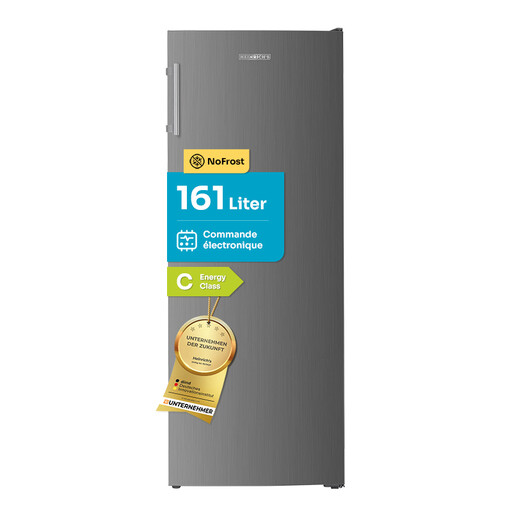 Image unavailable
Heinrich’s 161 L No Frost upright freezer
An upright freezer for keeping food separate and easy to find.
161 L, energy class C, No Frost protection, Fast Freeze function, three drawers, two shelves, LED display, alarm and reversible door. Stated temperature: -14 °C to -22 °C.
Check the dimensions, kWh/year, performance during a power cut and climate class before comparing this model or placing it in an unheated room.
Joybuy
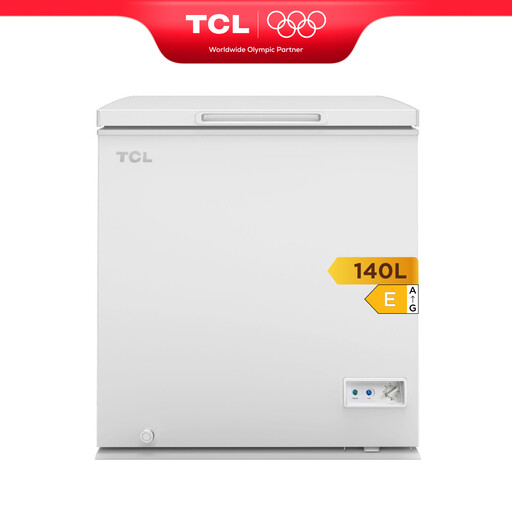 Image unavailable
TCL CF182EWE0FR 140 L chest freezer
A chest freezer for adding storage in an extra room while keeping a basket for small bags.
140 L, energy class E, storage basket, lid that stays open, castors, adjustable feet, mechanical control and water drainage. Stated dimensions: 637 × 556 × 846 mm.
Check the kWh/year, freezing capacity, storage time during a power cut and climate class for your chosen location. The documented storage includes one basket.
Joybuy
 Image unavailable
AUCMA 95 L convertible chest freezer
A compact top-up chest freezer for a flat or kitchen with limited space.
95 L, energy class E, stated consumption of 165 kWh/year, seven-level thermostat, removable basket and defrost drain. Stated dimensions: 550 × 475 × 848 mm.
This capacity is mainly useful as an addition for large stocks. Confirm the freezer setting, performance during a power cut and climate class before installing it in a garage.
Joybuy
Frequently asked questions
Does a chest freezer necessarily keep food frozen for longer than an upright freezer during a power cut?
No. Compare the stated or measured storage time for the exact model rather than relying on the format alone. In its testing protocol, Que Choisir measures the time needed for the temperature to rise from -17 °C to -9 °C without a power supply, and results can vary considerably between models.
Can I install a freezer in a garage or cellar?
Yes, but only if the room temperature remains within the climate-class range specified for the appliance. Bosch gives ranges of 10 to 32 °C for SN and 10 to 43 °C for SN-T, for example; some chest freezers claim to operate down to -15 °C, but this capability depends on the exact model.
What should I look for on a freezer’s energy label?
At a minimum, compare the A to G energy class and annual consumption in kWh between appliances with comparable capacity and format. In France, freezers are among the refrigeration appliances covered by European energy labelling.
Does the retailer have to take back my old freezer?
When buying an appliance of the same type, the “one-for-one” take-back service applies under the official take-back conditions. Ask about collection or drop-off arrangements when placing your order so that you can organise the replacement of the old appliance.


