Households that stock up in bulk
You prepare several meals in advance or buy in bulk. The amount of frozen food you can actually store matters more than the appliance’s external dimensions.


If you’re adding extra storage for bulk shopping, choose a chest freezer if you have enough floor space and don’t mind organising food in a single compartment. An upright freezer is a better choice if you often take out individual portions and have more room upwards than outwards. If you’re also replacing your fridge, compare the freezer capacity of a fridge-freezer; if you only run short of space now and then, reorganising your current freezer may be enough.
You prepare several meals in advance or buy in bulk. The amount of frozen food you can actually store matters more than the appliance’s external dimensions.
You want to find portions, bags and containers easily. Drawers, baskets and access to food matter just as much as the stated capacity.
Whether you’re installing it in a kitchen, utility room or unheated space, check the dimensions, door opening and permitted ambient temperature range for the model you’re considering.
Consider it: if you need extra storage for bulk buys and large containers, and have a dedicated spot on the floor.
Bear in mind: you’ll need to organise the compartment so food at the bottom is still easy to reach.
Consider it: if you store individual portions and take them out often, and have more height available than floor space for a chest freezer.
Bear in mind: compartments make sorting easier, but their layout may not leave room for a very large container.
Consider it: if you’re replacing your main appliance and want your fridge and freezer in one place.
Bear in mind: the appliance’s total capacity isn’t the same as the capacity of its freezer compartment.
Consider it: if you only need a little extra space occasionally and don’t want to install a second appliance.
Bear in mind: better organisation won’t create extra capacity if you regularly run out of space.
| Consideration | What to check | Who it matters to |
|---|---|---|
| Freezer capacity | Compare the freezer compartment’s capacity in litres, then check how much room is usable for your containers. With a fridge-freezer, don’t use its total capacity. | If you can no longer fit prepared meals and bulk buys in your current freezer, you need to increase the usable capacity first. Around 31% of consumers put extra capacity at the top of their list. |
| Access and organisation | Check the depth of the compartment or how the drawers open, and whether there are baskets to keep food separate. | If you take out portions several times a week, being able to find each container quickly becomes a priority. Easy access comes first for around 25% of consumers. |
| Space and installation | Measure the appliance, access routes and space needed to open it. In an unheated room, check the permitted ambient temperature for the exact model. | If floor space is limited or the appliance needs to go in a cold room, choose a suitable format before considering capacity. Around 25% of consumers prioritise this installation constraint. |
| Use and power cuts | Compare kWh/year and noise levels between similar appliances. Also check the stated storage time during a power cut for each model. | If you’re buying an appliance that runs continuously, check its energy use and find out how its stated storage time is measured. Around 19% of consumers put this concern first. |
A large chest freezer needs plenty of floor space, and smaller items can be hard to find inside. An upright freezer with compartments suits a different kind of use, even if its capacity is different.
Measure the room and access routes, then compare the stated capacity with the size of your containers and how often you take food out.
Whether a freezer can run in a cold room depends on the model, not simply on whether it’s a chest or upright freezer.
Compare the room temperature with the operating range given for the exact model, and follow its installation instructions.
Two appliances with different capacities won’t necessarily meet the same needs. The energy label also lets you compare their annual consumption in kWh.
Choose a suitable capacity first, then compare the energy rating, kWh/year and noise levels of appliances with similar capacities.
In France, the statutory legal guarantee of conformity applies to goods sold by a business to a consumer. Any additional commercial guarantee has its own terms and conditions.
Before taking out extra cover, read what it includes and distinguish it from the rights that come with the sale, as set out by the French Ministry of the Economy.
The range includes domestic chest freezers, including models that can switch between freezing and refrigeration.
The range includes chest and upright freezers, with features that vary by model.
The FNd 522i Plus NoFrost is an example of an upright freezer designed for vertical storage.
Worth considering if spare parts information is important to you when choosing a model.
These models illustrate three ways to get more freezer space: replace your fridge with a fridge-freezer, add a chest freezer or install an upright freezer. Compare their capacity with your containers and check the available space before choosing.
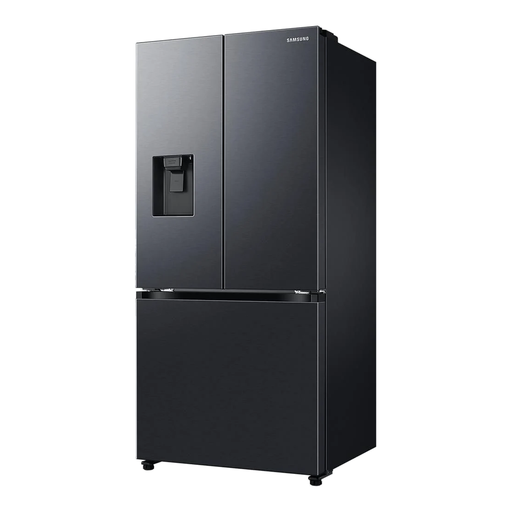 Image unavailable
Consider this if you’re replacing your main appliance rather than adding a separate freezer. The 495 L refers to the appliance’s stated total capacity, so check the freezer compartment capacity separately. Energy rating E.
 Image unavailable
A way to add extra storage in a top-opening compartment. The product title mentions a removable basket, a seven-setting thermostat and the option to switch between fridge and freezer modes. Check which mode suits your needs. Energy rating E. If you’re placing it in a cold room, check the permitted ambient temperature range.
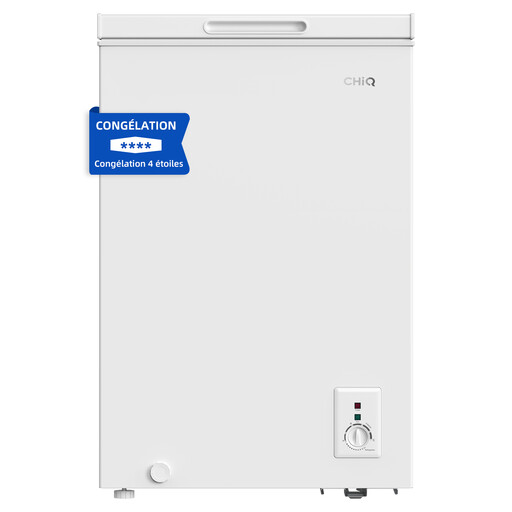 Image unavailable
A dedicated freezer if 99 L meets your storage needs. The product title mentions a removable basket and sliding lid; check that they’ll be easy to use in your chosen space. Energy rating E.
 Image unavailable
Compare this if you’re looking for a small upright freezer rather than a large chest. The product title states that it has a reversible door and an energy rating of E. Check the internal layout before buying, along with how much room your portions will actually need.
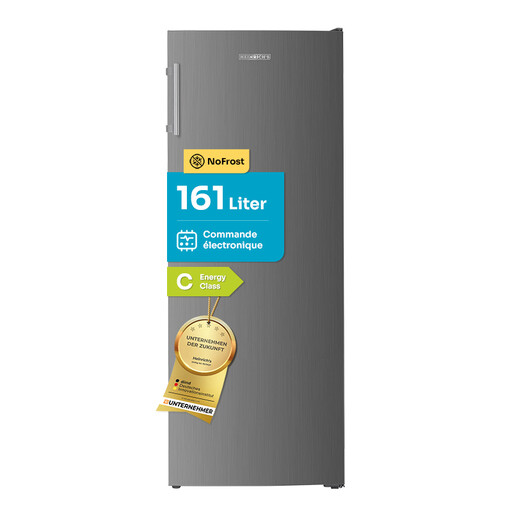 Image unavailable
Consider this if you want 161 L of compartmentalised upright freezer space. The product title states that it has No Frost technology and an energy rating of C. Check the internal layout, dimensions and installation requirements for this model.
For relevant appliances, the EU energy label shows details including an A to G rating, annual energy consumption in kWh, capacity and noise level. The European Commission explains the scale. When choosing, compare the kWh/year figures for models with similar formats and capacities.
No. Treat the storage time as an indicator that depends on how it was measured, not as a guarantee that every type of food will keep for that long. In its freezer testing protocol, UFC-Que Choisir measures the time it takes for the temperature to rise from −17 °C to −9 °C without power. Compare the figures for specific models on the same basis.
Yes, as long as the garage temperature stays within the operating range specified for the model and you follow its installation instructions. Some appliances are designed to work in very cold rooms, but that doesn’t apply to every chest freezer.
The statutory legal guarantee of conformity applies when a business sells goods to a consumer, as explained by the French Ministry of the Economy. This is separate from an optional commercial guarantee. Keep the product description and sales documents so you can check the right steps to take if the product doesn’t conform to its description.
Start with the meals, bulk buys and containers you actually want to store, then compare freezer capacity and the internal layout. For a fridge-freezer, use the capacity of the freezer compartment rather than the whole appliance. Then compare the kWh/year figures of models that meet your needs.