Households that freeze food in batches
If you prepare meals in advance or buy a lot of frozen food, consider how much storage space you need, how much floor space you have and how you’ll find what you’re looking for.


To build up a stock of frozen food, choose a chest freezer if you have enough space and rarely need to reach for individual items. An upright freezer makes it easier to organise food in drawers and access it regularly. A fridge freezer is a good option if you’re replacing your fridge too, provided its freezer compartment is large enough for your stock. Whatever you choose, check the installation requirements, energy consumption and power-cut storage time for the specific model.
If you prepare meals in advance or buy a lot of frozen food, consider how much storage space you need, how much floor space you have and how you’ll find what you’re looking for.
If you regularly need to get individual portions or ingredients, an upright freezer with drawers can make it easier to keep everything organised. However, check that its capacity is suitable for your stock.
If you’re installing the appliance in a garage or cellar, compare the room temperature with the operating range specified for the exact model, as this varies between models.
Consider this if: you buy in bulk or prepare food in batches, and have space for a horizontal appliance.
The trade-off: you’ll need to organise the contents to find food easily, and make sure the lid can open fully in the space you’ve chosen.
Consider this if: you often take food out and want to organise it in drawers.
The trade-off: compare its freezer capacity with the amount of storage you need, rather than choosing based only on ease of access.
Consider this if: you also need to replace your main fridge and want both functions in one appliance.
The trade-off: some of the total capacity is for fresh food, so check how much space is specifically available for frozen food.
| Criteria | What to check | What I need |
|---|---|---|
| Format and capacity | Compare the capacity available for frozen food, rather than the total capacity of a fridge freezer. Measure the space and allow room for the door or lid to open. | I want to store bulk purchases without making them difficult to find. |
| Room temperature | Check the climate class or ambient temperature range for the exact model, then compare it with the conditions in the room. | The freezer will go in my garage or cellar, so the model needs to be suitable for the temperatures there. |
| Energy consumption | Check the energy label and the model’s stated annual energy consumption. When comparing consumption, take the appliance type and capacity into account; the European Commission also provides EPREL product information sheets. | I want to factor in the electricity used by an appliance that runs all year round. |
| Power cuts | Compare the stated storage time for each model rather than assuming it based on the format. UFC-Que Choisir separately assesses how long food stays frozen during a simulated power cut. | I want to know how long the model I install will keep food frozen, especially if power cuts are possible where I live. |
The total capacity of a fridge freezer also includes the fridge compartment. With a dedicated freezer, the format affects how easy it is to access your food.
Compare the capacity actually available for frozen food, then choose between horizontal storage and easy access based on how often you use it.
The permitted ambient temperature depends on the specific model. A feature listed for some appliances won’t necessarily apply to an entire range.
Check the room temperature and confirm the operating range in the documentation for the model you’re considering.
Storage times vary between models. For example, Whirlpool states 24 h for the UW8F2DWHBIN2 and 35 h for the WVA35642 NFW 2.
Check the stated time for your model. If there’s a power cut, keep the appliance closed to limit heat getting in, as Whirlpool advises.
The energy rating alone doesn’t tell you the capacity or annual energy consumption. A useful comparison should also take the type and capacity of each appliance into account.
Check the energy label and EPREL product information sheet for each model, then compare appliances with similar storage capacity.
The features below apply to specific models presented by the manufacturers, not to every appliance they make.
Worth considering for selected chest freezers designed for unheated rooms or a NoFrost upright freezer.
Worth considering among chest freezers with features relating to frost or low ambient temperatures, depending on the model.
Worth considering for upright freezers, particularly if you have a preference for a particular installation type or need to know how long food stays frozen during a power cut.
This selection includes dedicated upright freezers and fridge freezers. For a fridge freezer, check the capacity of its freezer compartment; for a large dedicated freezer, make sure the stated capacity matches your needs.
 Image unavailable
Worth considering if you want a dedicated freezer with storage compartments to keep your frozen food separate.
The product name lists a capacity of 161 L, three drawers, a reversible door, an alarm and a C energy rating. Check the dimensions, permitted ambient temperature and storage time during a power cut to make sure it’s suitable for your home.
 Image unavailable
Worth considering if you’re replacing your main fridge too, rather than simply adding extra freezer space.
The stated 360 L capacity is for the whole appliance, so compare the freezer compartment’s capacity separately with your needs. The product name lists Total No Frost and an E energy rating; check the installation dimensions too.
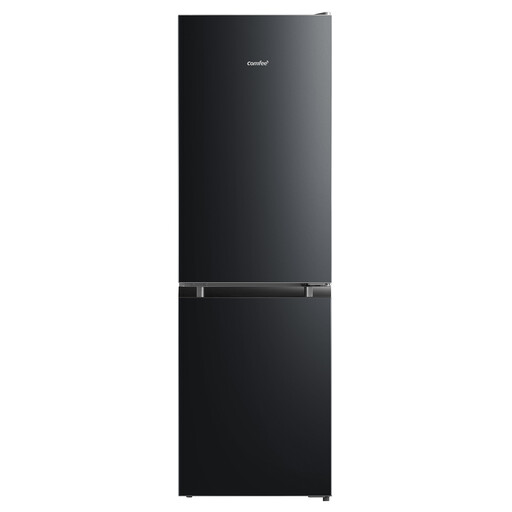 Image unavailable
This fridge freezer combines refrigeration and freezing in one appliance. Make sure its freezer compartment is large enough for your stock.
The product name lists a total capacity of 174 L, Low Frost, an adjustable thermostat and a reversible door. Check the freezer compartment’s capacity, energy consumption and installation requirements for this model.
Image unavailable
Worth considering for extra freezer space if 60 L is enough, rather than for building up a large stock.
The product name lists a reversible door, adjustable temperature and an E energy rating. Check the available space, permitted ambient temperature and storage time during a power cut.
Yes, if you’re also replacing your fridge and the freezer compartment can hold the amount of food you usually store. Check its capacity separately, as the fridge freezer’s total capacity includes the fridge compartment too.
Check that the ambient temperature range specified for the model matches the temperature in the room. A low-temperature feature offered by Liebherr or Beko on selected models doesn’t mean that all their freezers are suitable for unheated rooms.
Compare the stated storage time for the models you’re considering with the likelihood of power cuts where you live; it varies between appliances. For example, Whirlpool states 24 h for the UW8F2DWHBIN2 and 35 h for the WVA35642 NFW 2. During a power cut, keep the appliance closed, as the manufacturer advises.
Compare the energy rating and annual consumption for appliances of a similar type and capacity. For appliances covered by EU energy labelling, the European Commission provides EPREL, where you can look up information for a specific model.