Households building a separate food reserve
If the freezer compartment in your fridge-freezer is no longer big enough for food you buy, prepare or freeze at home, compare the usable capacity of a separate appliance with the space it will take up.


For a separate frozen food reserve, a chest freezer is a good choice if you have floor space and don’t mind organising food in layers; an upright makes frequent access and drawer-by-drawer organisation easier. An under-counter model suits more limited storage needs, while a large fridge-freezer makes most sense if you also need to replace your main fridge. In every case, compare the usable capacity, dimensions, permitted ambient temperature and the specific model’s power-cut storage time.
How often you need to reach your food and how much space you have are just as important as the capacity you need.
If the freezer compartment in your fridge-freezer is no longer big enough for food you buy, prepare or freeze at home, compare the usable capacity of a separate appliance with the space it will take up.
If you want to find food quickly by category or date, consider the drawers in an upright or how you could organise a chest freezer using its baskets.
If you’re fitting it under a worktop, in a small kitchen or in a room with little heating, check the dimensions, required clearance and ambient temperature range of the model you’re considering.
For a separate reserve, first choose between a chest, upright and under-counter freezer based on access and available space. Consider a large fridge-freezer if you also need to replace your main fridge.
| What to consider | What to check | What I need |
|---|---|---|
| Capacity and size | Compare the usable freezer capacity, external dimensions and access route to its intended position. Remember to allow enough space to open the door or lid. | I want extra storage that will fit in the room, and I won’t judge capacity by the appliance’s external size alone. |
| Access to food | Check the number and layout of the drawers, compartments or baskets. With a chest freezer, think about how you’ll find food stored at the bottom. | If I open the freezer often, I want to find what I need without moving a large part of my food reserve. |
| Power cuts | Compare the stated storage time for the specific models and check whether they have a temperature alarm. If you’re looking at test results, check how the tests were carried out: UFC-Que Choisir, for example, measures how long food stays below −9 °C during a simulated power cut. | My appliance may be left unattended, so I want to be able to spot a rise in temperature and know its stated storage time. |
| Installation room | Check that the climate class or ambient temperature range suits the room’s temperatures. ADEME recommends checking this for the intended location, such as a kitchen or cellar. | For a cellar or an unheated garage, I need a model whose operating range covers the temperatures it will actually experience. |
| Energy and noise | Compare the energy rating and annual consumption in kWh on the labels of new appliances. Check the noise level in dB(A) if the freezer will be near a living space. | Noise matters to me in an open-plan kitchen, and I also want to compare the stated consumption of each model. |
Two appliances with different capacities can also differ greatly in how easy they are to access and organise. Capacity won’t tell you whether the appliance will fit through your doors or how easy it will be to arrange the contents.
Measure the space and delivery route, then compare the usable capacity, dimensions and interior layout of the specific model.
A model’s stated operating range doesn’t automatically apply to other appliances, even those from the same brand. ADEME recommends taking the ambient temperature of the installation room into account.
Estimate the room’s minimum and maximum temperatures, then check them against the chosen model’s technical details and instruction manual.
Calling an appliance a ‘chest’ or ‘upright’ doesn’t tell you how long a specific model will keep food frozen during a power cut. UFC-Que Choisir tests factors including energy consumption and how long the temperature stays below −9 °C during a simulated power cut.
Compare the stated storage times model by model. If you consult test results, look for those that clearly explain how the measurements were taken.
If you’re replacing a freezer, it needs to be removed in a way that works with the delivery arrangements and access to your home.
Before placing your order, ask the seller how to arrange collection or take-back of your old appliance.
These examples of ranges and models can help you identify features to compare. A feature listed for one appliance doesn’t necessarily apply to the whole brand.
Beko’s range includes chest freezers, with ambient temperature ranges that vary by model.
The range includes upright and under-counter models to suit different spaces.
Whirlpool offers upright and chest freezers with layouts and dimensions that vary by model.
Some Liebherr chest freezers are presented with features related to frost build-up or installation in an unheated room.
This Joybuy selection includes chest freezers in several capacities, an upright model and a compact vertical design. They’re suited to separate food storage. If you’re also planning to replace your main fridge, compare the freezer compartments of the fridge-freezers you’re considering instead.
 Image unavailable
This chest freezer is suited to a separate food reserve where a stated capacity of 291 L and basket storage meet your needs. The product title lists a switchable fridge and freezer function, five-level digital control and an energy rating of E. If you’re planning to keep it in a cellar or garage, check its ambient temperature range. Also compare its storage time during a power cut if that matters to you.
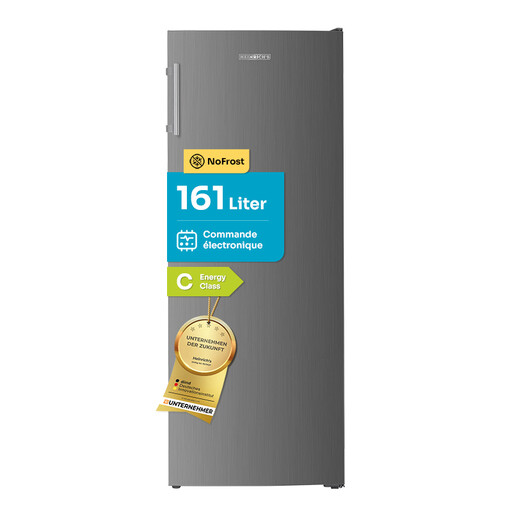 Image unavailable
This upright model with drawers may suit you if you want to separate food and access it frequently. The title lists a capacity of 161 L, a No-Frost function, an alarm and an energy rating of C. Measure the space and check the model’s dimensions, ambient temperature range and storage time during a power cut before choosing.
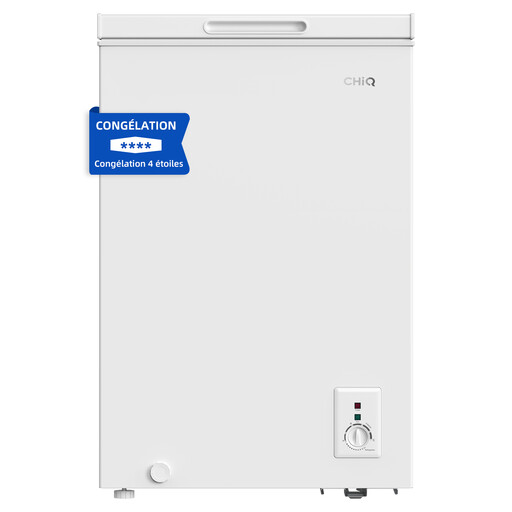 Image unavailable
This 99 L chest freezer can provide extra space when you only have a small amount of food to store. The title mentions a removable basket, sliding lid and energy rating of E. It’s described as requiring manual defrosting, so bear this maintenance in mind. Check the storage time during a power cut and the ambient temperature range for your intended location.
 Image unavailable
This 60 L model suits anyone needing extra storage in a compact space, as long as you check its dimensions and the clearance required. The title lists a reversible door and an energy rating of E. The title and description differ on the interior layout, so confirm the number and type of compartments for this variant before buying.
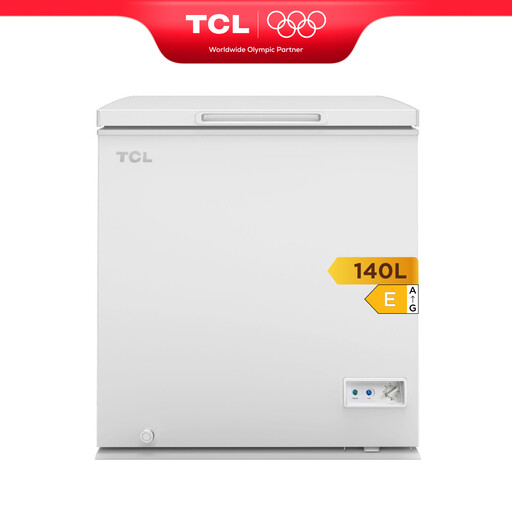 Image unavailable
This 140 L chest freezer is an option for a separate food reserve if its capacity and lid opening suit your needs. The title mentions a storage basket, counterbalanced lid and energy rating of E. Before installing it in a cellar or garage, check the model’s ambient temperature range. Also look at its storage time during a power cut.
Yes, as long as the model’s specified ambient temperature range covers the temperatures in the room. ADEME recommends checking the recommended temperature for the intended location. A feature listed for one specific chest freezer doesn’t necessarily apply to other models.
Check the stated storage time for the specific model and, if you’re looking at test results, how the measurements were taken. UFC-Que Choisir measures how long food stays below −9 °C during a simulated power cut. Don’t assume this time based on whether the freezer is a chest or upright model.
Yes. According to the Directorate-General for Competition, Consumer Affairs and Fraud Control, household refrigeration appliances, including freezers and fridge-freezers, have been covered by energy labelling requirements since 1 March 2021. Compare the energy rating and consumption figures shown on the new appliances you’re considering.
Ask the seller about take-back or collection arrangements before ordering your new appliance. If delivery is planned, explain where the old freezer is and check how its removal can be arranged.