Households freezing their harvest
You need to store large quantities of food or bulky containers in a short space of time, and can set aside a permanent spot for the appliance.


For storing large harvests or bulky purchases, a chest freezer could be a good choice if you have enough floor space and room to open the lid. If you regularly need to find individual portions, an upright freezer with drawers makes organising them easier. In either case, choose a usable capacity that suits the amount you plan to store, and check the dimensions and permitted room temperature range for your chosen location.
You need to store large quantities of food or bulky containers in a short space of time, and can set aside a permanent spot for the appliance.
You open your freezer often and want to find meals or ingredients quickly, organised by category.
You want to store bulk purchases outside the kitchen. The space available and the room temperature will both affect your choice of model.
For harvests or bulk purchases, start by comparing chest freezers and their usable capacity. If you regularly take out a variety of portions, also consider how easy an upright freezer with drawers is to access. Compact models are better suited to extra storage, while a fridge-freezer only offers substantial frozen storage if its freezer compartment is large enough for your needs.
Choose this if: you store harvests, parcels or bulky bulk purchases and have enough floor space.
Bear in mind: food at the bottom can be harder to find, so you’ll need to organise it carefully.
Choose this if: you often store and take out portions, and want to keep them separate in compartments.
Check: the drawers must be accessible and able to fit your containers once the appliance is installed.
Choose this if: you’re short on space and need extra storage; Que Choisir puts these models in the 30 to 100 l range.
Bear in mind: their smaller capacity makes them less suitable for a large harvest or bulk purchases.
Consider this if: you also need to replace or upgrade your fridge, and the freezer compartment offers enough storage for your needs.
Check: the total capacity includes both the fridge and freezer compartments, so it doesn’t represent freezer capacity alone.
| Criteria | What to check | Who cares most about it |
|---|---|---|
| Usable capacity | Estimate the largest amount you’ll need to store at one time. Compare the usable litres available for freezing, the internal layout and, for large additions, the stated freezing capacity in kg/24 h. | When I’m storing a harvest or bulk purchases, I prioritise usable space and room for containers. Around 27% of consumers put ample storage at the top of their list. |
| Access and storage | Look at the drawers, baskets and dividers; check whether removable parts let you adapt the space to suit the model and your containers. | If I take out portions often, I want to sort them and find them without moving the whole stock. Around 27% of consumers prioritise easy access and organisation. |
| Room temperature | Check the temperatures in the intended location against the instructions for the exact model. For example, Liebherr gives a range of +10 °C to +43 °C for climate class SN-T; its CFe 2500 is listed with FrostProtect down to −15 °C, a feature specific to that appliance. | Before installing an appliance in a pantry, utility room or garage, I check the temperatures it actually reaches. Around 20% of consumers prioritise compatibility with an unheated room. |
| Size and access | Measure the space, doorways and route to the room. Allow for the clearance needed to open the lid, door or drawers. | When space is limited, I check that the appliance will fit through the access points and can be opened without getting in the way. Around 13% of consumers prioritise a compact footprint. |
| Energy consumption | Compare the annual consumption in kWh and usable capacity on the labels of the models you’re considering. The EU energy label also lets you compare ratings from A to G; ADEME points out that a freezer runs continuously. | If I’m keeping the appliance running all year, I compare its annual consumption with the capacity I actually need. Around 13% of consumers make running costs their priority. |
For a fridge-freezer, the total capacity also includes the fridge compartment. So an appliance described as spacious won’t necessarily offer ample freezer storage.
Compare the usable litres in the freezer compartment alone and check that the internal layout will accommodate your containers.
The permitted room temperature range varies by climate class and model. Liebherr’s SN-T class covers +10 °C to +43 °C; the ability to operate below +10 °C must be confirmed for the specific model.
Check the minimum and maximum temperatures in the room, then consult the instructions or rating plate for the exact appliance.
These features answer different questions: maintenance, freezing newly added food and keeping food cold for a limited time aren’t interchangeable. Que Choisir assesses them separately in its test protocol.
Compare each feature with your needs and check what it refers to, including the freezing capacity in kg/24 h.
Worth considering for a chest freezer in a cold room, provided the model and installation suit your needs.
Worth comparing if you’re looking for an upright model with compartmentalised storage, particularly the GSN36AICM.
Worth considering for a high-capacity chest freezer, if its size suits the room and access points.
This selection includes chest freezers for storing larger quantities and an upright freezer with drawers for organising portions. Capacity and installation requirements vary by model.
 No image available
The upright design and separate storage areas may suit you if you regularly take out individual portions.
161 L; 3 drawers and 2 shelves; No Frost; LED display; reversible door hinge; alarm; energy rating C; stated temperature range: −14 °C to −22 °C.
 No image available
Its stated capacity could suit your storage needs, provided you’ve checked the dimensions of the space where you plan to put it.
140 L; storage basket; counterbalanced lid; stated dimensions: 637 × 556 × 846 mm; energy rating E. The product description also mentions adjustable feet and a front water drain.
 No image available
Its stated capacity may suit a household looking to store a large amount of food and with enough floor space for the appliance.
291 L; removable basket; stated dimensions: 1100 × 597 × 872 mm; energy rating E; stated minimum ventilation clearance: 10 cm. The model is described as switchable between fridge and freezer modes, but the two modes cannot operate at the same time.
 No image available
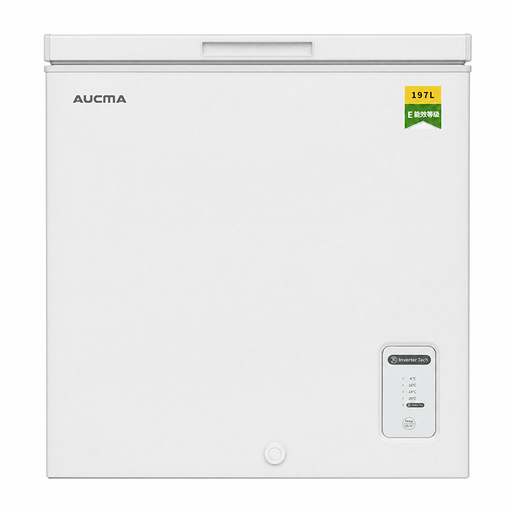
This capacity may suit you if you need frozen storage but don’t require as much space as the larger chest freezer models offer.
197 L; removable basket; stated dimensions: 816 × 554 × 848 mm; stated minimum ventilation clearance: 10 cm. The model is described as switchable between fridge and freezer modes, but the two modes cannot operate at the same time.
 No image available
With a stated capacity of 99 L, this chest freezer is better suited to extra storage than to a large harvest or bulky purchases.
99 L; stated freezing capacity: 4,5 kg/24 h; removable basket; adjustable thermostat; energy rating E. The product description recommends manual defrosting when the frost layer exceeds 5 mm.
Compare the usable litres available for freezing, not the appliance’s total capacity. The Bosch KIV87NSE0 product information lists 200 l for refrigeration and 70 l for freezing.
Not if the room gets colder than the stated lower limit: Liebherr defines the SN-T range as +10 °C to +43 °C. Check the temperatures in your garage and consult the instructions for the model you’re considering; its ability to operate below +10 °C must be confirmed for that specific model.
Anses states that domestic freezing at −18 °C stops bacteria from multiplying, but most micro-organisms survive. So continue to follow food hygiene rules and maintain the cold chain.
Check the type of cooling, defrosting requirements and the model’s freezing capacity in kg/24 h. Que Choisir’s test protocol assesses the freezing of newly added food and ease of cleaning separately, among other things; capacity in litres alone won’t answer these questions.
The EU energy label lets you compare energy consumption and, for appliances covered by it, uses a scale from A to G. For goods bought by an individual from a professional seller, the DGCCRF states that the claim period for the legal guarantee of conformity is two years from delivery; any commercial guarantee is separate.