Households stocking up in bulk
If you buy in bulk or cook ahead, the freezer’s usable capacity matters especially. A chest freezer is worth considering if you can set aside enough floor space for it.


If your priority is storing a large quantity of frozen food and you have enough floor space, start by looking at chest freezers. An upright freezer makes it easier to access food regularly in a vertical format; a large-capacity fridge freezer makes most sense if you’re replacing your fridge too. In every case, compare the freezer compartment’s capacity and check that the appliance is suitable for the temperature of the room where you plan to keep it.
If you buy in bulk or cook ahead, the freezer’s usable capacity matters especially. A chest freezer is worth considering if you can set aside enough floor space for it.
If you want to keep food separate and find it without rummaging at the bottom of a chest freezer, compare the drawer layout of upright freezers with the baskets in the chest freezers you’re considering.
A fridge freezer combines both functions in one appliance. However, check the freezer compartment’s capacity separately from the total capacity.
Consider it: if frozen food storage is your priority and you have enough floor space.
Bear in mind: top access calls for an organised system of baskets and enough clearance to open the lid.
Consider it: if you often take food out and prefer to organise it in drawers.
Bear in mind: to match the capacity of the largest chest freezers, you’ll need to compare the available capacities carefully.
Consider it: if you’re replacing your fridge too and want both functions in one appliance.
Bear in mind: some of the total capacity is for chilling, not frozen food.
If your household regularly stores a lot of frozen food, start with how much you need to store, then check how easy it is to access your food, where the appliance will go and the model’s usage specifications.
| Criteria | What to check | Who it matters to |
|---|---|---|
| Freezer capacity | Compare the usable litres available for frozen food and the appliance’s dimensions with the lid or door open. | If I’m stocking up after bulk shopping or batch cooking, I want enough space without exceeding the space available. Around 33% of consumers would put this capacity at the top of their list. |
| Storage and access | Look at the drawers or baskets and the space available for bulky items. | If I open the freezer often, I want to find food quickly when it’s organised by category. This ease of access would be the priority for around 27% of consumers. |
| Where it will be installed | Compare the room’s minimum and maximum temperatures with the ambient temperature range specified for the model. | In a cellar, garage or very warm room, I need to know whether the appliance is designed to operate there. Around 20% of consumers would make this suitability their main priority. |
| Ongoing use and power cuts | For appliances with a similar capacity, compare kWh/year, noise in dB, storage time in hours and freezing capacity in kg/24 h. | I want to take everyday energy use into account, as well as the stated storage time if the power is cut. These criteria would come first for around 20% of consumers. |
A chest freezer can offer plenty of capacity while taking up a large amount of floor space. You’ll also need to be able to open the lid fully and reach the food inside.
Measure the space, delivery route and clearance above the appliance. Also check how its baskets organise your stock.
The climate class corresponds to a range of ambient temperatures. The chest or upright format alone doesn’t tell you whether a model is suitable for an unheated room.
Note the room’s lowest and highest temperatures and compare them with the model’s manual. For example, Beko states that its HSM14540 can operate at ambient temperatures as low as −15 °C; don’t assume the same applies to other models.
Appliances with different capacities don’t offer the same amount of storage. So the rating letter alone isn’t enough to compare how they’ll suit your needs.
Compare the rating, kWh/year, usable capacity and noise levels for models intended for similar use.
Electricity consumption continues all year round, so take each appliance’s stated annual figure into account.
Storage time during a power cut and freezing capacity vary from model to model. A chest freezer won’t automatically outperform an upright freezer on every measure.
Compare the stated number of hours and kg/24 h for each option, depending on what matters to you: possible power cuts or regularly adding large quantities of food to freeze.
These models illustrate some of the features you can compare; always check the specifications of the model you’re considering.
Worth considering if the temperature of the room where you’ll install the appliance or frost management is important to you.
Worth considering if you’re looking for a high-capacity upright freezer and vertical storage is a priority.
Worth considering if you’re comparing chest freezers with different capacities; check storage time and freezing capacity for each model.
This selection includes chest freezers to add extra storage, an upright freezer for organising food vertically, and a fridge freezer to consider if you’re replacing your fridge too. Compare capacities and check the installation requirements for each model.
 Image unavailable
Worth considering if you want to add top-access storage. The title specifies fridge or freezer mode, an E rating, five-level digital controls and a removable basket.
Check the clearance needed to open the lid, the permitted ambient temperature range and the stated storage time if these matter for your installation.
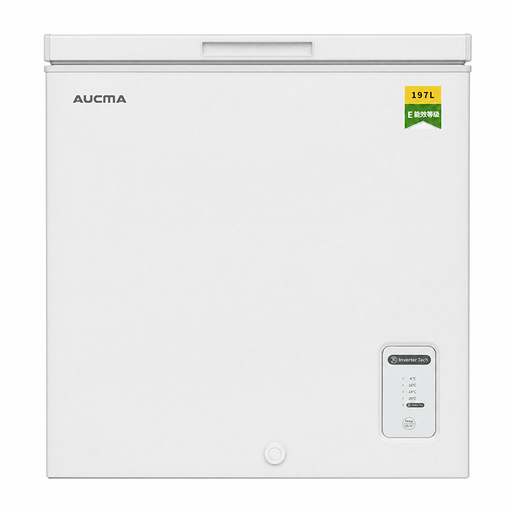 Image unavailable
Worth considering if you’re looking for a dedicated 197 L chest freezer. The title specifies fridge or freezer mode, an E rating, five-level digital controls and a removable basket.
Allow for top access and check the ambient temperature range and storage time for this model.
 Image unavailable
Worth considering if you’re replacing your fridge too. The title specifies a total capacity of 467 L, four doors, Total No Frost technology and an E rating.
To see how much space is actually available for frozen food, check the capacity of the freezer compartment alone, along with the required dimensions and clearances.
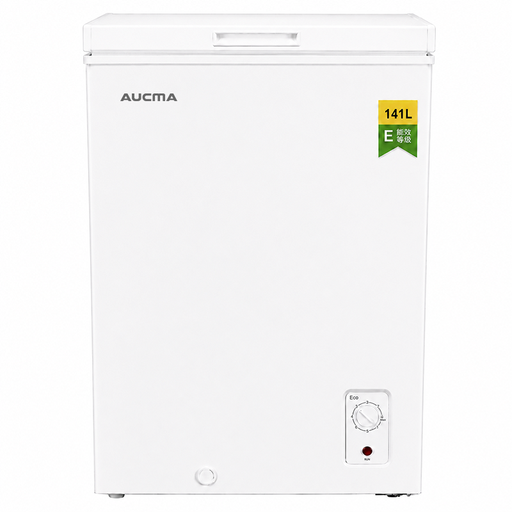 Image unavailable
Worth comparing if your available space calls for a smaller chest freezer. The title specifies 141 L, fridge or freezer mode, an E rating, a seven-level thermostat and a removable basket.
Check the space needed to open the lid, the permitted ambient temperature range and the storage time if power cuts are an important consideration.
 Image unavailable
Worth considering if you prefer to organise frozen food in a vertical format. The title specifies 161 L, drawers, No Frost protection, a reversible door hinge and a C rating.
Check the dimensions and door clearance, then compare the climate class, kWh/year and storage time according to your priorities.
Yes, if the model’s specified ambient temperature range covers the temperatures your garage actually experiences. UFC-Que Choisir gives the following reference ranges: 10–32 °C for class SN, 16–32 °C for N, 16–38 °C for ST and 16–43 °C for T. Check the manual for the model you choose rather than assuming it’s suitable based on its format.
Check the A to G rating, annual consumption in kWh and noise level, then consider these alongside each appliance’s usable capacity. When choosing between two storage options, the comparison is more meaningful if their capacities and intended uses are similar.
Compare the stated number of hours for each model rather than estimating it from its capacity or shape. UFC-Que Choisir’s testing protocol measures how long food stays below −9 °C during a simulated power cut. Bear in mind the method used for each figure you compare.
No: also look at the model’s usable capacity, annual consumption and storage time. Bosch describes its NoFrost system as removing moisture to prevent a layer of frost from forming. Check the feature listed for the model you’re considering rather than assuming it applies to an entire range.