To increase the amount of frozen food you can keep at home, choose a chest freezer if you prioritise bulky provisions and have a suitable space; opt for an upright freezer if you need to organise and retrieve small portions regularly. A large fridge freezer is a better option if you also need more room for fresh food, provided its freezer compartment is large enough for your provisions. In every case, check the appliance’s dimensions, installation requirements and annual energy consumption.
Who are these formats for?
Households that store large quantities
If you buy in bulk or keep ready meals, consider whether you have room for a chest freezer and check the minimum and maximum ambient temperatures for the room where you plan to install it. UFC-Que Choisir distinguishes this need for substantial storage from the kind of storage provided by a fridge freezer compartment.
Households that use frozen food regularly
If you often take out a range of portions, the drawers in an upright freezer can make it easier to organise and access your food. Check, though, that the drawer layout suits your packaging.
Households replacing their fridge too
A fridge freezer is worth considering if you also need more room for fresh food. Check the capacity of its freezer compartments separately: the appliance’s total capacity doesn’t tell you how much space is available for frozen food.
How do the formats compare?
Start by considering how much food you need to store and how often you’ll need to access it. Then check that your chosen format can be installed in the room you have in mind.
Chest freezer
Consider one: for provisions or bulky packaging, if you have enough floor space and room above the lid.
The trade-off: small portions stored at the bottom of a deep chest can be harder to find.
Upright freezer
Consider one: if you open the freezer often and want to sort your food into separate drawers.
The trade-off: compartments divide up the space, so check they can fit your largest packages.
Large fridge freezer
Consider one: if you’re replacing your fridge too and the freezer compartment has enough room for the food you plan to store.
The trade-off: a large total capacity doesn’t necessarily mean a large freezer compartment.
| What matters to you |
What to check |
Who is this for? |
| Capacity and bulky packaging |
Compare the freezer compartment capacities in litres, and measure the floor space and room needed to open the appliance. |
If buying in bulk already fills your freezer, you’ll need room for more provisions, including bulky packages. Around 40% of consumers prioritise capacity. |
| Access and organisation |
Look at the drawers or baskets and check that your packages will be easy to reach. |
If you take out different portions every day, being able to find food without rummaging through the whole chest is especially important. Around 40% of consumers prioritise this. |
| Replacing your fridge |
Check the fridge freezer’s freezer capacity separately, and make sure its dimensions suit the room where you plan to put it. |
If your fridge also needs replacing, one appliance could meet both needs, provided its freezer compartment is large enough. Around 20% of consumers prioritise replacing both appliances at the same time. |
Mistakes to avoid
-
Choosing based only on the largest capacity
A spacious chest freezer can make food at the bottom difficult to reach. Drawers in an upright freezer make it easier to organise food, but divide up the available space.
Before choosing, compare the size of your packaging with the actual layout of the baskets or drawers.
-
Assuming a model will work in any room
A cellar, garage or warm room may fall outside the ambient temperature range the appliance can handle. You’ll also need to allow enough space for ventilation and to open the door or lid.
Measure the space and access points, then check the model’s instructions for its operating temperature range and required clearances.
-
Looking only at the energy label rating
The European Commission says the label also provides information on annual energy consumption, storage capacity and noise emissions.
Look at the kWh/year figure alongside the freezer capacity in litres and the noise level, rather than comparing the ratings alone.
-
Assuming freezing makes food safe to store without care
According to Anses, at −18 °C bacterial growth stops, but most micro-organisms survive freezing.
Maintain the cold chain, follow the relevant food date labels and defrost food safely. Extra capacity won’t make up for poor food storage.
Brands to compare
Liebherr
The range includes NoFrost upright freezers and chest freezers, so you can compare these two ways of organising your frozen food.
- Liebherr lists a capacity of 248 L and FrostProtect for its CFd 2085 Plus chest freezer.
- Operating conditions in an unheated room depend on the model. Check the temperature range for the one you choose.
Beko
Beko chest and upright freezers offer formats to consider for extra storage or larger quantities.
- Beko states that the HSM27050 chest freezer has a minimum operating ambient temperature of −15 °C and a 41 h storage period in the event of a power cut.
- These specifications apply to the HSM27050 and don’t automatically apply to other models in the range.
Whirlpool
The range of upright freezers lets you compare capacity and drawer layouts.
- Whirlpool lists a capacity of 404 L, six drawers or baskets and energy consumption of 292 kWh/year for the WHFF 6403 W4E.
- These specifications are specific to this model. Check the product details for the one you’re considering.
Haier
Haier’s range includes upright and chest freezers, which you can compare based on your available space and preferred way of accessing your food.
- Choosing between a chest and an upright freezer lets you start with the way you prefer to store your provisions.
- Check the capacity, dimensions and installation requirements for each model.
Freezers to consider on Joybuy
These models are chest or upright freezers designed to give you extra space for frozen food. If you’re also thinking of replacing your fridge, compare the freezer capacity of a fridge freezer separately.
 Image unavailable
AUCMA convertible chest freezer 291 L
Worth considering if you need a chest freezer for bulky provisions and have enough room to open the lid.
The product name lists fridge or freezer modes, an energy rating of E, LED lighting, a five-level control and a removable basket. Before installing it in an unheated room, check the instructions for the permitted ambient temperature range.
View on Joybuy
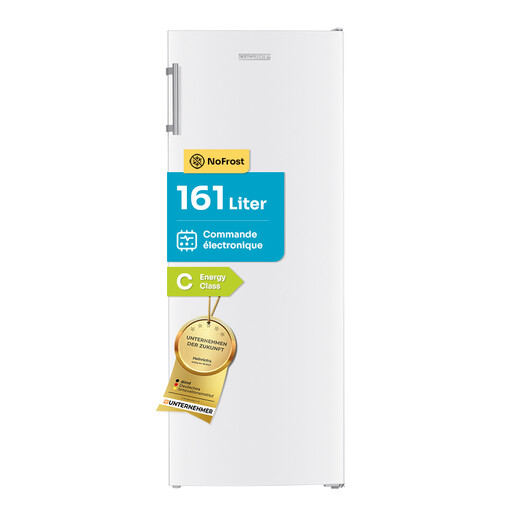 Image unavailable
Heinrich´s upright freezer 161 L
An upright freezer is suited to households that want to keep provisions separate and regularly access the food they’ve stored.
The product name lists drawers, a No-Frost function, a reversible door, a temperature setting range of −14 °C to −22 °C and an energy rating of C. Check the model’s dimensions and ambient temperature range for the space you have in mind.
View on Joybuy
 Image unavailable
CHiQ JR99DWE chest freezer 99 L
Consider this chest freezer if you need a smaller amount of extra freezer space and a top-opening lid suits your room.
The product name lists a four-star compartment, an adjustable thermostat, a removable basket, a sliding lid and an energy rating of E. Check the instructions for installation requirements and defrosting guidance.
View on Joybuy
 Image unavailable
AUCMA convertible chest freezer 95 L
Consider this for extra freezer storage after checking that 95 L is enough for the provisions you want to add.
The product name lists fridge or freezer modes, an energy rating of E, a seven-level thermostat and a removable basket. Check the ambient temperature range before installing it in a garage or unheated room.
View on Joybuy
 Image unavailable
TCL CF182EWE0FR chest freezer 140 L
This chest freezer could suit you if you need extra storage and its capacity and lid clearance work for your space.
The product name lists a basket, a counterbalanced lid, temperature control and an energy rating of E. Check the product details to compare annual energy consumption and the instructions for its ambient temperature range.
View on Joybuy
Frequently asked questions
What temperature should I set my household freezer to?
Aim for −18 °C to store frozen food. Anses explains that bacterial growth stops at this temperature, but most micro-organisms survive. Maintaining the cold chain and following safe defrosting advice are still important.
Can I put a freezer in an unheated garage?
Only if the model’s permitted ambient temperature range covers the conditions in your garage. For example, Beko lists a minimum operating temperature of −15 °C for the HSM27050; this specification doesn’t apply to all freezers. Check the instructions for the appliance you’re considering.
Should I leave space around my freezer?
Yes. Allow room for air to circulate and for the door or lid to open fully. Electrolux France recommends allowing air to circulate around the appliance. Check the instructions for the model you choose to find out how much clearance is required.
What should I compare on the energy label?
Compare the energy rating, kWh/year, the capacity of the freezer compartments and noise emissions. The European Commission includes this information on the label for fridges and freezers. For a fridge freezer, check the freezer capacity separately from the total capacity.


