Households building up a large stock
If you buy in bulk or regularly freeze food, a chest freezer is worth considering if you have the floor space. However, make sure its storage space is easy to organise so you can find food stored at the bottom.


If you need to store a large amount of frozen food and have enough floor space, consider a chest freezer. If you access your food often, an upright freezer with drawers makes it easier to organise. A small chest freezer or an under-counter model may be better for extra storage, while a large fridge-freezer could be enough if you only need a modest increase in capacity. If you’re installing it in an unheated cellar or garage, always check that the model’s permitted ambient temperature range covers the room’s temperatures.
The amount you need to store isn’t the only factor when choosing a type of freezer. Available space and how often you access your food matter too.
If you buy in bulk or regularly freeze food, a chest freezer is worth considering if you have the floor space. However, make sure its storage space is easy to organise so you can find food stored at the bottom.
An upright freezer with drawers lets you sort food into categories and access each one more easily. Check that there’s enough room to open the door and pull out the drawers.
A compact model may provide useful extra capacity, but its dimensions must suit the space available. If it’s going in an unheated cellar or garage, also check the ambient temperatures permitted for that specific model.
First, estimate how much frozen food you need to store and measure the available space. Then compare the features of models that meet both requirements.
| Criteria | What to check | My needs |
|---|---|---|
| Capacity | Compare the freezer’s net capacity with the quantity and size of the food you need to store. UFC-Que Choisir describes chest freezers with capacities of up to 600 L and standard upright models of around 200 L, with larger models also available. | I want to store bulk purchases, or simply add a little extra space to my fridge’s freezer compartment. |
| Type and access | Measure the floor space, height and clearance needed for the door or lid. Consider an upright freezer’s drawers or a chest freezer’s baskets, depending on the packaging you need to store. | If I open the freezer every day, I want to find food without having to move everything around. |
| Location | Compare the room’s minimum and maximum temperatures with the operating range specified for the model. Don’t assume a freezer is suitable for a cold room just because of its type. | My appliance will be in a cellar, utility room or garage where the temperature changes with the seasons. |
| Energy consumption | Compare the A to G energy rating and kWh/year figures for appliances with similar capacities and uses. The A to G scale is set out by the European Union; the letter alone doesn’t tell you the energy consumption stated for each model. | I want to compare the consumption of appliances that can hold my stock, rather than choosing based on the label letter alone. |
| Power cuts | Check the stated autonomy in hours and the method used when comparing test results. UFC-Que Choisir, for example, measures how long food stays below −9 °C during a simulated power cut. | Power cuts are a concern where I plan to install the appliance. I want to compare durations measured under clearly defined conditions. |
| Maintenance and noise | Check the defrosting system, its maintenance instructions and the noise level in dB, especially if the freezer will be near a living area. | I want maintenance that suits how I use the appliance and a noise level that works for its intended location. |
| Fridge-freezer or separate appliance | If you’re considering a large fridge-freezer, compare the capacity of its freezer compartment alone with your needs. For example, Whirlpool lists a total capacity of 300 L, including 79 L for freezing, for the WHC20D021B2. | I may be replacing my fridge too, but I don’t want to confuse the total capacity with the space actually available for frozen food. |
An appliance may fit in the room but still leave too little space to open the lid or reach the food comfortably.
Measure the appliance, the delivery route, the floor space, the clearance needed and the ventilation space specified in the manual.
Beko and Liebherr state that some models fitted with Freezer Guard and FrostProtect respectively can operate at temperatures as low as −15 °C. This doesn’t apply to all their freezers.
Note the room’s seasonal temperatures and check the ambient temperature limits listed for the model you’re considering.
Two freezers with different capacities may not meet the same storage needs, even if their energy labels show different letters.
Compare kWh/year, net capacity and type together, then look at appliances suited to similar uses.
In France, the Ministry of the Economy distinguishes between an optional commercial warranty and the statutory guarantee of conformity that applies to goods sold by a business to a consumer.
Before accepting an extended warranty, check its duration, territorial coverage, exclusions and claims process. It is separate from your statutory rights.
These examples highlight features to check on specific models; they don’t describe every freezer made by each brand.
Worth considering for a cold room if the model you choose has Freezer Guard.
Worth considering for a high-capacity chest freezer or a FrostProtect model intended for a cold room.
Worth considering if you’re choosing between a chest freezer, an upright freezer and a large fridge-freezer.
Worth considering for a built-in freezer, provided its installation dimensions and features suit your needs.
This selection includes chest freezers for extra frozen food storage and an upright model with drawers to help you organise your food. Compare their capacities with your needs before choosing a type.
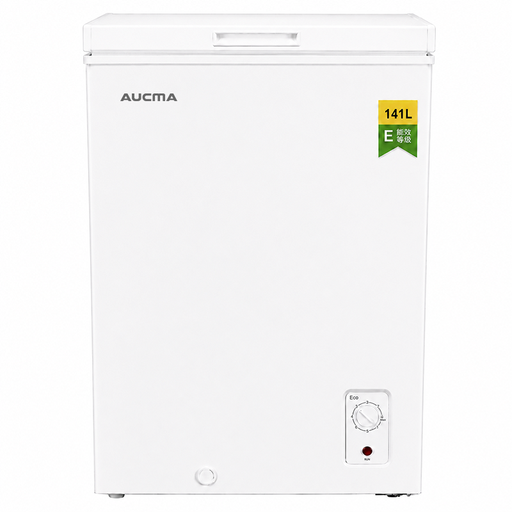 Image unavailable
This chest freezer offers a stated capacity of 141 L for frozen food when set to freezer mode. Its specifications mention a removable basket, a defrost drain and an E energy rating. If you’re installing it in a cold room or are concerned about power cuts, check the model’s ambient temperature range and power-cut storage time.
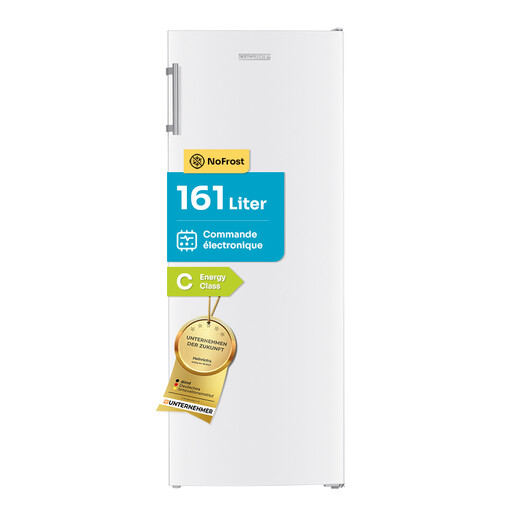 Image unavailable
This upright freezer could suit you if you’d rather organise frozen food than rummage through a chest freezer. Its name indicates three freezer drawers, No Frost protection, a reversible door and a C energy rating. Check its dimensions, door clearance and ambient temperature range for your intended location.
 Image unavailable
This chest freezer has a stated capacity of 140 L and includes a basket to separate some of the contents. Bear in mind that food at the bottom may be harder to reach. Its name mentions a counterbalanced lid and an E energy rating. Measure the space and check its annual energy consumption and ambient temperature range if these factors affect your choice.
 Image unavailable
With a stated capacity of 95 L, this chest freezer is better suited to extra storage than to holding a large family’s stock. It can switch between fridge and freezer modes, so check the setting you need to keep food frozen. The product name indicates a removable basket, a defrost drain and an E energy rating.
 Image unavailable
This chest freezer has a stated capacity of 99 L, making it suitable for extra storage. It includes a removable basket for smaller items. Its name indicates a four-star freezer compartment, an adjustable thermostat and an E energy rating. Consider how you’ll reach food beneath the basket, and check the defrosting instructions before installing it.
Choose a model whose ambient temperature range covers the room’s minimum and maximum temperatures. Beko France and Liebherr state that some Freezer Guard and FrostProtect models respectively can operate at temperatures as low as −15 °C. Check this feature for the specific model rather than assuming it’s suitable based on whether it’s a chest or upright freezer.
No. You can’t determine a model’s energy consumption from its type alone. Compare the kWh/year and energy rating of appliances with capacities suited to similar needs, as well as their installation requirements.
Check the time stated in hours, then find out what it measures before comparing two figures. In its freezer testing protocol, UFC-Que Choisir simulates a power cut and measures how long food stays below −9 °C. A duration measured using a different method isn’t directly comparable.
No. A compartment described as frost-free, such as the one in the Electrolux EUN7NE18S, still needs to be cleaned and used according to the manufacturer’s instructions. Also check which defrosting system the model you choose actually has: terms relating to frost don’t all describe the same features.
No. According to the Ministry of the Economy, the statutory guarantee of conformity applies to goods sold by a business to a consumer, while a commercial warranty is optional and provides cover in addition to statutory rights. Check the terms of any extended warranty separately.